
Why Fire Ants Rule the South (And How to Fight Back)
Red imported fire ants (Solenopsis invicta) have become a dominant force in the Southern United States since their accidental introduction in Mobile, Alabama, in the 1930s. These aggressive invaders have spread across over 320 million acres, particularly affecting homeowners in Texas, Oklahoma, Louisiana, and Mississippi. A single yard in these states can harbor multiple colonies, each containing up to 500,000 ants.
Unlike native ant species, fire ants are more than just a nuisance; they are a threat. They attack in swarms, injecting venom that causes painful pustules lasting weeks, and can rebuild their colonies faster than they can be destroyed. However, fire ants have specific biological weaknesses that homeowners can exploit immediately, even without professional treatment.
Ready to Get Started?
Free quote • No obligation • Same-day service available
The Fire Ant Advantage: Why They're Winning
Temperature Tolerance That Beats Native Species
Fire ants thrive in soil temperatures between 70-95°F, which Southern summers provide for 6-8 months annually. According to Texas A&M AgriLife Extension research, fire ant colonies remain active year-round in areas where soil temperature stays above 60°F, giving them a significant advantage over native ants that enter dormancy.
Reproductive Superiority
A mature fire ant queen produces 1,000-1,500 eggs daily during peak season, compared to native ant species that typically produce 100-300 eggs daily. Multiple queen colonies (polygyne) can contain 10-40 queens, creating reproductive powerhouses that can split and establish new colonies within weeks.
Aggressive Territory Expansion
Fire ants don't just compete—they eliminate competition. Worker ants actively seek and destroy other ant colonies, spider nests, and ground-dwelling insects. They've been documented reducing native ant diversity by 70-90% in invaded areas, according to University of Arkansas Extension research.
Immediate Action Steps: What You Can Do Today
The 48-Hour Mound Mapping Strategy
Before treating your yard, map every mound using these professional techniques:
- Early morning surveys (6-8 AM): Fire ants are most active when soil temperature is 70-85°F.
- Mark with flags: Use colored flags to mark active mounds; you'll likely find 2-3 times more than initially noticed.
- Check irrigation zones: Fire ants prefer areas with consistent moisture but good drainage.
- Document mound age: Fresh mounds (loose, fluffy soil) indicate recent queen activity and require immediate attention.
The Bait-and-Broadcast Method (DIY Version)
Professional pest control uses a two-step approach you can replicate with retail products:
| Step | Product Type | Timing | Coverage |
|---|---|---|---|
| 1. Broadcast Bait | Hydramethylnon-based granules | Morning when ants are foraging | Entire yard |
| 2. Individual Mound Treatment | Contact insecticide drench | 24-48 hours after baiting | Each marked mound |
Critical timing: Apply broadcast bait when soil temperature is 70-85°F and no rain is forecast for 4-6 hours. Fire ants won't collect bait during temperature extremes or wet conditions.
Natural Disruption Techniques
While not elimination methods, these tactics can reduce fire ant activity immediately:
- Diatomaceous earth barriers: Create 2-inch wide bands around high-traffic areas like playsets and patios.
- Beneficial nematode application: Steinernema riobrave nematodes specifically target fire ant larvae in Southern climates.
- Moisture management: Eliminate standing water and fix irrigation leaks that create ideal nesting conditions.
Regional Fire Ant Patterns: Know Your Enemy's Schedule
Texas (DFW, Austin, San Antonio, Tyler Regions)
Fire ant activity peaks during two seasons in Texas: April-June and September-October. Summer heat drives colonies deeper (up to 8 feet underground), making surface treatments less effective. Focus intensive treatments during spring emergence and fall preparation periods.
Oklahoma (OKC, Tulsa, Edmond)
Oklahoma's variable winter temperatures create unique challenges. Mild winter days (above 60°F) trigger false activity spikes. Colonies may appear eliminated in winter but explode in spring from surviving underground populations.
Louisiana (Slidell, New Orleans Area)
High humidity and frequent rainfall in Louisiana create year-round fire ant pressure. Colonies often relocate monthly during the rainy season, requiring continuous monitoring rather than single-season treatments.
Mississippi (Gulf Coast)
Coastal Mississippi faces the highest fire ant density in the region due to optimal humidity and temperature conditions. Sandy soils allow rapid colony expansion but also make broadcast baits more effective due to better penetration.
When DIY Fails: Recognizing Professional Treatment Needs
Homeowners should consider professional fire ant treatment when experiencing:
- Rapid recolonization: New mounds appearing within 2-4 weeks of treatment.
- Multiple stinging incidents: More than one family member or pet stung monthly.
- Property damage: Fire ants damaging electrical equipment, HVAC units, or irrigation systems.
- Large-scale infestation: More than 20 active mounds per acre.
Fire Ant Biology: Knowledge That Saves Money
Colony Structure Weaknesses
Understanding fire ant social structure reveals treatment opportunities:
- Queen dependency: Workers live only 30-60 days; eliminate the queen and the colony collapses.
- Foraging patterns: Workers travel up to 100 feet from mounds, creating predictable bait collection zones.
- Seasonal reproduction: New queens emerge during specific weather conditions (after rain, 70-80°F temperatures).
Environmental Stress Points
Fire ants become vulnerable during:
- Temperature extremes: Below 60°F or above 95°F reduces activity and feeding.
- Drought conditions: Colonies concentrate around water sources, making targeted treatment more effective.
- Soil disturbance: Construction, landscaping, or flooding forces colony relocation and exposes queens.
Long-Term Fire Ant Management Strategy
Seasonal Treatment Calendar
Spring (March-May): Primary treatment season. Apply broadcast bait as soil warms to 70°F. Target emerging colonies before peak reproduction.
Summer (June-August): Maintenance monitoring. Focus on irrigation zones and shaded areas where colonies remain active during heat.
Fall (September-November): Secondary treatment window. Colonies are preparing for winter and actively foraging for food storage.
Winter (December-February): Planning and prevention. Eliminate moisture sources and plan landscape modifications to reduce suitable habitat.
Landscape Modifications That Work
- Drainage improvement: Install French drains in low-lying areas where fire ants establish large colonies.
- Mulch selection: Use cedar or cypress mulch, which fire ants avoid due to natural oils.
- Plant choices: Establish thick turf grass varieties that compete with fire ants for soil space.
Safety and Medical Considerations
Fire ant stings inject solenopsin, a cytolytic alkaloid that destroys cell membranes. Typical reactions include immediate burning pain followed by pustule formation within 24 hours. However, approximately 1-2% of the population experiences severe allergic reactions requiring medical attention. Always consult with a healthcare provider if you experience severe symptoms.
FAQs
How can I identify fire ant mounds?
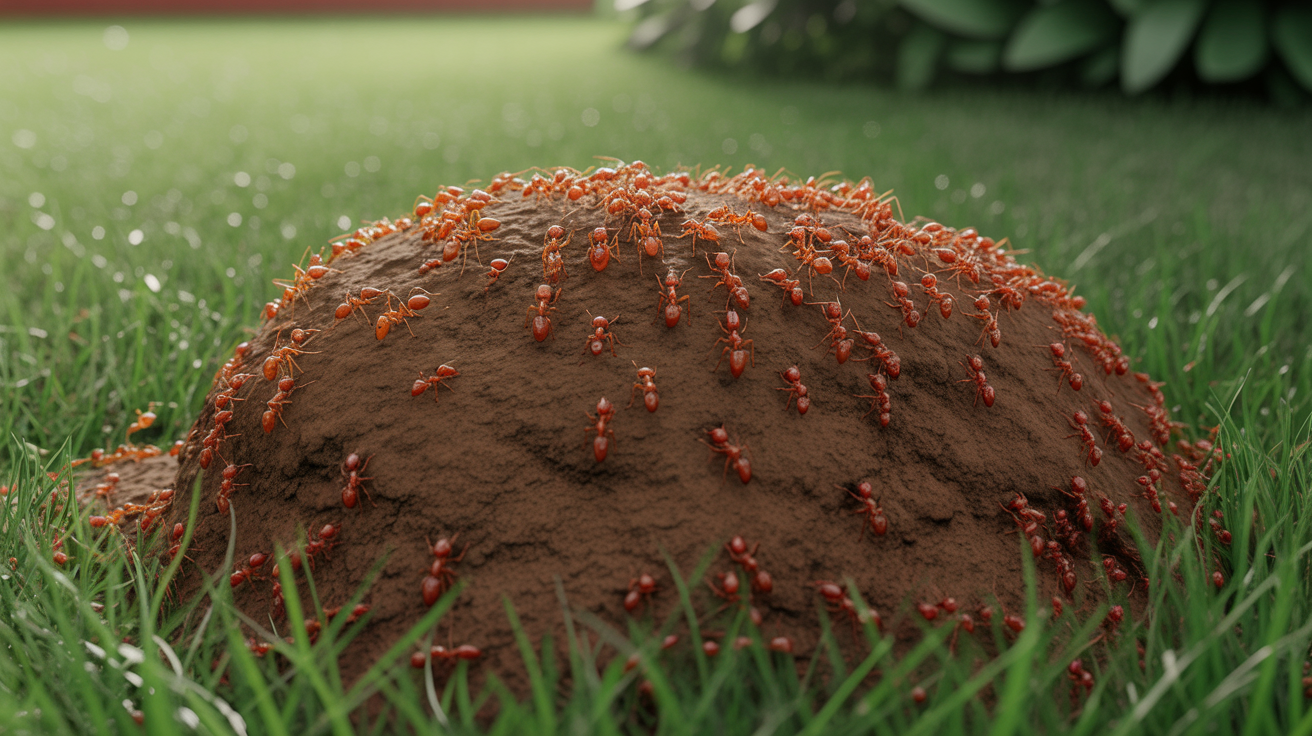
Fire ant mounds are dome-shaped and can be up to 18 inches high. They often appear in open areas such as lawns, pastures, and along roadsides.
Are there natural predators for fire ants?
Yes, some natural predators include certain species of flies and beetles, but they are not effective enough to control fire ant populations alone.
What should I do if I get stung by a fire ant?
Wash the area with soap and water, apply a cold compress to reduce swelling, and use over-the-counter antihistamines or hydrocortisone cream to relieve itching. Seek medical attention if you experience severe reactions.
Author Bio
Ella Hansen is a pest control marketing specialist at Romex Pest Control who leverages in-house expertise and external industry resources to deliver actionable pest management content. Her work is informed by the latest research and best practices in the pest control industry.