
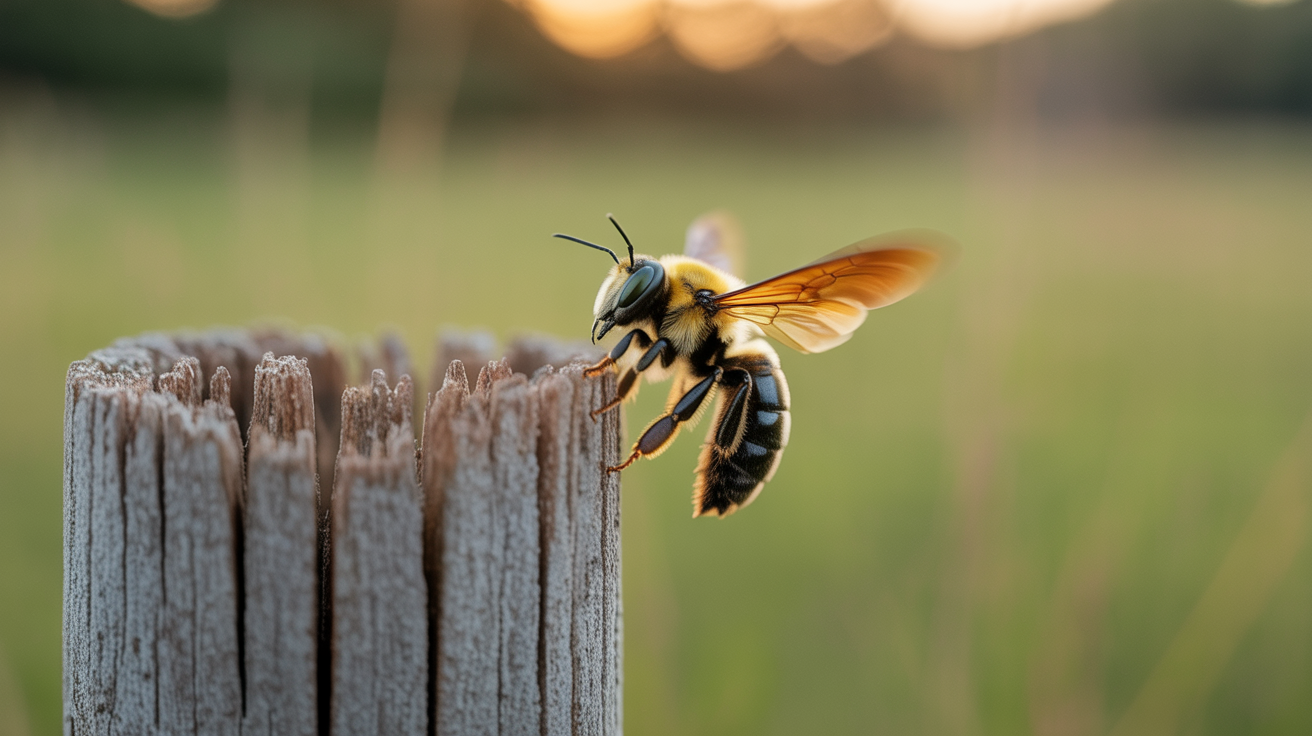
Carpenter Bees: Damage Prevention & Control

Ella Hansen is a pest control marketing specialist at Romex Pest Control with over 10 years of experience in the industry. She holds a certification in Pest Management from the National Pest Management Association and has contributed articles to industry publications like Pest Control Technology magazine.
Ready to Get Started?
Free quote • No obligation • Same-day service available
Understanding Carpenter Bee Behavior and Biology
Carpenter bees aren't your typical honey-producing pollinators. These robust, shiny black insects measure ¾ to 1 inch long and create perfectly round ½-inch holes in wood surfaces. Unlike termites that consume wood, carpenter bees excavate tunnels for nesting, creating galleries that can extend 6-10 inches deep.
The most common species in our service regions—Texas, Oklahoma, Louisiana, and Mississippi—is the Eastern carpenter bee (Xylocopa virginica). These solitary insects have a distinctive flight pattern: males hover aggressively around nest sites but cannot sting, while females rarely sting unless directly handled.
Identifying Carpenter Bee Damage Early
Early detection prevents minor cosmetic damage from becoming structural concerns. Here's what to look for during your monthly property inspections:
Visual Damage Indicators
- Perfect round holes: Exactly ½ inch in diameter, appearing freshly drilled
- Yellow staining: Sawdust-like frass mixed with bee excrement below holes
- Hovering males: Large black bees defending territory near wooden structures
- Buzzing sounds: Audible excavation activity inside wood during spring months
Prime Target Areas
Focus your inspections on these high-risk locations:
- Deck railings and support posts
- Eaves and fascia boards
- Outdoor furniture and play equipment
- Fence posts and garden structures
- Window trim and door frames
Regional Activity Patterns
Understanding carpenter bee seasonality in our climate zones helps time prevention and treatment efforts effectively.
Texas and Oklahoma Activity
In North Texas and Oklahoma, carpenter bees emerge in late March to early April when temperatures consistently reach 60°F. Peak activity occurs April through June, with a second generation possible in late summer during favorable conditions. CDC
Louisiana and Mississippi Gulf Coast
The extended growing season means carpenter bees may remain active from February through October. High humidity and mild winters allow for multiple generations annually, increasing potential damage accumulation.
| Month | Activity Level | Recommended Actions |
|---|---|---|
| February-March | Emergence begins | Apply preventive treatments |
| April-June | Peak nesting | Monitor for new holes daily |
| July-August | Second generation | Treat active galleries |
| September-November | Overwintering prep | Seal holes, apply wood treatments |
Proven Prevention Strategies
Prevention remains more effective and economical than reactive treatments. These methods leverage carpenter bee behavioral preferences to make your property less attractive.
Wood Treatment and Maintenance
Paint all exposed wood: Apply quality exterior paint or polyurethane finish to all wooden surfaces. Carpenter bees avoid painted wood because they cannot grip smooth surfaces effectively for excavation.
Replace softwood with alternatives: Consider composite materials, vinyl, or naturally resistant hardwoods like oak or maple for high-risk areas like deck railings and trim work.
Apply wood preservatives: Borate-based treatments like Tim-bor penetrate wood fibers, making them unpalatable to carpenter bees while providing long-term protection.
Physical Deterrents
Install steel wool plugs: Temporarily stuff existing holes with steel wool before permanent repair. The abrasive material deters re-entry while allowing you to monitor activity levels.
Create vibration barriers: Attach aluminum flashing or metal trim to vulnerable wooden edges. The vibration and texture disruption discourages excavation attempts.
Effective Treatment Methods
When prevention fails, targeted treatments can eliminate active infestations and prevent colony expansion.
Residual Insecticide Applications
Professional-grade pyrethroid insecticides provide 30-60 days of residual activity. Apply directly into gallery openings during evening hours when bees are inside tunnels. Products containing bifenthrin or cyfluthrin show excellent efficacy against carpenter bees.
Dust Formulations
Insecticidal dusts like boric acid or diatomaceous earth work mechanically, adhering to bee bodies and providing extended kill activity. Inject dust deep into galleries using a bulb duster, then seal holes temporarily with putty.
Timing Treatment Applications
Treat active galleries in late evening (after 8 PM) when adult bees return to tunnels. Morning treatments often miss target insects and may drive them to create new galleries nearby.
Long-Term Damage Prevention
Successful carpenter bee management requires ongoing vigilance and proactive maintenance.
Annual Maintenance Schedule
February: Inspect all wooden structures for new holes or emerging activity. Apply preventive treatments to vulnerable unpainted wood.
May: Monitor for active nesting. Document new damage locations for targeted treatment.
August: Treat active galleries before second generation development. Plan fall repair projects.
November: Seal all holes with wood putty or dowels. Apply fresh paint or stain to weathered surfaces.
Structural Repair Techniques
Properly repairing carpenter bee damage prevents re-infestation and maintains structural integrity:
- Clean galleries thoroughly: Use compressed air to remove all frass and debris
- Inject wood filler: Use exterior-grade wood filler or matching wooden dowels
- Sand smooth: Ensure repair surfaces are flush with surrounding wood
- Prime and paint: Apply quality primer followed by two coats of exterior paint
When Professional Help Is Necessary
While homeowners can manage minor carpenter bee issues, certain situations require professional intervention:
- Extensive structural damage: Multiple galleries in load-bearing members
- Recurring infestations: Annual return despite prevention efforts
- Inaccessible locations: High eaves, complex roof structures, or enclosed spaces
- Large populations: More than 10-15 active galleries on your property
Professional pest control technicians have access to specialized equipment and restricted-use pesticides that provide longer-lasting control than consumer products.
Understanding Treatment Limitations
Honest expectations improve treatment outcomes and prevent frustration. Carpenter bee control faces several inherent challenges:
Solitary nature: Unlike social insects, carpenter bees don't share pheromone trails or centralized nests, requiring individual treatment of each gallery.
Protected larvae: Developing bees inside sealed galleries remain protected from surface treatments, potentially emerging weeks after application.
Site fidelity: Carpenter bees often return to previous nesting sites, making annual prevention treatments necessary in high-activity areas.
Regional Considerations
Climate and environmental factors across our service areas influence carpenter bee behavior and treatment timing.
Texas Hill Country and East Texas
Cedar and pine construction materials common in these regions provide ideal carpenter bee habitat. Extended drought periods may drive bees to seek moisture in treated lumber, increasing activity around homes.
Oklahoma Red Clay Region
Temperature fluctuations and severe weather events can damage protective paint coatings, creating new vulnerable surfaces annually. Plan touch-up painting as part of storm damage repairs.
Louisiana Coastal Areas
High humidity and frequent rainfall can accelerate wood decay, making untreated surfaces more susceptible to carpenter bee activity. Regular maintenance and timely repairs are crucial in these regions.