
Annual Cicada
Tibicen species
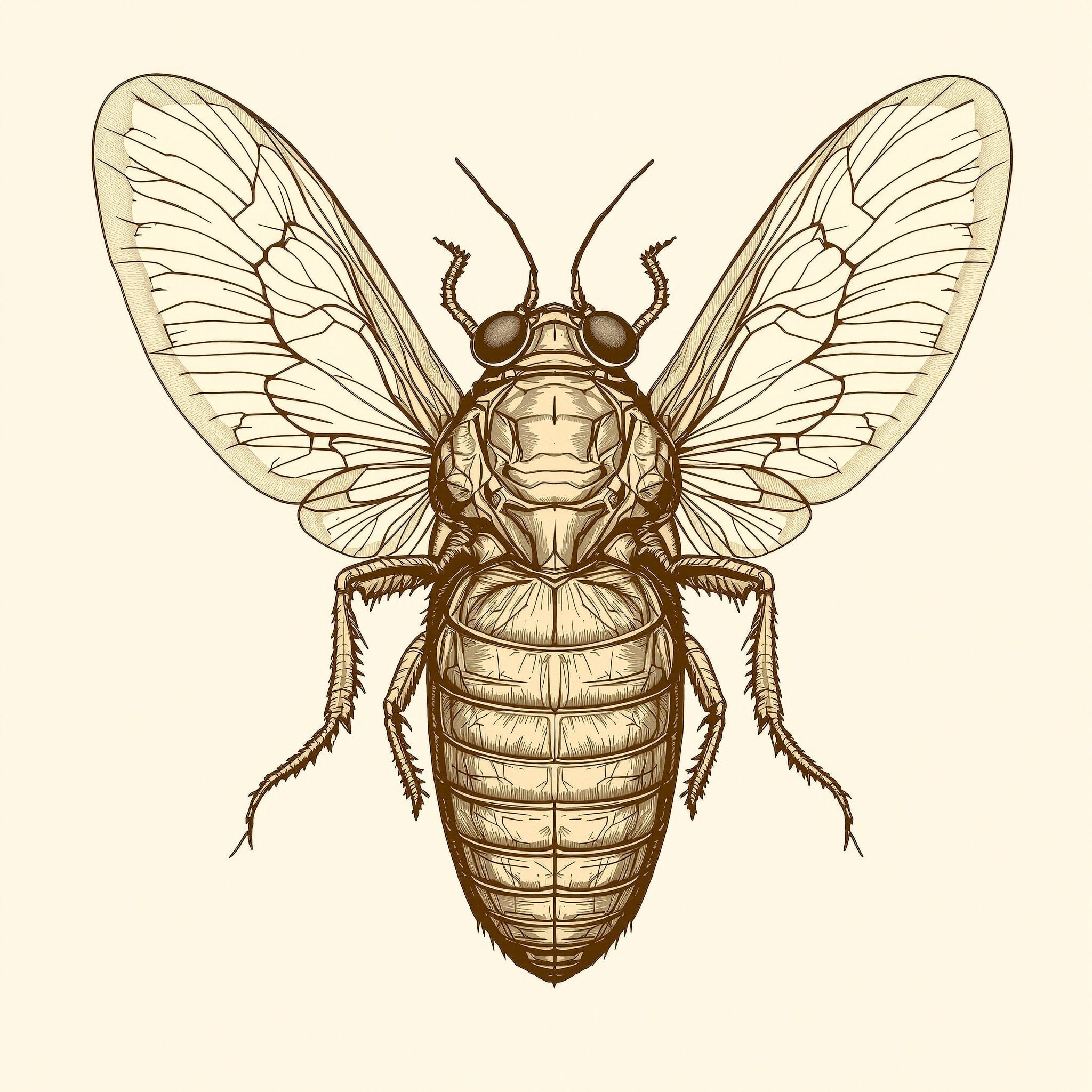
Scientific illustration for identification purposes
Overview
Cicadas are large, noisy insects known for their loud mating calls that can reach over 100 decibels. They spend most of their lives underground as nymphs, emerging as adults for a few weeks to mate. They do not bite or sting.
How to Identify
- Large size - 1 to 2 inches
- Broad head with bulging eyes
- Large transparent wings with visible veins
- Green, brown, or black coloring
- Extremely loud buzzing song
Behavior
Male cicadas produce extremely loud mating calls using specialized organs called tymbals. They are harmless and do not bite or sting. Adults live only a few weeks.
Habitat
Nymphs live underground feeding on tree roots for 2-5 years. Adults emerge and climb trees to molt, then spend their brief adult lives in trees.
Diet
Nymphs feed on tree root sap underground. Adults drink tree sap using piercing mouthparts.
Reproduction
Females cut slits in tree branches to lay eggs. Nymphs hatch and drop to the ground, burrowing to feed on roots. Annual cicadas emerge every year (different broods), unlike periodical cicadas.
Distribution in the Southern U.S.
Common throughout Texas, Oklahoma, Louisiana, and Mississippi during summer months.
Regional Notes
Multiple species of annual cicadas are present in the South, emerging throughout summer. Their loud calls are a familiar summer sound.
Signs of Infestation
- Loud buzzing sounds from trees in summer
- Empty cicada shells on tree bark
- Large insects with transparent wings
- Exit holes in soil at base of trees
- Minor flagging of tree branch tips
Prevention Tips
- Cicadas are not typically controlled
- They do not damage healthy trees significantly
- Protect young trees with netting during emergence
- Do not apply pesticides - ineffective and unnecessary
- Accept cicadas as a natural summer occurrence
When to Contact a Professional
Professional treatment is generally not needed for cicadas. Contact an arborist if concerned about young tree damage during heavy emergence years.
Frequently Asked Questions
Do cicadas bite or sting?
No, cicadas do not bite or sting. They have piercing mouthparts for drinking tree sap but cannot bite humans. They are completely harmless.
Why are cicadas so loud?
Male cicadas produce loud calls to attract females. They have specialized organs called tymbals that vibrate to produce sounds reaching over 100 decibels - louder than a lawnmower.
Latest Research & News
Recent developments about annual cicada
Get the latest news and research about annual cicada
Click "Load News" to fetch recent articles from scientific sources