
Eastern Subterranean Termite
Reticulitermes flavipes
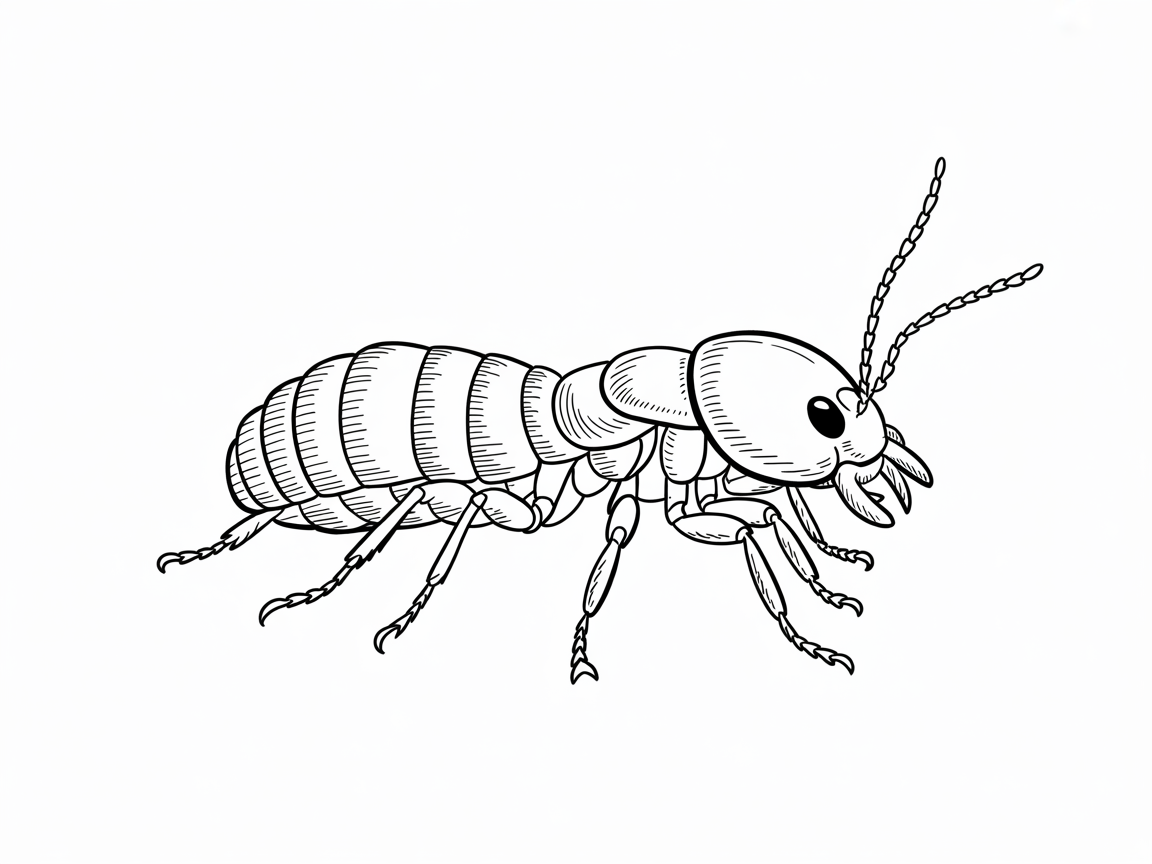
Scientific illustration for identification purposes
Overview
Subterranean termites are the most destructive wood-destroying insects in the United States, causing over $5 billion in property damage annually. Unlike drywood termites, they require contact with soil moisture to survive and build distinctive mud tubes to travel between their underground colonies and food sources.
How to Identify
- Workers: Soft, creamy-white bodies; no eyes; bead-like antennae
- Soldiers: Rectangular yellowish-brown heads with large mandibles
- Swarmers: Dark brown/black with two pairs of equal-length wings
- Mud tubes (shelter tubes) on foundations and walls
- Swarmers often confused with flying ants (termites have straight antennae, equal wings, broad waist)
Behavior
Termites live in highly organized colonies with distinct castes: workers (foragers/builders), soldiers (defenders), and reproductives (kings, queens, swarmers). Workers forage 24/7 and can travel up to 300 feet from the colony. They communicate through pheromones and vibrations.
Habitat
Colonies are located underground in moist soil. They build mud tubes (pencil-width tunnels) to maintain humidity while accessing above-ground food sources. Any wood in contact with soil is at high risk. They often enter homes through expansion joints, cracks in slabs, and around plumbing penetrations.
Diet
Cellulose from wood, paper, cardboard, and other plant materials. They cannot digest cellulose directly but rely on symbiotic protozoa in their gut. A mature colony can consume 5 grams of wood per day, equivalent to one foot of 2x4 lumber per year.
Reproduction
Mature colonies produce winged swarmers that emerge en masse on warm, humid days, typically after rain. After a brief flight, pairs shed their wings, mate, and establish new colonies. It takes 3-5 years for a new colony to mature and produce swarmers.
Distribution in the Southern U.S.
Found throughout all Southern states. The Formosan subterranean termite (Coptotermes formosanus), an even more aggressive species, is established along the Gulf Coast from Texas to Florida.
Regional Notes
The warm, humid climate of the Southern states allows for year-round termite activity. Properties in Texas, Louisiana, Mississippi, and Oklahoma are at very high risk. Slab-on-grade construction common in the region increases vulnerability due to hidden entry points.
Signs of Infestation
- Mud tubes on foundation walls, posts, or in crawl spaces
- Swarmers (winged termites) indoors, especially in spring
- Discarded wings near windows, doors, or light fixtures
- Hollow-sounding wood when tapped
- Buckling or blistering wood flooring
- Damaged wood with soil or mud in galleries
Prevention Tips
- Eliminate wood-to-soil contact around your home
- Maintain proper drainage away from foundation
- Fix leaky pipes, faucets, and AC units promptly
- Keep mulch at least 6 inches from foundation
- Store firewood at least 20 feet from the house
- Ensure adequate ventilation in crawl spaces
- Schedule annual professional termite inspections
When to Contact a Professional
Contact a licensed termite professional immediately if you find mud tubes, swarmers inside your home, or damaged wood. Termite control requires specialized equipment and products not available to consumers. Annual professional inspections are recommended for all homes in the Southern states.
Romex Pest Control provides professional eastern subterranean termite control services across Texas, Oklahoma, Louisiana, and Mississippi.
Learn about our eastern subterranean termite control servicesFrequently Asked Questions
How do I know if I have termites or flying ants?
Termite swarmers have straight, bead-like antennae, a broad waist, and two pairs of equal-length wings. Flying ants have elbowed antennae, a pinched waist, and forewings longer than hindwings. Termite swarmers also shed their wings easily after landing.
Can I treat termites myself?
DIY termite treatment is not recommended. Effective termite control requires specialized equipment for soil injection or baiting systems, professional-grade products, and expertise to locate all infestation sites. Improper treatment can allow termites to continue damaging your home undetected.
How much damage can termites cause?
A mature subterranean termite colony can consume about one foot of 2x4 lumber per year. However, most homes have multiple colonies feeding on them simultaneously. By the time homeowners notice damage, termites have often been active for 3-5 years, with repair costs averaging $3,000 to $5,000 or more.
Latest Research & News
Recent developments about eastern subterranean termite
Get the latest news and research about eastern subterranean termite
Click "Load News" to fetch recent articles from scientific sources