
American Dog Tick
Dermacentor variabilis
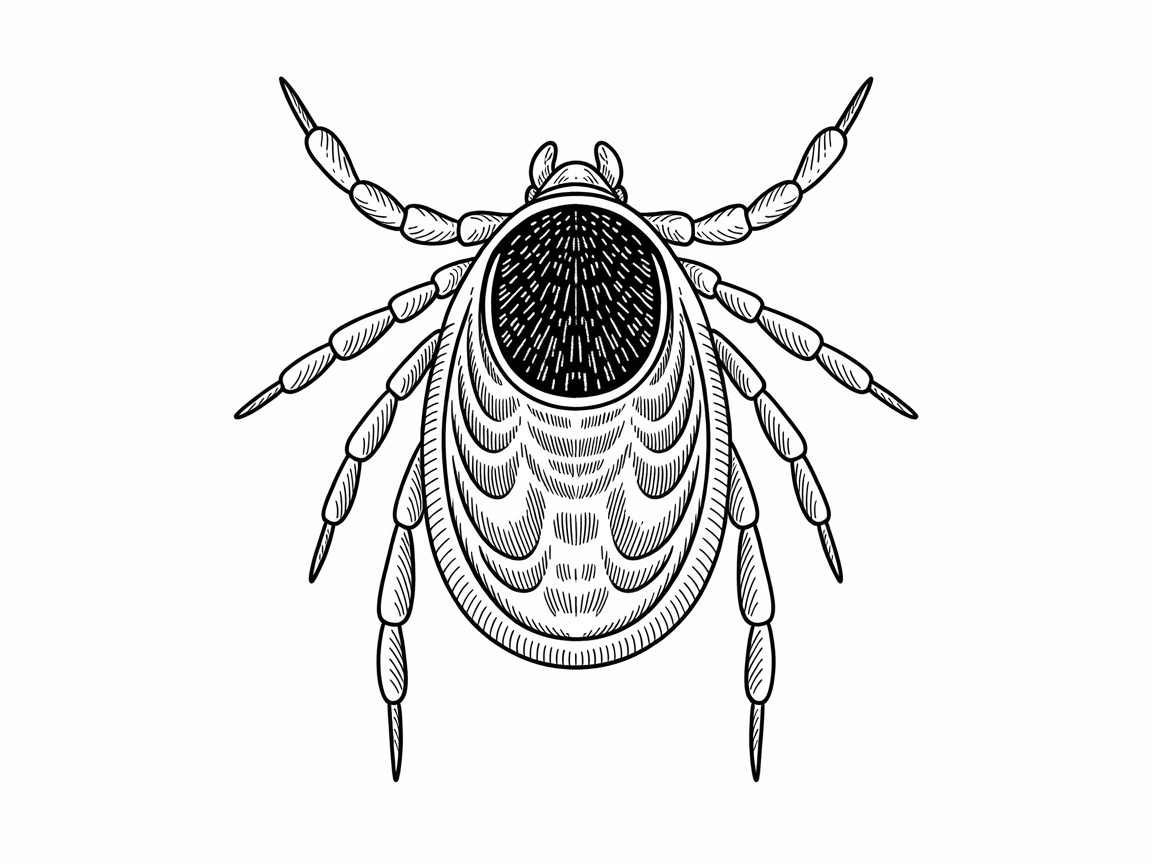
Scientific illustration for identification purposes
Overview
The American dog tick is the most commonly encountered tick in the eastern United States and a primary vector of Rocky Mountain spotted fever in the South. Also known as the wood tick, it is a three-host tick that feeds on different animals at each life stage.
How to Identify
- Oval, flattened body (rounded when engorged)
- Eight legs (adults); six legs (larvae)
- Males: ornate white or grayish markings covering entire back
- Females: smaller ornate shield (scutum) behind head only
- Capitulum (mouthparts) visible from above
- Festoons (rectangular areas) along posterior margin
Behavior
Ticks do not jump or fly but use a behavior called "questing" - climbing vegetation and extending their forelegs to grab passing hosts. They are attracted to carbon dioxide, body heat, and movement. Once attached, they can feed for several days, increasing in size dramatically.
Habitat
Found in grassy fields, shrubby areas, and along trails and paths where hosts are likely to pass. They prefer transitional zones between woods and open areas. Adults are most often found on dogs and humans; larvae and nymphs feed on smaller animals like mice and rabbits.
Diet
Blood meals from hosts at each life stage. Larvae and nymphs typically feed on rodents and small mammals. Adults prefer medium to large mammals, especially dogs, and readily bite humans.
Reproduction
Mated females drop from hosts to lay 4,000-6,500 eggs in soil or leaf litter. Eggs hatch in 36-57 days into six-legged larvae. Development through three life stages (larva, nymph, adult) requires a blood meal at each stage and can take 2-3 years.
Distribution in the Southern U.S.
Common throughout Texas, Oklahoma, Louisiana, and Mississippi. Highest populations in East Texas, eastern Oklahoma, and wooded areas of Louisiana and Mississippi.
Regional Notes
The Lone Star tick (Amblyomma americanum) is another common species in the South that aggressively bites humans and can cause alpha-gal syndrome (red meat allergy). The Gulf Coast tick is also present along coastal areas.
Signs of Infestation
- Ticks found on pets, especially around ears, neck, and between toes
- Embedded ticks found on family members after outdoor activities
- Multiple ticks found during inspection of property
- High wildlife activity in yard (deer, rabbits, rodents)
Prevention Tips
- Keep lawns mowed and remove leaf litter and brush
- Create a 3-foot barrier of gravel or wood chips between lawn and wooded areas
- Stack firewood neatly in dry areas away from the house
- Discourage deer and rodents from entering the yard
- Use tested and approved repellents on skin and permethrin on clothing
- Conduct tick checks after outdoor activities
- Shower within 2 hours of coming indoors
- Treat pets with veterinarian-recommended tick prevention
When to Contact a Professional
Consider professional tick control if you find ticks frequently on family members or pets, have wooded or brushy property, or live in an area with high Lyme or RMSF incidence. Professional treatments can significantly reduce tick populations on your property.
Romex Pest Control provides professional american dog tick control services across Texas, Oklahoma, Louisiana, and Mississippi.
Learn about our american dog tick control servicesFrequently Asked Questions
What diseases do ticks transmit in the South?
In the Southern states, ticks transmit Rocky Mountain spotted fever (American dog tick), ehrlichiosis (Lone Star tick), tularemia, and STARI (Southern tick-associated rash illness). The Lone Star tick is also linked to alpha-gal syndrome, an allergy to red meat. Lyme disease is less common but occurs in some areas.
How do I properly remove an attached tick?
Use fine-tipped tweezers to grasp the tick as close to the skin as possible. Pull upward with steady, even pressure - do not twist or jerk. After removal, clean the bite area with rubbing alcohol or soap and water. Save the tick in a sealed bag in case you develop symptoms and need it identified.
How long does a tick need to be attached to transmit disease?
Transmission time varies by disease and tick species. RMSF can be transmitted in as few as 2 hours, while Lyme disease typically requires 36-48 hours of attachment. This is why daily tick checks are so important - finding and removing ticks quickly reduces disease risk.
Latest Research & News
Recent developments about american dog tick
Get the latest news and research about american dog tick
Click "Load News" to fetch recent articles from scientific sources