
Introduction
German cockroaches are a persistent problem in Texas, thriving in the state's warm and humid climate. Understanding the signs of infestation, associated risks, and effective removal strategies is crucial for homeowners. This guide provides expert insights into managing German cockroach infestations, drawing on professional pest control practices and the latest industry research.
Ready to Get Started?
Free quote • No obligation • Same-day service available
What Makes German Cockroaches So Difficult to Control in Texas
Texas's heat and humidity are practically a welcome mat for German cockroaches. They thrive in warm, moist environments, and the Gulf Coast climate, combined with Texas summers that routinely push above 95°F, creates near-ideal breeding conditions year-round.
But the climate is only part of the problem. German cockroaches reproduce at an alarming rate. A single female produces an egg capsule (called an ootheca) containing up to 48 eggs roughly every six weeks. At that pace, an untreated infestation can balloon to thousands of individuals in just a few months. They're also resistant to many over-the-counter sprays, especially if previous treatments have been inconsistent. Spray a population repeatedly with the same product and you'll eventually select for survivors that pass on that resistance.
Did You Know? According to the EPA, cockroaches can spread 33 kinds of bacteria, including E. coli and Salmonella. This makes professional pest control crucial in managing infestations (source).
How to Identify a German Cockroach Infestation
The most obvious sign is seeing live roaches, usually at night when you flip on the kitchen light. But daytime sightings are actually a red flag: it typically means the population has grown so large that roaches are being pushed out of hiding spots during daylight hours.
- Dark droppings resembling ground pepper near appliances, inside cabinets, and along baseboards
- Egg casings (small, brownish capsules) tucked behind the refrigerator or under the sink
- A musty, oily odor that intensifies in poorly ventilated spaces
- Grease smear marks along walls or edges where roaches travel repeatedly
If you're unsure what you're dealing with, a Texas pest identification guide can help you distinguish German cockroaches from American or Asian species.
What German Cockroaches Look Like
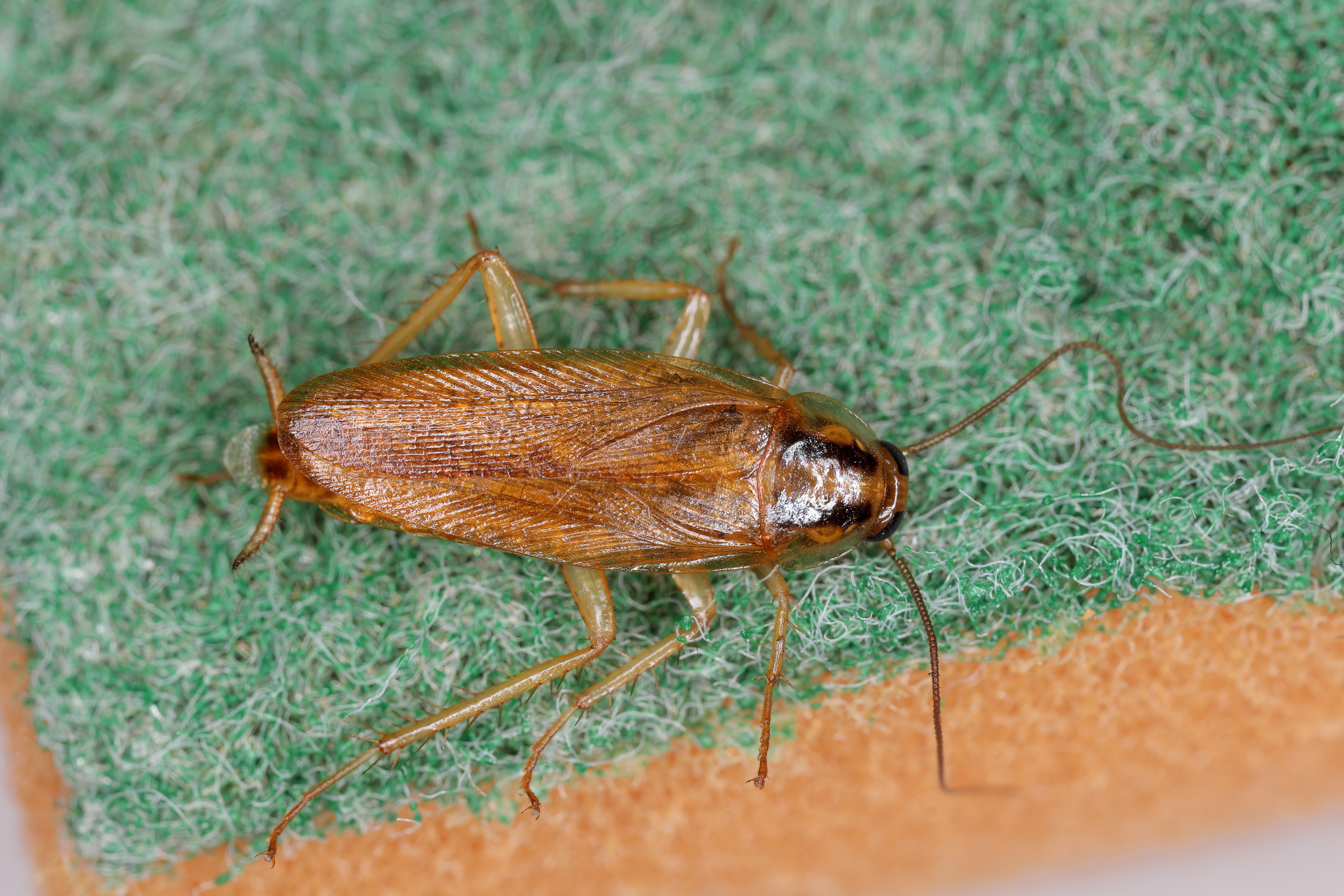
German cockroaches are smaller than most people expect, adults measure just ½ to ⅝ of an inch long. Their color ranges from tan to light brown, and the most reliable identifier is two dark, parallel stripes running down the back of their head (the pronotum).
Unlike American cockroaches (the big, reddish-brown ones sometimes called "water bugs"), German cockroaches rarely fly. They have wings, but they prefer to run. Nymphs, juvenile cockroaches, are darker, almost black, with a single light stripe down the middle of their back. You'll often find them in the same areas as adults but in tighter crevices.
For a broader look at common southern pest species in your region, knowing the difference matters, treatment strategies vary significantly between species.
Where German Cockroaches Hide Inside Your Home
German cockroaches are thigmotactic, they prefer tight spaces where their bodies touch surfaces on both sides. That instinct drives them into places most homeowners never check.
- Behind and beneath the refrigerator, stove, and dishwasher
- Inside the motor housing of small appliances (toasters, coffee makers)
- Under the sink and inside cabinet hinges
- Behind wall outlet plates and switch covers
- Inside false ceilings and drop ceilings in bathrooms
- Along the inner edges of drawers
Bathrooms and kitchens are the primary zones because both provide warmth, moisture, and proximity to food or organic residue. In apartment buildings, German cockroaches also travel between units through wall voids, shared plumbing chases, and utility conduits, which is why a neighbor's infestation can quickly become yours.
Health Risks Associated With a German Cockroach Infestation
German cockroaches aren't just unpleasant, they're a documented public health concern. They carry bacteria including Salmonella, E. coli, and Listeria on their bodies and legs, contaminating food prep surfaces as they travel. The CDC has linked cockroach exposure to increased rates of asthma and allergic reactions, particularly in children (source).
Cockroach allergens, found in their saliva, droppings, and shed skins, are one of the most common indoor asthma triggers. Studies show that children in cockroach-infested homes have significantly higher rates of asthma-related emergency room visits. In Texas, where allergen seasons already pile up, adding cockroach allergens to the mix can make respiratory issues noticeably worse.
If anyone in your household has asthma, respiratory allergies, or a compromised immune system, eliminating a German cockroach infestation isn't just a comfort issue, it's a health priority.
Prevention Tips to Keep German Cockroaches Out
Good sanitation is the foundation of German cockroach prevention, but it's not the whole story. Even clean homes can get infested if conditions are right or if roaches hitchhike in on grocery bags, cardboard boxes, or secondhand appliances.
- Store all food in airtight containers: never leave pet food out overnight
- Empty trash cans daily and use bins with tight-fitting lids
- Fix leaky faucets and pipes under sinks immediately, moisture is a primary attractant
- Seal gaps around plumbing penetrations with caulk or expanding foam
- Declutter cabinets and pantry shelves to reduce harborage spots
- Inspect secondhand appliances and grocery bags before bringing them inside
- Run your exhaust fan during cooking and after showers to reduce humidity
These habits significantly reduce the conditions that attract and sustain German cockroach populations. They won't guarantee zero risk, but they make your home far less hospitable.
Professional German Cockroach Treatment: What to Expect
DIY sprays and foggers rarely solve a German cockroach problem, they often scatter the population and drive roaches deeper into walls, making the infestation harder to treat. Professional treatment is more targeted and significantly more effective.
A licensed German cockroach exterminator will typically:
- Inspect thoroughly to locate harborage areas and assess infestation severity
- Apply gel baits in precise locations, these outperform sprays because roaches carry the bait back to the colony
- Use insect growth regulators (IGRs) to interrupt the reproductive cycle and prevent nymphs from reaching adulthood
- Treat wall voids and entry points to eliminate hidden populations
- Schedule follow-up visits to monitor activity and reapply as needed
Most professional treatments require 2–3 follow-up visits for complete control. The timeline depends on infestation size, but expect 4–8 weeks for significant reduction in severe cases.
Professional Tip from Romex Technicians: Always follow up with preventive measures post-treatment to ensure long-term success. Regular inspections and maintenance can prevent re-infestation.
Romex's Approach to German Cockroach Control
At Romex Pest Control, we don't just spray and leave. Our technicians are trained to identify the specific conditions driving your infestation and treat the source, not just the symptoms.
We use a combination of targeted gel baits, IGRs, and void treatments that address German cockroaches where they actually live, not just where they're visible. Every treatment is backed by our 100% satisfaction guarantee: if roaches return between scheduled services, we come back at no additional charge.
Our cockroach control near me service is available across Texas, Oklahoma, Louisiana, and Mississippi, with same-day appointments in most areas. Our service is built for homes with kids & pets: licensed technicians use EPA-registered products applied according to label directions and walk you through product-specific precautions.
If you're in Texas, our local pest control team serves 211+ cities and can typically reach you the same day you call.
Conclusion
German cockroach infestations don't resolve on their own, they grow. The sooner you act, the easier and less expensive it will be to control the problem. Professional pest control services, like those offered by Romex Pest Control, provide the most effective solutions, ensuring your home remains safe and comfortable. Contact us today to schedule an inspection and take the first step towards a roach-free home.