
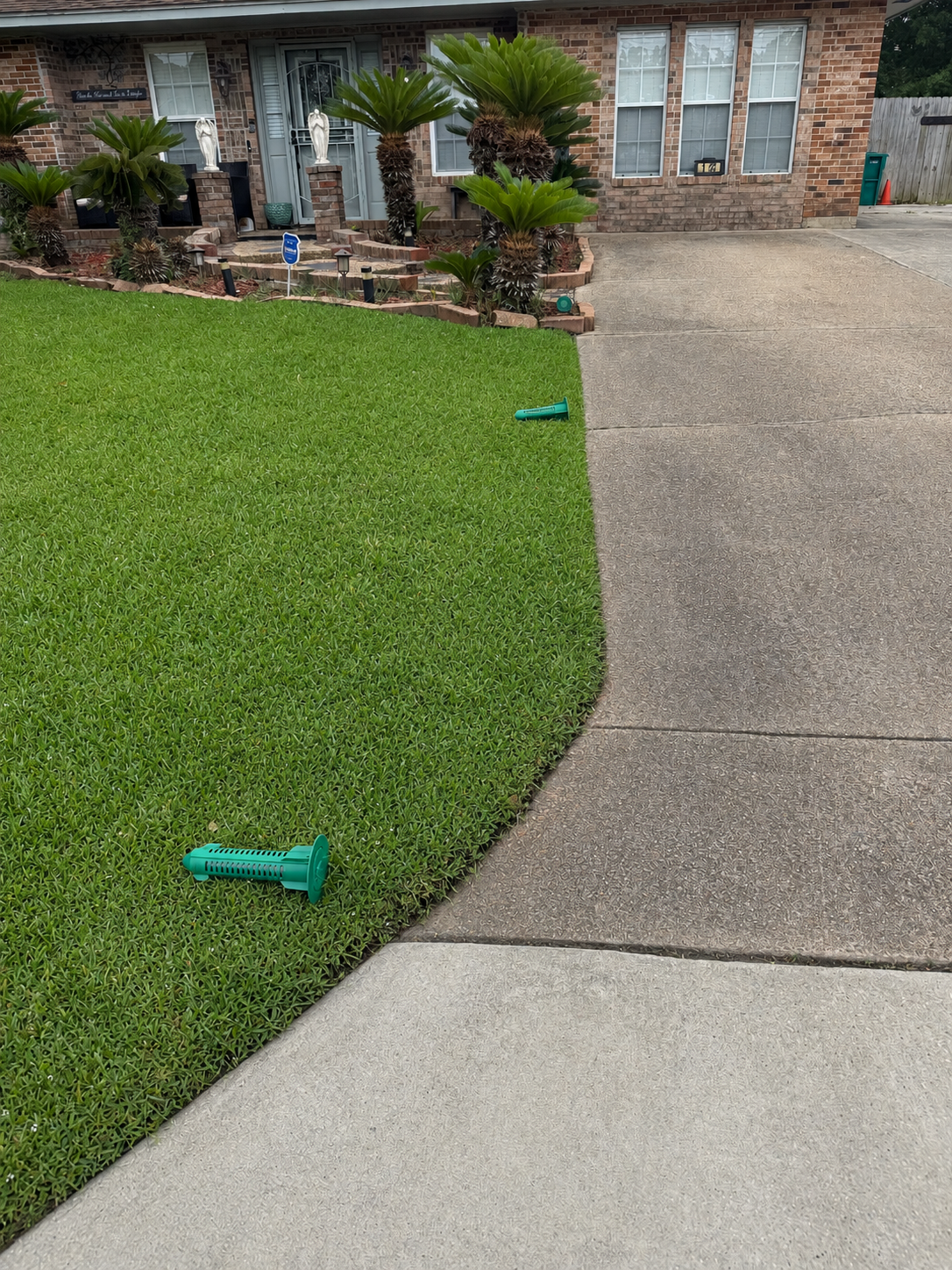
Concerned about the safety of termite treatments for your children and pets? This comprehensive guide is designed to address your worries and provide clarity. Understanding the termite treatment process and the products used can offer peace of mind. Here's what you need to know.
The Short Answer
Modern termite treatments are strategically designed to be applied in areas where children and pets typically do not frequent. These include sealed below-ground bait stations around the perimeter of your home or a trench along the foundation line. These treatments are not applied inside living spaces or across your yard. The bait systems work by blocking a biological process unique to insects, which mammals do not possess. However, no reputable company will claim that a pesticide is "safe" due to federal regulations, and understanding this is crucial.
Ready to Get Started?
Free quote • No obligation • Same-day service available
Why Can't Pest Control Companies Claim Termite Treatments Are "Safe"?
Legally, pest control companies cannot label pesticides as "safe" or "non-toxic." The Environmental Protection Agency (EPA) considers such claims misleading under the Federal Insecticide, Fungicide, and Rodenticide Act (FIFRA). The concern is that these claims might lead individuals to underestimate the product's toxicity and ignore the necessary precautions on the label (EPA pesticide labeling Q&A).
That's why Romex Pest Control describes its service as family-focused, with kid & pet precautions explained at every visit, instead of calling any product "safe." Companies that claim a termiticide is perfectly safe may not be adhering to federal guidelines.
What we can provide is precise and verifiable information: the active ingredient, its mechanism, application areas, and when it's safe for your household to re-enter the treated area.
What Is Actually in a Termite Bait Station?
Bait systems like Sentricon use an insect growth regulator, currently noviflumuron, which inhibits chitin synthesis. Chitin is a critical component of an insect's exoskeleton, and termites need to produce it each time they molt. Blocking this process prevents the colony from replacing its workers.
For households with pets and children, it's important to note: mammals do not produce chitin. Therefore, there is no equivalent process in humans or pets that the compound can interfere with. This is a mechanism, not a reassurance.
Dow AgroSciences received the 2000 Presidential Green Chemistry Challenge Award for Sentricon, highlighting its targeted approach that minimizes pesticide use (EPA Green Chemistry).
What Is Actually in a Liquid Termite Treatment?
Liquid barrier treatments often use fipronil, the active ingredient in Termidor. This non-repellent chemical is undetectable by termites, allowing them to carry it back to their colony, affecting nestmates through contact.
The treatment involves creating a trench approximately six inches deep along the foundation, with additional applications beneath slabs or footers as needed. It is not applied inside the house, on the lawn, or in garden beds.
Soil termiticides must demonstrate at least five years of efficacy to claim effectiveness, according to EPA's termiticide labeling policy (EPA PRN 96-7), which is why it's a single application rather than a repeated spray.
Sentricon vs. Termidor: Which Is Better for a House with Kids and Pets?
| Sentricon (Baiting) | Termidor / Liquid Barrier | |
|---|---|---|
| Active Ingredient | Noviflumuron (growth regulator) | Fipronil (non-repellent) |
| How It Works | Blocks chitin production; colony can't molt | Termites contact it, transfer it to nestmates |
| Where It Goes | Sealed stations in ground at perimeter | Trench along foundation, ~6" deep |
| Amount of Active Ingredient | Very small — grams, contained | Larger volume, diluted, in soil |
| Physical Access | Locked tamper-resistant housing, below grade | Buried in backfilled trench |
| Ongoing Visits | Yes — monitored and serviced | No; barrier stays in soil |
| Best When | You want minimal product and ongoing monitoring | You need fast knockdown of an active infestation |
Neither option is automatically the best choice for homes with kids and pets. Baiting uses less active ingredient, while a liquid barrier quickly addresses active infestations. Your decision should be based on your home's construction, soil type, and whether termites are already present, which an inspection will determine.
Where Exactly Does the Product End Up Relative to Where My Kids Play?
Bait stations are flush with the ground at the perimeter in tamper-resistant housings. Accessing the bait requires deliberate excavation and unlocking the station.
Liquid termiticide is applied in a trench against the foundation, then backfilled. It is not sprayed on grass, patios, play areas, or garden soil.
Neither treatment is applied inside your home.
Nothing is applied to the open lawn. Proposals to broadcast termiticide across your yard are not standard termite treatments.
The targeted nature of these treatments is possible because inspections precede application. Placement is based on where termites are entering your property, not a default pattern.
"Cracks in the foundation are a concern — termites can enter through an opening less than 1/32 of an inch wide. That's why a thorough termite inspection goes beyond checking the area where a homeowner notices a problem. We inspect the home and surrounding property to identify potential entry points, conducive conditions, and signs of activity. The goal is to find where the problem is coming from, not just treat the symptoms you can see."
— Cole Catalanotto, Termite Inspector, Romex Pest Control
A plan based on this kind of inspection places products where termites travel — the foundation line, specific penetrations, and the perimeter — rather than everywhere. This strategy minimizes the treatment footprint.
What Do I Do with My Kids and Pets on Treatment Day?
Keep children and pets away from the work area. The technician will be trenching, operating equipment, and handling concentrate, which is reason enough to maintain distance. For liquid applications, you'll receive a specific re-entry time once the treated soil area is clear.
This instruction comes from the product label, and label directions carry the force of law under FIFRA. Deviating from them is a federal violation. If your technician doesn't provide re-entry timing, ask. A good technician will inform you proactively.
What Should I Do After Termite Treatment?
Don't dig along the treated foundation line — trenching a flower bed there can breach a liquid barrier.
Don't move or mow over bait stations. They're on a deliberate spacing pattern; a missing station is a blind spot.
Keep mulch and soil below siding level — piling either against the house rebuilds the bridge the treatment just removed.
Keep the report. Documented treatment history matters if you sell.
Expect brief continued activity with baiting. Colony elimination is a process. Termites at a station mean it's working.
Five Questions Worth Asking Your Inspector
What is the active ingredient, and how does it work?
Where will the treatment be applied?
What precautions should be taken during and after treatment?
How long before it's safe to return to the treated area?
What follow-up services are included?
Did You Know?
Termites cause over $5 billion in property damage annually in the U.S. alone, according to the National Pest Management Association (NPMA).
Professional Tip
Consider scheduling regular inspections to catch termite activity early. Early detection can save you from costly repairs and extensive treatments.
For more information about our services in Texas, Louisiana, Oklahoma, and Mississippi, visit our Termite Treatment Services page.