
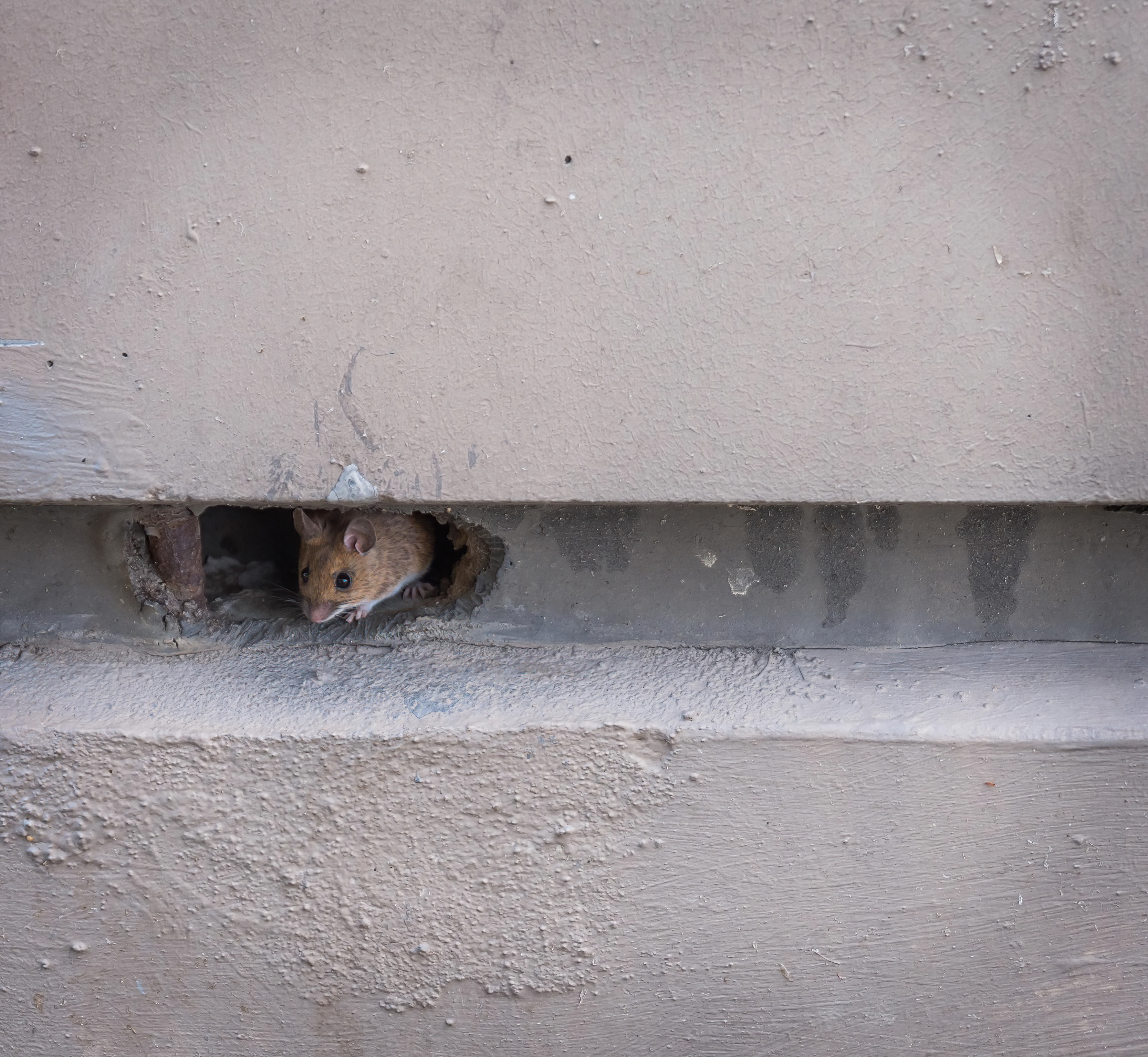
Hearing mice in the walls at night starts as a faint scratch behind the drywall, easy to dismiss until it comes back every night. Mice often settle into walls, attics, and cabinets long before you see one crossing the floor. Along the way, they contaminate stored food, damage insulation, and gnaw wiring. If you suspect an infestation, you need to know what you're dealing with, how the rodents entered, and why a few traps may not solve it. Here's how to recognize mouse activity and what professional removal typically involves.
Signs You Have Mice in Your Walls or Attic
Mice are most active after dark, so sound is often the first clue. Listen for light scratching, scampering, or gnawing inside walls, above ceilings, and beneath floors. Activity commonly increases shortly after the house becomes quiet.
Other warning signs include:
- Small, dark droppings resembling grains of rice
- Chewed food packages, cardboard, or electrical wiring
- Shredded insulation, paper, or fabric used for nests
- A stale, musky urine odor in enclosed areas
- Greasy rub marks along baseboards and wall openings
- Pets staring, pawing, or barking at cabinets and walls
Droppings near a pantry suggest mice are feeding nearby: sounds in the attic may indicate nesting around insulation or stored belongings. Avoid sweeping or vacuuming dry droppings, which can stir contaminated particles into the air. Ventilate the space and follow the CDC's guide to cleaning up after rodents instead.
Ready to Get Started?
Free quote • No obligation • Same-day service available
Is It Mice or Rats? How to Tell the Difference
Correct identification affects trap placement, exclusion work, and rodent control cost. Mouse droppings are generally small and pointed, while rat droppings are larger and thicker. Our mouse vs. rat identification guide covers more side-by-side differences. Mice also leave delicate gnaw marks and can travel through openings about 1/4 inch wide. Rats usually need a larger gap and may create heavier smears along established travel routes.
Sound offers another clue. Mice produce quick, light movement in walls or ceilings. Rats tend to sound heavier and may be heard beneath floors, in crawl spaces, or around garages.
Don't rely on size alone if you glimpse a rodent. A young rat can be mistaken for an adult mouse. For a closer look at the two rat species common in the South, see our roof rats vs. Norway rats guide. A technician can assess droppings, tracks, nesting material, and entry points. Homes near fields or wooded areas may also need field mice control from a technician familiar with regional species and their nesting behavior.
How Mice Get Into Your Walls (and Why It Happens in Fall)
Mice enter through surprisingly small construction gaps. Common access points include openings around plumbing and utility lines, worn door sweeps, foundation cracks, roofline gaps, garage-door corners, and weep holes, and unscreened vents. Once inside, wall voids provide sheltered routes between food, water, and nesting areas.
Fall brings a predictable increase in activity across Texas, Oklahoma, Louisiana, and Mississippi. As nights cool and outdoor food becomes less dependable, mice move toward warm buildings. Homes bordering fields, drainage corridors, wooded lots, and dense landscaping can face greater pressure.
Entry doesn't necessarily mean your home is dirty. A few crumbs, pet food left overnight, or condensation around a pipe may be enough to support mice. Structural access is usually the bigger issue. Sealing exterior openings before colder weather arrives helps interrupt this seasonal migration before nesting begins.
Why Traps Alone Don't Get Mice Out of Walls
A well-positioned snap trap can remove an individual mouse, but traps don't close the hole that allowed it inside. If exterior access remains open, new rodents can replace the ones you catch. Poor placement also matters: mice usually travel close to edges, behind appliances, and through protected wall routes, not across exposed rooms.
Successful control combines several measures:
- Identify active travel paths and nesting zones
- Place traps where children and pets can't reach them
- Remove accessible food and water
- Seal confirmed and potential entry points
- Monitor for continuing activity
Repellent sprays, ultrasonic devices, and strong-smelling home remedies aren't substitutes for exclusion. Careless indoor baiting can create another problem if a rodent dies in an inaccessible wall void, leaving a lingering dead rodent smell that's hard to reach. Professional rodent control addresses the infestation and the structural conditions sustaining it, rather than treating each sighting as an isolated event.
What Happens During a Romex Rodent Control Visit
A Romex visit begins with diagnosis. Your technician looks for droppings, gnawing, nesting material, rub marks, and likely entry points. Kitchens, attics, garages, utility rooms, rooflines, and exterior penetrations may all require inspection.
The next steps follow a practical sequence:
Protect: Targeted traps, secured bait stations where appropriate, and other rodent-control methods are selected for your home. Nonchemical measures are prioritized when they can deliver effective control, and placements account for children and pets.
Exclude: Your technician identifies the gaps, cracks, and holes mice are using. In the DFW Metroplex, Romex can seal them as part of rodent exclusion service. In other markets, your technician will show you which openings to seal and what materials hold up against chewing.
Monitor: Devices placed in key areas help show whether rodent activity is declining or shifting.
Report: You receive clear findings, details of the work completed, and practical recommendations. Follow-up service can then be adjusted based on evidence, not guesswork.
How Much Does Rodent Control Cost?
Rodent control pricing depends on your home, so Romex quotes after an inspection. The biggest factors are the size and layout of the property, how established the infestation is, where the nests are, how many visits it takes, and how much exclusion work is needed.
A straightforward problem confined to a garage may cost less than an established infestation spanning an attic, kitchen, and several wall voids. Difficult access, contaminated insulation, extensive repairs, emergency scheduling, or specialized cleanup can increase the total. Recurring protection plans may cost more initially but reduce future service expenses through monitoring and preventive treatment.
Ask what the quoted price includes: inspection, trapping, baiting, entry-point sealing, follow-up visits, cleanup, and guarantees aren't automatically bundled by every provider. Romex offers local technicians, free retreatments when covered pests return, and a 100% satisfaction guarantee subject to service terms. Early intervention is usually less expensive than waiting for mice to reproduce and spread.
How to Keep Mice From Coming Back
Long-term prevention starts outside. Walk around your home at ground level and again while looking toward the roofline. Seal openings around utility penetrations, repair damaged vent screens, replace worn weatherstripping, and install tight-fitting door sweeps. Steel or other rodent-resistant materials are preferable where mice could chew through softer filler.
Then reduce food and shelter:
- Store pantry goods and pet food in sealed containers
- Clean crumbs and grease beneath appliances
- Take trash out regularly and use lidded bins
- Fix plumbing leaks and address condensation
- Remove cardboard and clutter from garages and attics
- Trim vegetation away from exterior walls
- Move firewood and stored materials away from the house
Continue monitoring after the noise stops. Fresh droppings or new gnaw marks mean activity may remain. Inspect exclusion repairs periodically, especially before fall: shifting soil, weather, and routine utility work can reopen gaps that were once secure.
Did You Know?
Mice can produce up to 60 droppings per day, and a single female can have up to 10 litters per year. This rapid reproduction is why early intervention is crucial. Source: EPA
Professional Tip
Regularly check and maintain your home's exterior for any new gaps or openings, especially after severe weather. This proactive approach can significantly reduce the chances of an infestation.
Hearing Scratching in the Walls? Book a Romex Pest Control Rodent Inspection
Scratching in a wall doesn't tell you how many mice are present, or where they're getting in. A professional inspection replaces uncertainty with a clear plan. Romex technicians diagnose the species and activity, apply targeted control methods, and identify entry points to provide a comprehensive solution.
About Romex Pest Control
Romex Pest Control has been serving the Texas, Oklahoma, Louisiana, and Mississippi regions for over 20 years. Our technicians are certified by the National Pest Management Association and have received numerous awards for excellence in pest management. We pride ourselves on our commitment to customer satisfaction and our innovative approach to pest control.
Contact Us
For more information or to schedule a rodent inspection, visit our contact page or call us at 1-800-555-0199.