
Brown Recluse Spider
Loxosceles reclusa
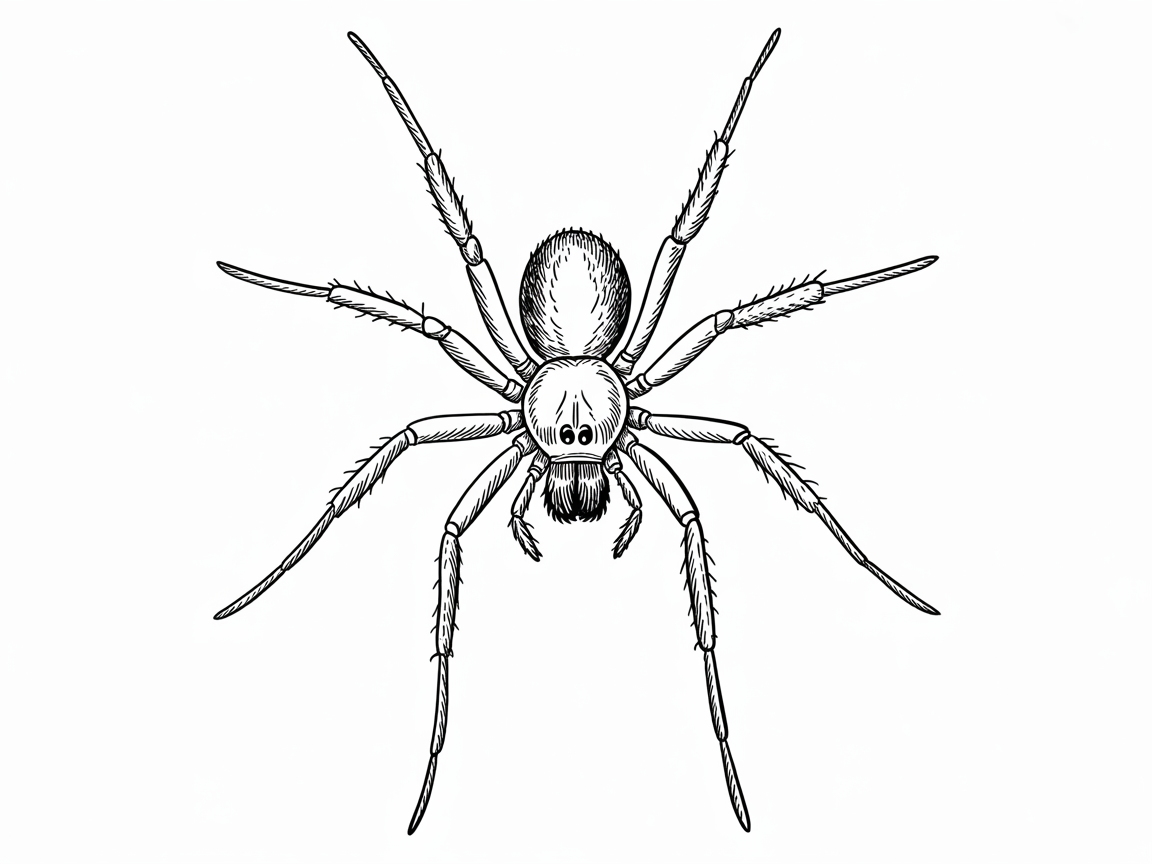
Scientific illustration for identification purposes
Overview
The brown recluse is one of the few medically significant spiders in North America. Its bite can cause necrotic wounds that require medical attention. Despite its reputation, the brown recluse is not aggressive and bites only when pressed against skin.
How to Identify
- Dark violin-shaped marking on cephalothorax (fiddle with neck pointing backward)
- Six eyes arranged in three pairs (most spiders have 8 eyes)
- Uniform light to dark brown color without stripes or patterns on legs
- Fine hairs on legs and body (no spines)
- About the size of a quarter with legs extended
Behavior
True to their name, brown recluses are shy and nocturnal. They spin irregular webs in undisturbed areas and venture out at night to hunt. They do not build webs to catch prey but actively hunt small insects. Bites typically occur when spiders are trapped against skin in clothing, bedding, or shoes.
Habitat
Found in dark, undisturbed areas including closets, attics, basements, storage boxes, behind furniture, and in seldom-used clothing or shoes. Outdoors, they hide under rocks, logs, and debris. They tolerate dry conditions better than most spiders.
Diet
Small insects including cockroaches, crickets, and other spiders. They are nocturnal hunters that do not rely on webs for prey capture.
Reproduction
Females produce 1-5 egg sacs per year, each containing 40-50 eggs. Spiderlings emerge in about 30 days and molt 7-8 times over the course of a year to reach adulthood. They can live 2-4 years.
Distribution in the Southern U.S.
Native range includes Texas, Oklahoma, and extends through the central U.S. Well-established in the South Central region. Rarely found in Louisiana or Mississippi Gulf Coast areas.
Regional Notes
Brown recluses are frequently misidentified - most "brown recluse bites" are actually other conditions. In Texas and Oklahoma, true populations exist indoors and outdoors. They often go unnoticed for years in infested buildings.
Signs of Infestation
- Irregular, loose webbing in undisturbed corners
- Spider sightings, especially at night
- Shed skins in storage areas
- Multiple spiders found in cardboard boxes or stored items
- Presence in seldom-used closets or storage rooms
Prevention Tips
- Shake out clothing and shoes before wearing, especially if stored
- Move beds away from walls and keep bedding off the floor
- Install door sweeps and seal cracks around windows
- Reduce clutter, especially cardboard boxes and paper
- Use plastic storage containers instead of cardboard
- Wear gloves when handling stored items or firewood
- Eliminate other insects that serve as food sources
When to Contact a Professional
Contact a pest control professional if you have confirmed brown recluse sightings or suspect an infestation. Professional treatment is recommended for any spider that poses a health risk. Seek immediate medical attention if bitten - take the spider if possible for identification.
Romex Pest Control provides professional brown recluse spider control services across Texas, Oklahoma, Louisiana, and Mississippi.
Learn about our brown recluse spider control servicesFrequently Asked Questions
How dangerous is a brown recluse bite?
Most brown recluse bites heal without serious complications, causing only minor redness. However, about 10% of bites develop necrotic lesions that destroy skin tissue, potentially requiring weeks or months to heal and sometimes surgery. Seek medical attention for any suspected bite, especially if the wound develops a blister or darkens.
How can I tell if a spider is a brown recluse?
Look for three key features: six eyes in three pairs (not eight), a violin-shaped marking on the cephalothorax with the neck pointing backward, and uniform brown coloring without stripes or patterns on the legs. Many brown spiders are mistakenly identified as brown recluses.
Can brown recluses infest my home?
Yes, brown recluses can establish large populations indoors, sometimes numbering in the hundreds within a single structure. They often go unnoticed for years because of their secretive habits. If you find one, there are likely more.
Latest Research & News
Recent developments about brown recluse spider
Get the latest news and research about brown recluse spider
Click "Load News" to fetch recent articles from scientific sources