
European Earwig
Forficula auricularia
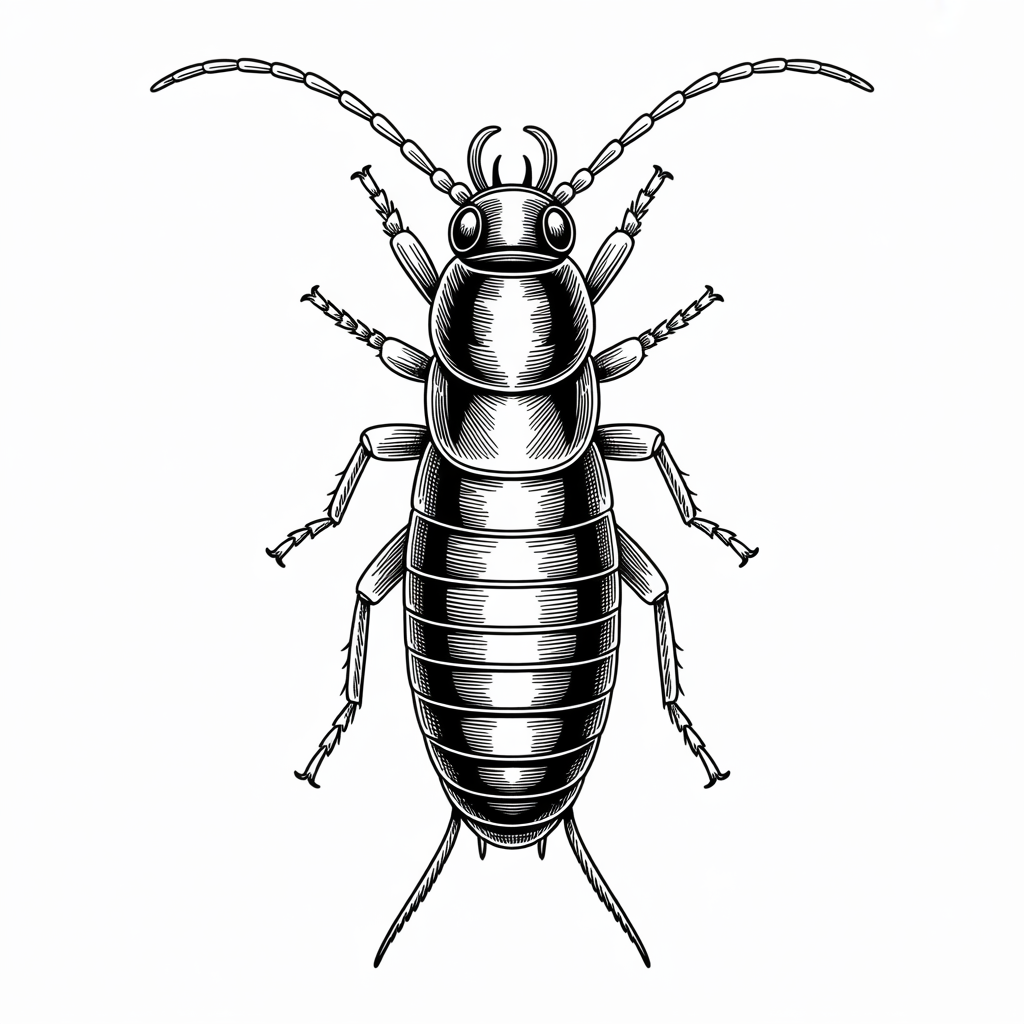
Scientific illustration for identification purposes
Overview
Earwigs are easily recognized by the pincer-like appendages (cerci) at the rear of their abdomen. Despite folklore, they do not crawl into human ears. They are primarily outdoor pests that occasionally enter homes seeking shelter.
How to Identify
- Elongated, flattened body
- Prominent forceps (pincers) at rear
- Reddish-brown color
- Short leathery forewings
- Long antennae
- Males have curved pincers, females have straight
Behavior
Earwigs are nocturnal and hide during the day in moist, dark places. They are attracted to lights at night and may enter homes in large numbers during hot, dry weather seeking moisture.
Habitat
Outdoors in mulch, leaf litter, under stones, and in garden debris. Enter homes through gaps around doors, windows, and foundations seeking moisture or escaping extreme heat.
Diet
Omnivorous - eat decaying plant matter, live plants, aphids, and other soft-bodied insects. Can damage garden plants and seedlings.
Reproduction
Females lay 30-50 eggs in underground burrows. Mothers guard eggs and young nymphs - unusual behavior for insects. One to two generations per year.
Distribution in the Southern U.S.
Common throughout Texas, Oklahoma, Louisiana, and Mississippi, especially in irrigated landscapes.
Regional Notes
Earwigs often invade Southern homes during hot, dry periods seeking moisture and cooler temperatures.
Signs of Infestation
- Multiple earwigs found indoors, especially in bathrooms
- Earwigs congregating under door mats or in mulch
- Damage to garden plants and seedlings
- Earwigs attracted to porch lights at night
- Dead earwigs near entry points
Prevention Tips
- Remove mulch and debris from foundation
- Fix moisture problems around foundation
- Seal gaps around doors and windows
- Replace white lights with yellow "bug lights"
- Keep vegetation trimmed away from house
- Use dehumidifiers in damp areas
When to Contact a Professional
Contact a professional for persistent indoor infestations or large outdoor populations near the foundation.
Romex Pest Control provides professional european earwig control services across Texas, Oklahoma, Louisiana, and Mississippi.
Learn about our european earwig control servicesFrequently Asked Questions
Do earwigs crawl in ears?
No, this is a myth. Earwigs have no interest in human ears. They prefer dark, moist hiding places like mulch and leaf litter, not human bodies.
Can earwigs pinch?
Yes, earwigs can pinch with their pincers if handled, but the pinch is not dangerous and rarely breaks the skin. They use their pincers for defense and capturing prey.
Latest Research & News
Recent developments about european earwig
Get the latest news and research about european earwig
Click "Load News" to fetch recent articles from scientific sources