
House Fly
Musca domestica
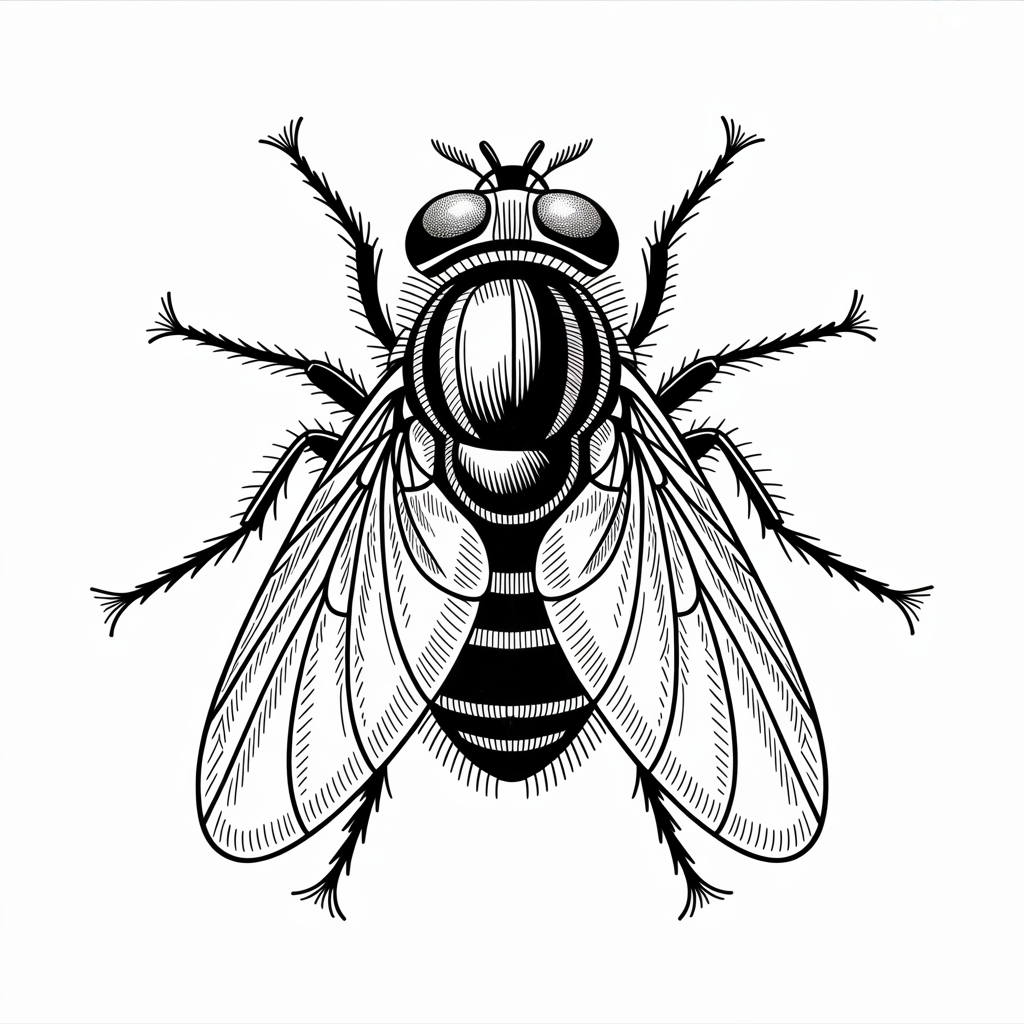
Scientific illustration for identification purposes
Overview
House flies are the most common flies associated with humans and are significant vectors of disease. They cannot bite but spread pathogens by landing on food after visiting garbage, feces, and decaying matter.
How to Identify
- Medium size - about 1/4 inch
- Grayish body with four dark stripes on thorax
- Large reddish-brown compound eyes
- Single pair of membranous wings
- Sponging mouthparts (cannot bite)
Behavior
House flies are active during daylight hours and rest at night. They regurgitate digestive juices on food before feeding and defecate frequently. They can transmit over 100 different pathogens.
Habitat
Found wherever humans live. Breed in garbage, animal waste, rotting vegetables, and decaying organic matter. Adults frequent kitchens, food prep areas, and garbage areas.
Diet
Feed on a wide range of foods including human food, animal waste, garbage, and decaying matter. They can only consume liquids and liquefy solid food by regurgitation.
Reproduction
Females lay 75-150 eggs at a time in batches. Complete development from egg to adult takes 6-20 days depending on temperature. A single female can produce 500+ eggs in her lifetime.
Distribution in the Southern U.S.
Abundant throughout Texas, Oklahoma, Louisiana, and Mississippi year-round in warm areas.
Regional Notes
The warm Southern climate allows house fly populations to remain active much longer than in northern states. They can breed continuously in warm areas.
Signs of Infestation
- Multiple flies seen indoors, especially near food
- Flies congregating on windows trying to exit
- Maggots found in garbage or decaying matter
- Fly specks (feces) on walls and surfaces
- Breeding sites with foul odors
Prevention Tips
- Keep garbage in sealed containers with tight lids
- Clean up pet waste promptly
- Install screens on windows and doors
- Keep kitchen clean and food covered
- Clean garbage cans regularly
- Eliminate breeding sites in yard
When to Contact a Professional
Contact a professional for persistent fly problems, especially in commercial settings, or when you cannot locate the breeding source.
Romex Pest Control provides professional house fly control services across Texas, Oklahoma, Louisiana, and Mississippi.
Learn about our house fly control servicesFrequently Asked Questions
Can house flies bite?
No, house flies have sponging mouthparts and cannot bite. However, stable flies look similar and do bite. House flies spread disease by contaminating food, not through biting.
How do house flies spread disease?
House flies land on feces, garbage, and decaying matter, picking up pathogens on their bodies. When they land on food, they regurgitate digestive juices and defecate, transferring bacteria and other pathogens.
Latest Research & News
Recent developments about house fly
Get the latest news and research about house fly
Click "Load News" to fetch recent articles from scientific sources