
Fruit Fly
Drosophila melanogaster
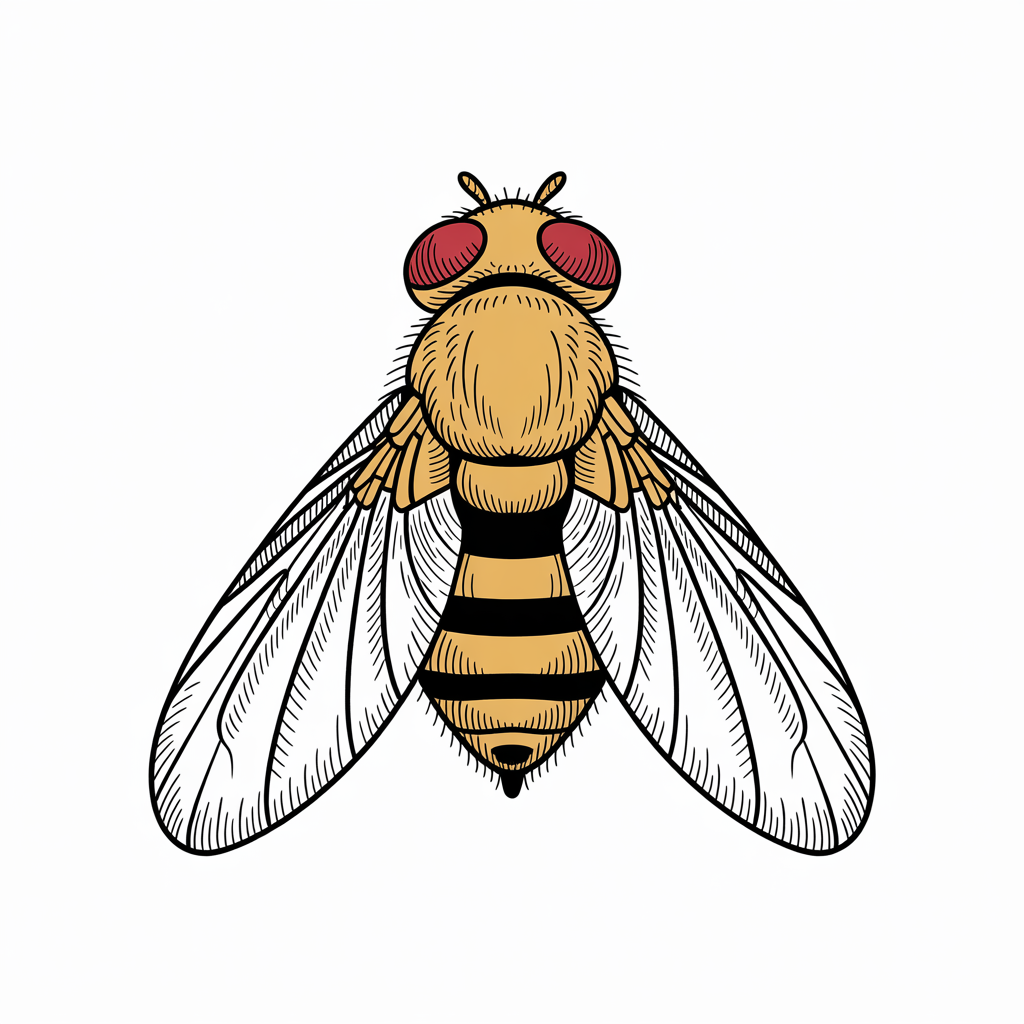
Scientific illustration for identification purposes
Overview
Fruit flies are tiny flies attracted to ripening and fermenting fruits and vegetables. They are a common nuisance in kitchens, particularly in late summer and fall. Their rapid reproduction can lead to large infestations quickly.
How to Identify
- Very small - about 1/8 inch
- Tan to brownish body
- Distinctive red eyes
- Clear wings with visible venation
- Hover around fruit and drain areas
Behavior
Fruit flies are attracted to fermenting organic matter, especially fruit. They can detect ripening fruit from a considerable distance. They reproduce extremely rapidly - a single female can lay 500 eggs.
Habitat
Found wherever fruit and vegetables are stored. Breed in overripe fruit, vegetable scraps, drains, garbage disposals, mop heads, and any area with fermenting organic matter.
Diet
Feed on yeasts that grow on fermenting fruits and vegetables. Also attracted to beer, wine, vinegar, and other fermented substances.
Reproduction
Females lay up to 500 eggs in their lifetime. Development from egg to adult takes only 8-10 days. Populations can explode rapidly.
Distribution in the Southern U.S.
Common throughout Texas, Oklahoma, Louisiana, and Mississippi, with populations peaking in late summer.
Regional Notes
The warm Southern climate extends the fruit fly season. They can breed year-round in heated buildings.
Signs of Infestation
- Tiny flies hovering around fruit bowls
- Flies near garbage cans and compost
- Flies in kitchen drain areas
- Increasing fly numbers over days
- Flies attracted to wine or beer
Prevention Tips
- Store ripe fruit in refrigerator
- Discard overripe produce promptly
- Clean drains and garbage disposals regularly
- Keep compost covered and away from house
- Rinse recycling containers before storing
- Use tight-fitting lids on garbage cans
When to Contact a Professional
Fruit flies rarely require professional treatment. Contact a professional if infestations persist after eliminating all food sources and cleaning potential breeding sites.
Romex Pest Control provides professional fruit fly control services across Texas, Oklahoma, Louisiana, and Mississippi.
Learn about our fruit fly control servicesFrequently Asked Questions
Where do fruit flies come from?
Fruit flies often enter homes on produce from the grocery store. Their eggs are laid on the surface of ripening fruit. They can also fly in through open windows and doors.
How do I get rid of fruit flies fast?
Remove all overripe produce, clean drains with enzyme cleaner, and set vinegar traps (apple cider vinegar with dish soap). The key is eliminating breeding sites - they cannot reproduce without fermenting organic matter.
Latest Research & News
Recent developments about fruit fly
Get the latest news and research about fruit fly
Click "Load News" to fetch recent articles from scientific sources