
Jumping Spider
Salticidae family
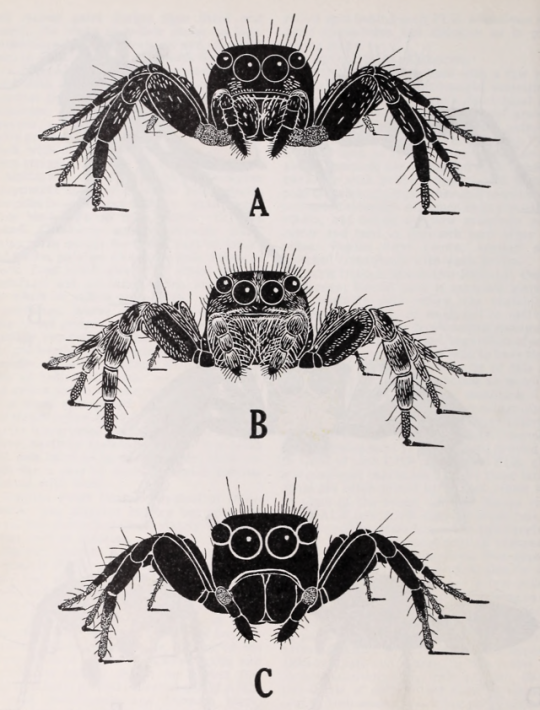
Scientific illustration for identification purposes
Overview
Jumping spiders are compact, active spiders known for their excellent vision and jumping ability. They have large front-facing eyes and are curious, often appearing to watch observers. They are harmless and help control insect pests.
How to Identify
- Compact, fuzzy body
- Large front-facing eyes
- Excellent jumpers
- Often colorful markings
- Active during day
Behavior
Jumping spiders are diurnal hunters with excellent vision. They stalk and jump on prey rather than building webs. They are curious and may appear to watch nearby movement.
Habitat
Found on walls, windows, fences, and vegetation. Enter homes through gaps and are often seen on sunny windows hunting.
Diet
Hunt and capture small insects and other spiders. Use jumping to pounce on prey.
Reproduction
Males perform elaborate courtship displays. Females build silken retreats for egg sacs.
Distribution in the Southern U.S.
Very common throughout Texas, Oklahoma, Louisiana, and Mississippi.
Regional Notes
Many jumping spider species are found in the South. They are common around homes and gardens and are beneficial predators.
Signs of Infestation
- Small, fuzzy spiders jumping on walls or windows
- Spiders appearing to watch you
- Active spiders during daytime
- No webs (they are hunters)
- Spiders sunning on window sills
Prevention Tips
- Seal gaps around windows and doors
- Keep screens in good repair
- Control insect populations
- Vacuum regularly
- Tolerate them - they are beneficial
When to Contact a Professional
Professional treatment is rarely needed for jumping spiders. They are beneficial and harmless.
Romex Pest Control provides professional jumping spider control services across Texas, Oklahoma, Louisiana, and Mississippi.
Learn about our jumping spider control servicesFrequently Asked Questions
Why does the spider seem to be watching me?
Jumping spiders have excellent vision with large front-facing eyes. They are curious and do observe movement around them. This is normal behavior for these visual hunters.
Can jumping spiders bite?
Jumping spiders can bite but rarely do. They are not aggressive. If handled roughly, a bite would cause only mild, localized pain similar to a mosquito bite.
Latest Research & News
Recent developments about jumping spider
Get the latest news and research about jumping spider
Click "Load News" to fetch recent articles from scientific sources