
Mosquito
Culicidae family (multiple species)
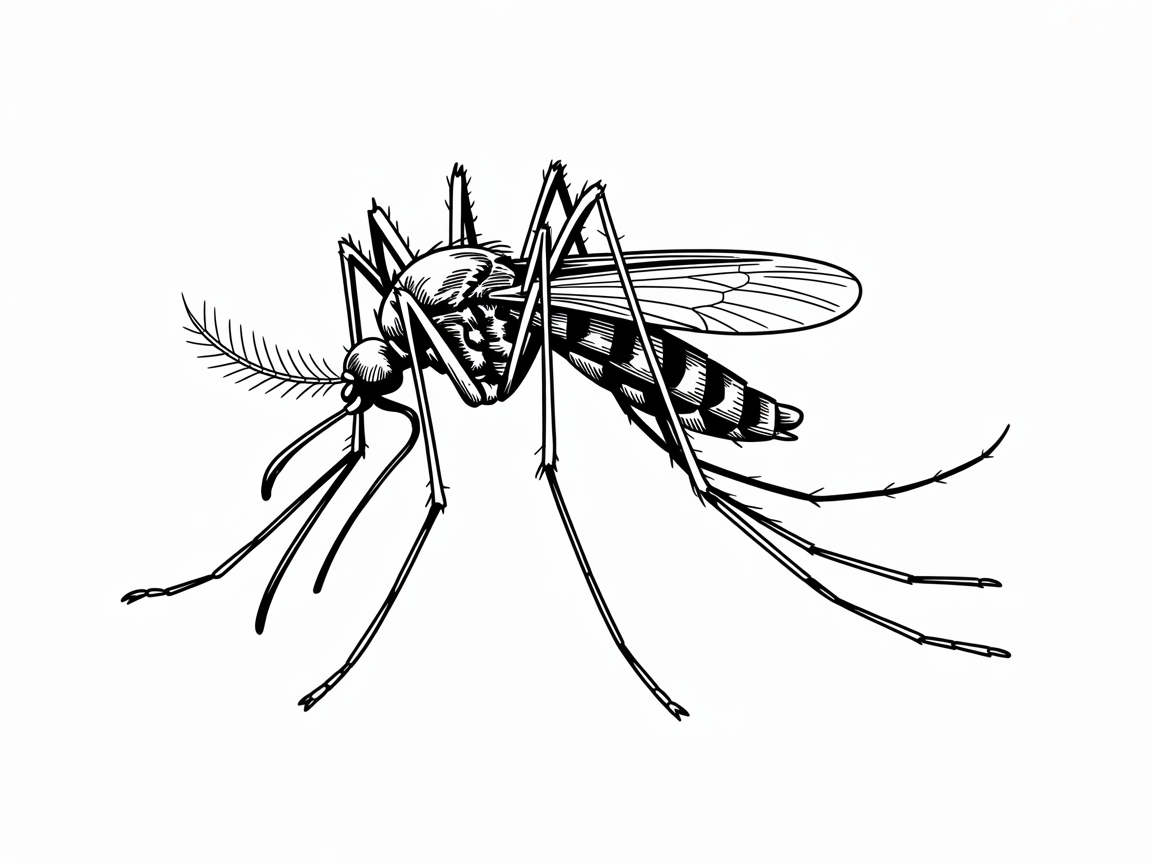
Scientific illustration for identification purposes
Overview
Mosquitoes are small flying insects that are among the deadliest animals on Earth, transmitting diseases that kill over 700,000 people worldwide annually. In the Southern United States, several species are of concern including the Asian tiger mosquito (Aedes albopictus), Southern house mosquito (Culex quinquefasciatus), and Yellow fever mosquito (Aedes aegypti).
How to Identify
- Slender body with long legs
- Long, thin proboscis (mouthpart) for piercing and sucking
- Single pair of wings with scales along veins
- Feathery antennae (bushier in males)
- Asian tiger mosquito: black with white stripes on legs and body
- Southern house mosquito: brown with lighter bands on abdomen
Behavior
Only female mosquitoes bite, requiring blood proteins for egg development. They locate hosts by detecting carbon dioxide, body heat, and body odors. Most species are most active at dawn and dusk, though the Asian tiger mosquito is a daytime biter. Males feed only on nectar.
Habitat
Mosquitoes require standing water to breed. Different species prefer different water sources: containers, tree holes, ditches, marshes, or even bottle caps. Larvae (wrigglers) live in water for 7-14 days before emerging as flying adults.
Diet
Both sexes feed on nectar and plant juices. Females require blood meals for egg production and may bite humans, birds, mammals, reptiles, or amphibians depending on species preferences.
Reproduction
Females lay 100-300 eggs at a time, directly on water (Culex) or in areas that will flood (Aedes). Eggs can survive dry conditions for months and hatch when flooded. Complete development from egg to adult takes 7-14 days in warm weather.
Distribution in the Southern U.S.
Over 80 species found in the Southern states. The warm, humid climate with frequent rainfall creates ideal breeding conditions. Urban areas with poor drainage and rural areas with standing water are both affected.
Regional Notes
Southern states see extended mosquito seasons compared to northern regions. West Nile virus is endemic in Texas and Oklahoma. Isolated cases of dengue and Zika have occurred in Texas. Standing water management is critical due to frequent rainfall.
Signs of Infestation
- Frequent biting when outdoors
- Mosquitoes resting on walls or screens
- Buzzing sounds near ears at night
- Larvae (wrigglers) visible in standing water
- Pupae (tumblers) in water sources
Prevention Tips
- Eliminate standing water weekly (bird baths, plant saucers, buckets)
- Clean gutters and downspouts regularly
- Fix leaky outdoor faucets and AC drip lines
- Store containers upside down or covered
- Maintain swimming pools and treat ornamental ponds
- Install or repair window and door screens
- Use fans on porches and patios
- Wear long sleeves and use tested and approved repellents when outdoors
When to Contact a Professional
Consider professional mosquito control if you spend significant time outdoors, have infants or elderly family members, live near water features, or want season-long protection. Professional treatments create barrier protection and target breeding sites more effectively than DIY methods.
Romex Pest Control provides professional mosquito control services across Texas, Oklahoma, Louisiana, and Mississippi.
Learn about our mosquito control servicesFrequently Asked Questions
What diseases do mosquitoes transmit in the Southern U.S.?
In the Southern states, mosquitoes can transmit West Nile virus (most common), Eastern equine encephalitis, St. Louis encephalitis, and La Crosse encephalitis. The Aedes species can also transmit Zika, dengue, and chikungunya, though local transmission is rare.
Why do mosquitoes seem to bite some people more than others?
Mosquitoes are attracted to certain body chemicals. People who produce more carbon dioxide, lactic acid, or have Type O blood may be more attractive to mosquitoes. Drinking alcohol, exercising, and pregnancy can also increase attractiveness. Dark clothing and certain fragrances may also draw mosquitoes.
Do bug zappers work for mosquitoes?
Bug zappers are largely ineffective for mosquitoes. Studies show that less than 5% of insects killed by zappers are mosquitoes or biting flies. Mosquitoes are not attracted to UV light but rather to carbon dioxide and body odors. Zappers may actually increase mosquito problems by killing their natural predators.
Latest Research & News
Recent developments about mosquito
Get the latest news and research about mosquito
Click "Load News" to fetch recent articles from scientific sources