
Indian Meal Moth
Plodia interpunctella
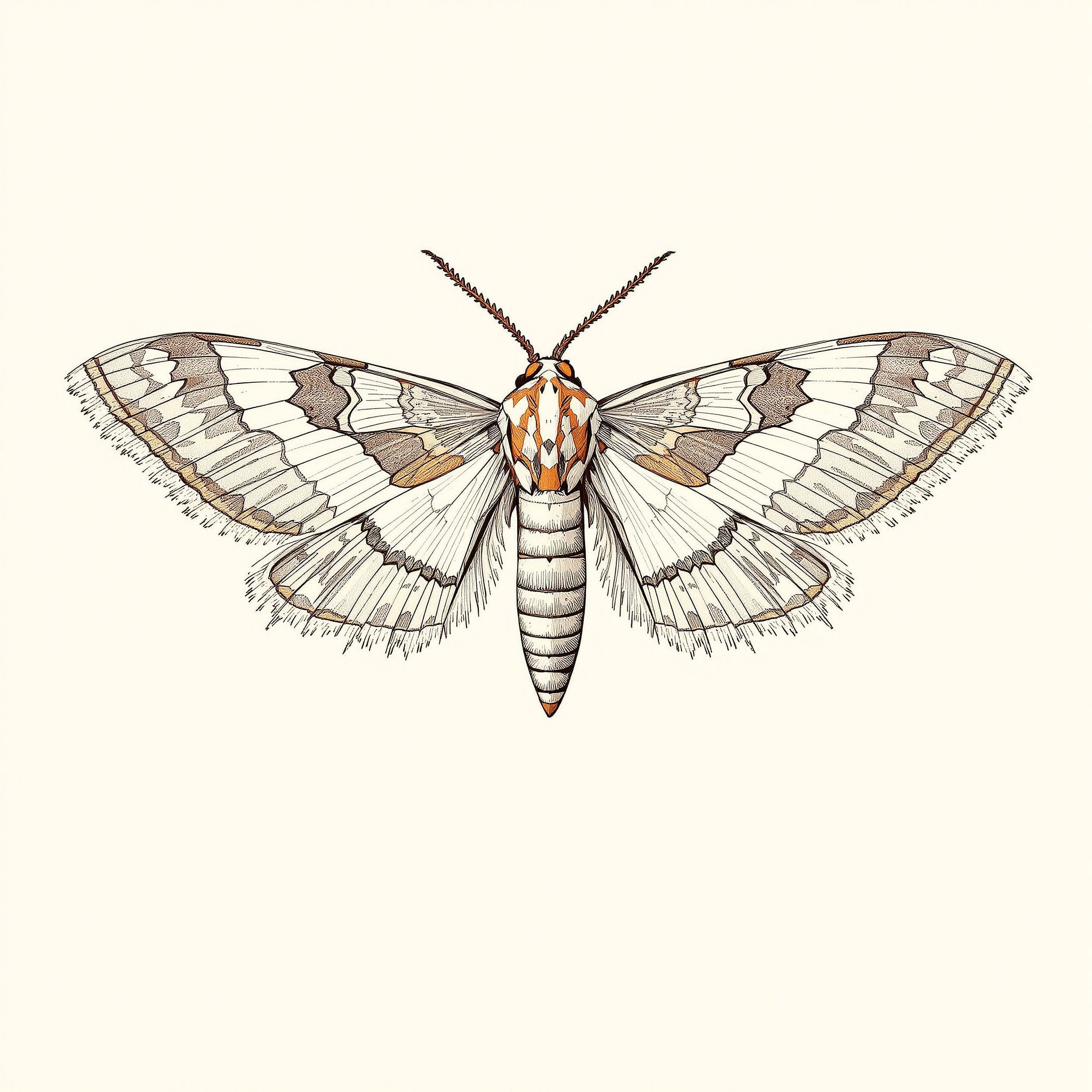
Scientific illustration for identification purposes
Overview
Indian meal moths are the most common stored product pest in homes. They infest grains, cereals, nuts, dried fruit, pet food, and other dry goods. The distinctive two-toned wings help identify them.
How to Identify
- Wingspan about 1/2 to 5/8 inch
- Gray inner wing portion, copper/bronze outer portion
- Distinctive two-toned wing pattern
- Larvae are cream-colored with brown heads
- Webbing in infested products
Behavior
Adult moths fly at night and are attracted to lights. Larvae spin silken webbing in food products. Infestations often originate from products brought home from stores.
Habitat
Found in pantries, cabinets, and wherever dry foods are stored. Larvae can crawl considerable distances to pupate, appearing on walls and ceilings.
Diet
Larvae feed on grains, cereals, flour, cornmeal, rice, nuts, dried fruit, pet food, bird seed, and similar dry products.
Reproduction
Females lay 100-400 eggs on or near food. Development from egg to adult takes 4-6 weeks in warm conditions. Multiple generations per year.
Distribution in the Southern U.S.
Common throughout Texas, Oklahoma, Louisiana, and Mississippi in homes and food storage facilities.
Regional Notes
Warm Southern temperatures accelerate pantry moth development. Infestations can establish quickly in hot pantries.
Signs of Infestation
- Moths flying in kitchen, especially at night
- Webbing in dry food products
- Larvae crawling on walls or ceilings
- Clumping in grain products
- Moths emerging from food containers
Prevention Tips
- Inspect groceries before storing
- Store dry goods in airtight containers
- Use older products before newer ones
- Keep pantry clean and crumb-free
- Freeze susceptible items for 72 hours after purchase
- Do not buy damaged packages
When to Contact a Professional
Professional treatment is rarely needed. Contact a professional only if you cannot locate and eliminate the infested source after thorough inspection.
Romex Pest Control provides professional indian meal moth control services across Texas, Oklahoma, Louisiana, and Mississippi.
Learn about our indian meal moth control servicesFrequently Asked Questions
How did pantry moths get in my sealed container?
Infestations often start from products brought home already infested. Eggs and small larvae are too small to see. The moths were inside the product before you stored it.
Can I still eat food with pantry moths?
While not harmful if accidentally consumed, infested food should be discarded. It is contaminated with eggs, larvae, webbing, and feces.
Latest Research & News
Recent developments about indian meal moth
Get the latest news and research about indian meal moth
Click "Load News" to fetch recent articles from scientific sources