
Paper Wasp
Polistes species
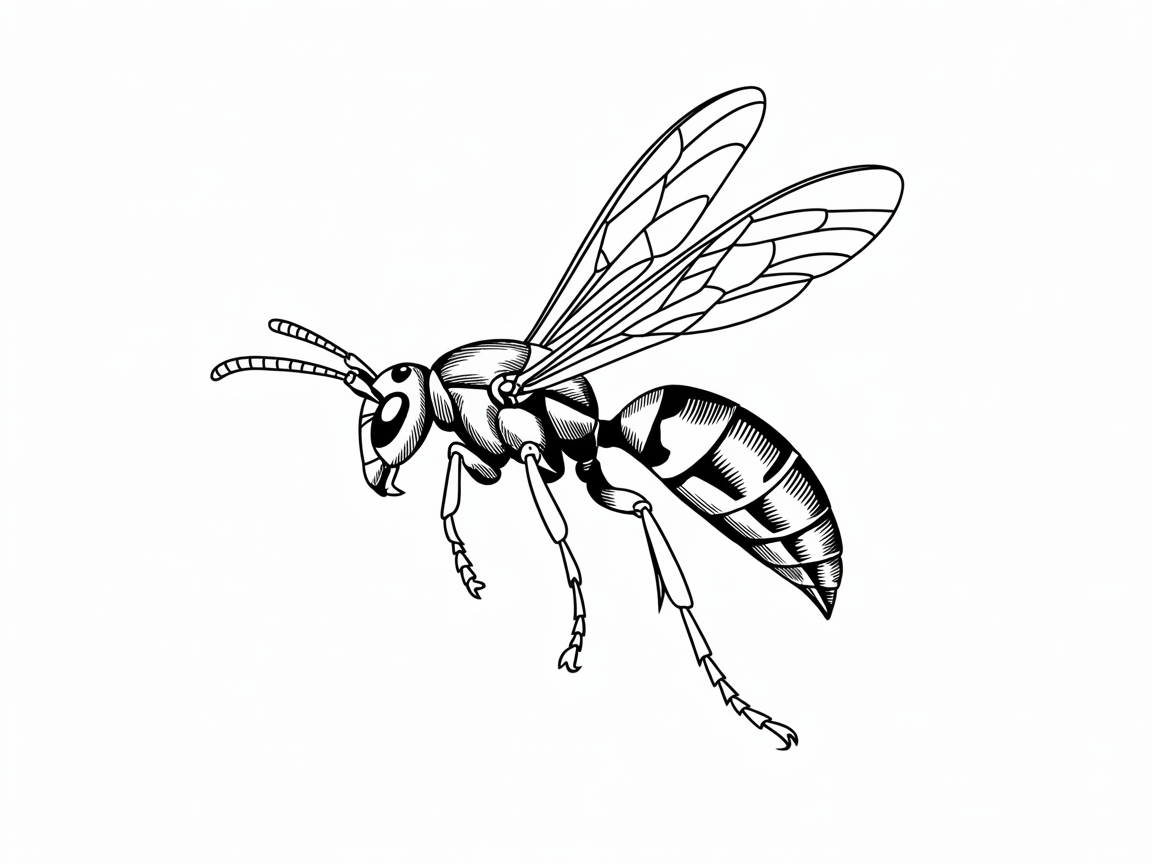
Scientific illustration for identification purposes
Overview
Paper wasps are social insects that build distinctive open-faced, umbrella-shaped nests from chewed wood fiber mixed with saliva. While generally less aggressive than yellowjackets, they will defend their nests if threatened. Several species are common in the South, including the red paper wasp (Polistes carolina) and the common paper wasp (Polistes exclamans).
How to Identify
- Slender body with narrow waist (petiole)
- Long legs that dangle during flight
- Wings fold lengthwise when at rest
- Brown, reddish-brown, or dark brown with yellow markings
- Smooth, not fuzzy (unlike bees)
- Nests: open-celled, umbrella-shaped, often found under eaves
Behavior
Paper wasps are semi-social, with small colonies of 20-75 adults. They are not as aggressive as yellowjackets and typically only sting when the nest is directly threatened. They are beneficial predators of caterpillars and other garden pests. Workers forage for protein (insects) to feed larvae and nectar/water for adults.
Habitat
Nests are built in protected locations including under eaves, in attics, behind shutters, inside grills, in play equipment, and in dense shrubs. They prefer locations with overhead protection from rain. Each colony builds a new nest each year; old nests are not reused.
Diet
Adults feed on nectar, honeydew, and fruit juices. Larvae are fed pre-chewed caterpillars, spiders, and other soft-bodied insects. This predatory behavior makes paper wasps beneficial for garden pest control.
Reproduction
Mated queens overwinter and emerge in spring to build new nests. The queen lays eggs in individual cells; larvae develop in 2-3 weeks. Only new queens and males are produced in fall. After mating, new queens seek shelter to overwinter while the rest of the colony dies.
Distribution in the Southern U.S.
Multiple species found throughout all Southern states. Very common in residential areas. The red paper wasp is particularly prevalent in the South.
Regional Notes
The warm Southern climate allows for longer nesting seasons and larger colony sizes compared to northern regions. Paper wasps are active from early spring through late fall. They may attempt to overwinter in structures, leading to indoor encounters.
Signs of Infestation
- Paper nests under eaves, porches, or in trees
- Wasps entering and exiting from a fixed location
- Wasps hovering around food or drinks outdoors
- Multiple stings when disturbing a nest
- Wasps found indoors (may indicate overwintering queens)
Prevention Tips
- Inspect property in early spring for new nest construction
- Remove small nests (dime-sized) before they grow
- Paint or stain exposed wood surfaces
- Seal gaps around windows, doors, and roof lines
- Keep outdoor eating areas clean of food residues
- Cover sweet drinks and food when outdoors
- Avoid wearing bright colors and floral patterns outdoors
- Dont swat at wasps - quick movements provoke stings
When to Contact a Professional
Contact a pest professional if nests are large (bigger than a golf ball), located in high-traffic areas, near entrances, or if any family members are allergic to stings. Professional removal is recommended for nests in walls, attics, or other difficult-to-reach locations.
Romex Pest Control provides professional paper wasp control services across Texas, Oklahoma, Louisiana, and Mississippi.
Learn about our paper wasp control servicesFrequently Asked Questions
Are paper wasps aggressive?
Paper wasps are generally docile and less aggressive than yellowjackets. They typically only sting when their nest is directly disturbed or when trapped against the body. However, near their nest, they will defend it vigorously. Always observe from a safe distance and avoid sudden movements near nests.
Are paper wasps beneficial?
Yes, paper wasps are important predators of garden pests like caterpillars, beetle larvae, and flies. A single colony can capture thousands of pest insects during the summer. If nests are located away from human activity, they can be left alone to provide natural pest control.
Do paper wasps reuse their nests?
No, paper wasp colonies build new nests each year. Old nests will not be reused, though new nests may be built in the same location if its favorable. Removing old nests does not prevent future nesting, but sealing entry points and treating with residual products can deter nest building.
Latest Research & News
Recent developments about paper wasp
Get the latest news and research about paper wasp
Click "Load News" to fetch recent articles from scientific sources