
Bald-Faced Hornet
Dolichovespula maculata
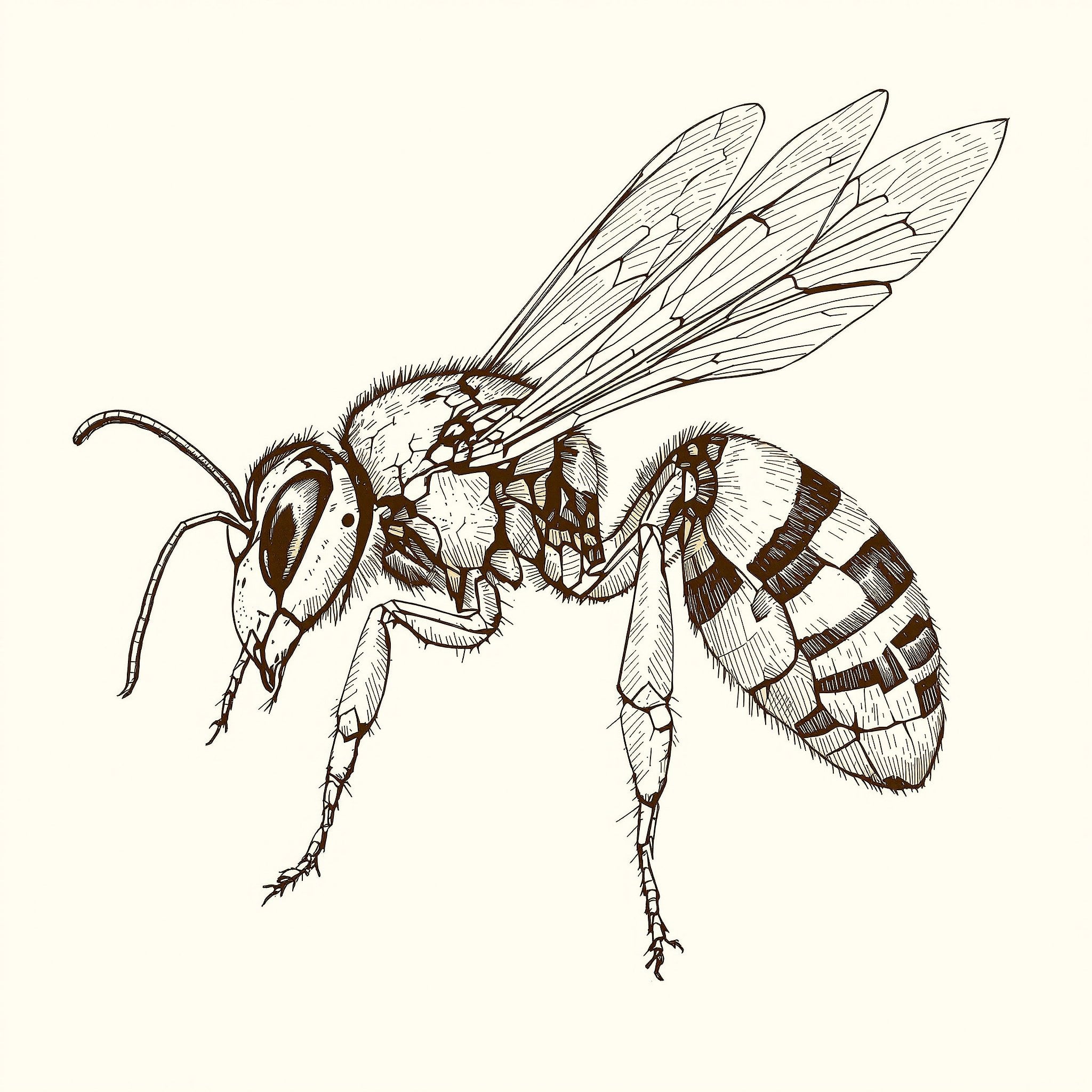
Scientific illustration for identification purposes
Overview
Bald-faced hornets are large, aggressive wasps that build distinctive paper nests in trees and shrubs. Despite their name, they are technically yellowjackets, not true hornets. They are very defensive of their nests and can sting repeatedly.
How to Identify
- Large size - 1/2 to 3/4 inch
- Black body with white face pattern
- White markings on thorax and abdomen
- Large, gray, football-shaped paper nests
- Nests hang from trees or building overhangs
Behavior
Bald-faced hornets are extremely defensive of their nests and will attack in large numbers if disturbed. They can spray venom into eyes of nest intruders. They are beneficial predators of other insects.
Habitat
Build exposed, enclosed paper nests in trees, shrubs, and under building overhangs. Nests can be as large as a basketball or football.
Diet
Adults feed on nectar and fruit juices. They hunt other insects, including flies, yellow jackets, and caterpillars, to feed larvae.
Reproduction
Annual colonies started by queens in spring. Nests grow through summer, producing new queens and males in fall. Old nests are not reused.
Distribution in the Southern U.S.
Found throughout Texas, Oklahoma, Louisiana, and Mississippi.
Regional Notes
Nests are often not noticed until leaves fall in autumn, revealing large paper structures. By this time, colonies are declining and less dangerous.
Signs of Infestation
- Large gray paper nest in tree or under overhang
- Black and white wasps flying to and from nest
- Aggressive wasps when near nest area
- Multiple wasps patrolling an area
- Nest growing larger through summer
Prevention Tips
- Inspect property for early nest building in spring
- Remove small nests (golf ball size) when discovered
- Keep distance from established nests
- Do not attempt to remove large nests yourself
- Be aware of nests when pruning trees
When to Contact a Professional
Contact a professional for all bald-faced hornet nest removal. These are extremely dangerous wasps. Never attempt DIY removal of established nests.
Romex Pest Control provides professional bald-faced hornet control services across Texas, Oklahoma, Louisiana, and Mississippi.
Learn about our bald-faced hornet control servicesFrequently Asked Questions
Are bald-faced hornets true hornets?
No, despite their name, bald-faced hornets are technically a type of yellowjacket. The only true hornet in North America is the European hornet.
Will the nest be reused next year?
No, bald-faced hornet nests are not reused. New queens start new nests each spring. Old nests gradually deteriorate over winter. However, new nests may be built in the same location if it is favorable.
Latest Research & News
Recent developments about bald-faced hornet
Get the latest news and research about bald-faced hornet
Click "Load News" to fetch recent articles from scientific sources