
Yellow Jacket
Vespula species
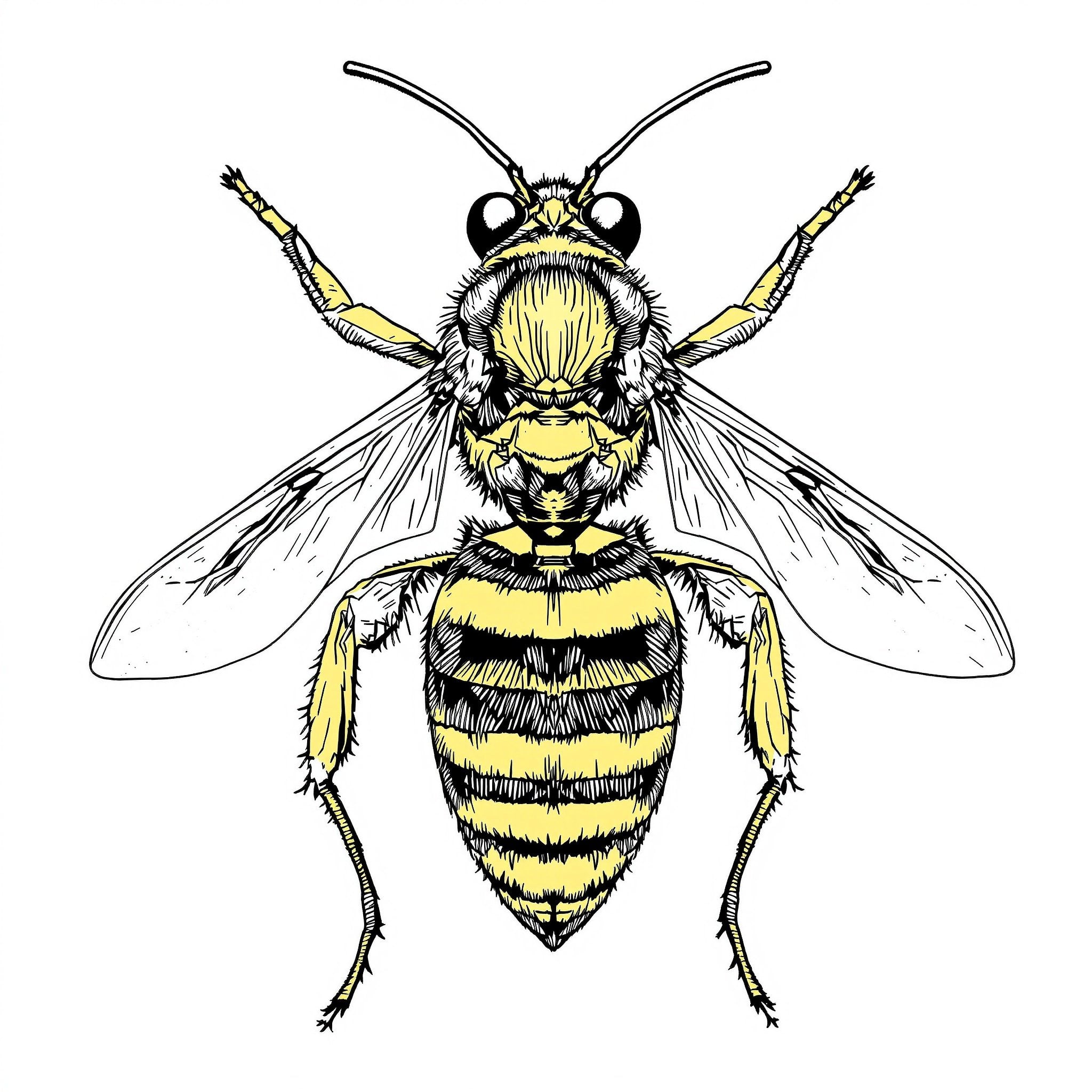
Scientific illustration for identification purposes
Overview
Yellow jackets are aggressive wasps that nest in the ground or in wall voids. They become especially aggressive in late summer when colonies are large and food becomes scarce. They can sting multiple times and are a significant hazard at outdoor events.
How to Identify
- Medium size - 3/8 to 5/8 inch
- Black and bright yellow stripes
- Smooth, shiny body (not fuzzy like bees)
- Narrow waist
- Tuck legs close to body when flying
Behavior
Yellow jackets are highly defensive of their nests and will sting repeatedly. They are attracted to sugary foods and meats, making them pests at picnics and outdoor dining. Colonies become more aggressive in fall.
Habitat
Nest in underground cavities, wall voids, attics, and protected areas. Underground nests may have entrance holes the size of a nickel. Colonies can contain thousands of workers.
Diet
Adults feed on sugars including nectar, fruit, and human foods. They hunt insects to feed larvae. They are attracted to sweet drinks, ripe fruit, and garbage.
Reproduction
Colonies are annual. A fertilized queen starts a new colony in spring. Colonies grow through summer, producing new queens and males in fall. Only new queens survive winter.
Distribution in the Southern U.S.
Common throughout Texas, Oklahoma, Louisiana, and Mississippi.
Regional Notes
In the South, yellow jacket colonies may survive mild winters and become especially large. Fall populations can be aggressive as natural food sources decline.
Signs of Infestation
- Wasps flying in and out of ground holes
- Wasps entering wall or eave gaps
- Aggressive wasps at outdoor eating areas
- Wasps attracted to garbage cans
- Increased wasp activity in late summer/fall
Prevention Tips
- Keep garbage in sealed containers
- Clean up food and drinks at outdoor events
- Cover sugary drinks outdoors
- Fill abandoned rodent burrows
- Seal gaps around the home
- Do not swat - this releases alarm pheromones
When to Contact a Professional
Contact a professional for all yellow jacket nest removal. Underground and wall void nests are difficult and dangerous to treat. Do not attempt DIY removal.
Romex Pest Control provides professional yellow jacket control services across Texas, Oklahoma, Louisiana, and Mississippi.
Learn about our yellow jacket control servicesFrequently Asked Questions
Why are yellow jackets so aggressive in fall?
In late summer and fall, yellow jacket colonies are at maximum size but natural food sources are declining. This makes them more desperate and aggressive in seeking food, especially at human events.
How many times can a yellow jacket sting?
Unlike bees, yellow jackets can sting multiple times. Their stingers are smooth and do not detach. A single yellow jacket can sting repeatedly, and they often attack in groups.
Latest Research & News
Recent developments about yellow jacket
Get the latest news and research about yellow jacket
Click "Load News" to fetch recent articles from scientific sources