
Carpenter Bee
Xylocopa species
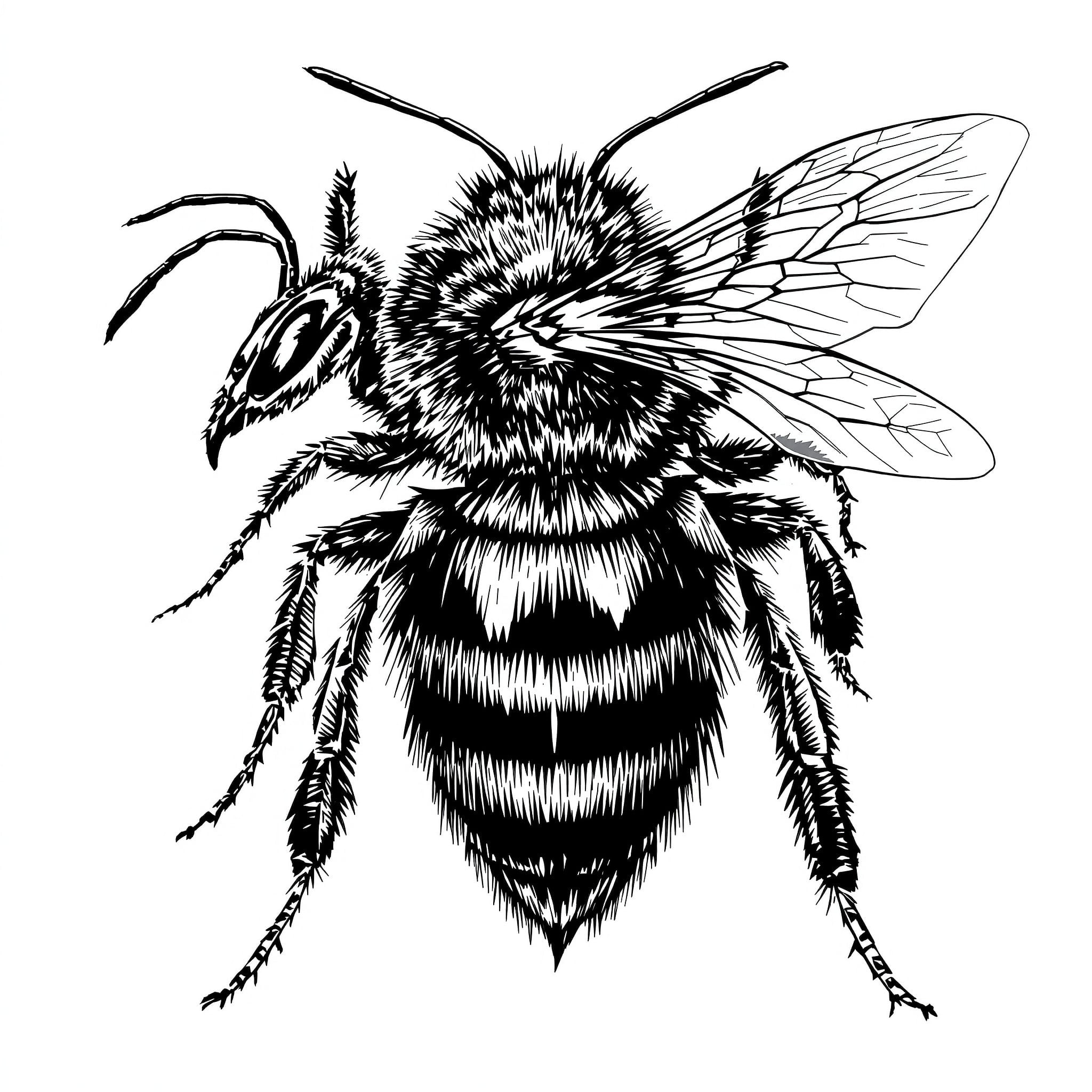
Scientific illustration for identification purposes
Overview
Carpenter bees resemble bumblebees but have a shiny, hairless abdomen. They bore perfectly round holes in unpainted wood to create nesting galleries. While males are aggressive, they cannot sting. Females rarely sting unless handled.
How to Identify
- Large size - 3/4 to 1 inch
- Shiny black hairless abdomen (unlike fuzzy bumblebees)
- Yellow, black, or white fuzzy thorax
- Males have white or yellow face markings
- Perfectly round 1/2 inch holes in wood
Behavior
Male carpenter bees hover aggressively near nests and will dive-bomb intruders, but they cannot sting. Females bore into wood to lay eggs. They reuse galleries year after year, expanding damage.
Habitat
Bore into soft, unpainted wood including fascia boards, deck railings, porch ceilings, and outdoor furniture. Prefer cedar, redwood, and pine.
Diet
Adults feed on pollen and nectar. Larvae feed on "bee bread" (pollen and nectar mixture) provided by the female.
Reproduction
Females bore galleries 4-6 inches deep, creating chambers for eggs. Larvae develop in chambers, emerging as adults in late summer. Adults overwinter in old galleries.
Distribution in the Southern U.S.
Very common throughout Texas, Oklahoma, Louisiana, and Mississippi.
Regional Notes
Carpenter bee damage accumulates over years as they reuse and expand galleries. Woodpeckers often enlarge holes seeking larvae, increasing damage.
Signs of Infestation
- Perfectly round 1/2 inch holes in wood
- Sawdust (frass) piles below holes
- Large black bees hovering near eaves
- Yellow staining below entrance holes
- Woodpecker damage near bee holes
Prevention Tips
- Paint or stain all exterior wood surfaces
- Fill existing holes after treatment
- Use hardwoods instead of softwoods where possible
- Cover exposed wood with aluminum flashing
- Treat holes with residual insecticide dust
- Address infestations promptly to prevent accumulation
When to Contact a Professional
Contact a professional for large infestations, hard-to-reach areas, or if wood damage is extensive. Professional treatment and repair may be needed.
Romex Pest Control provides professional carpenter bee control services across Texas, Oklahoma, Louisiana, and Mississippi.
Learn about our carpenter bee control servicesFrequently Asked Questions
Can carpenter bees sting?
Male carpenter bees cannot sting but are aggressive and will hover and dive-bomb. Female carpenter bees can sting but rarely do unless directly handled or trapped in clothing.
Do carpenter bees eat wood?
No, carpenter bees do not eat wood. They excavate tunnels for nesting and push the wood shavings out, creating sawdust piles. They feed on pollen and nectar.
Latest Research & News
Recent developments about carpenter bee
Get the latest news and research about carpenter bee
Click "Load News" to fetch recent articles from scientific sources