
Ready to Get Started?
Free quote • No obligation • Same-day service available
Why Yellow Jackets Are a Serious Concern
Yellow jackets are responsible for more stinging incidents in the United States than any other insect, including bees and hornets. According to the CDC, stinging insects send over 500,000 people to emergency rooms annually, with yellow jackets being a primary culprit. Their aggressive behavior and ability to sting multiple times make them a significant threat, especially in late summer when colonies can house up to 5,000 workers.
This guide, crafted with input from Romex Pest Control's licensed technicians, provides a comprehensive approach to identifying, locating, and safely removing yellow jacket nests. Whether you're considering DIY solutions or professional pest control services, this article will help you make informed decisions.
What Are Yellow Jackets?
Yellow jackets are social wasps belonging to the genus Vespula and Dolichovespula. In the southern United States, including Texas and Oklahoma, the most common species are the Eastern yellow jacket (Vespula maculifrons) and the Southern yellow jacket (Vespula squamosa).
Yellow Jacket vs. Wasp vs. Bee: Key Differences
Misidentifying yellow jackets can lead to ineffective or dangerous removal attempts. Here's a quick comparison:
- Yellow Jackets: Bright yellow and black bands, smooth body, about 1/2 inch long. Nest in the ground or concealed spaces. Highly aggressive.
- Paper Wasps: Brown with yellow/orange markings, longer bodies, and dangling legs in flight. Build small, umbrella-shaped nests under eaves. Less aggressive.
- Honeybees: Fuzzy, golden-brown bodies. Build wax comb nests. Can sting only once and are generally non-aggressive unless provoked.
- Hornets: Larger than yellow jackets, with some species like the bald-faced hornet featuring a white face. Build large, enclosed paper nests in trees or structures.
Did You Know? If you observe insects flying in and out of a hole in the ground, there’s a 90% chance it’s a yellow jacket nest. Ground-nesting bees are solitary and much less common near homes.
Where Do Yellow Jackets Build Nests?
Yellow jackets prefer enclosed, protected spaces with easy access to the outdoors. Here are the most common nesting sites:
1. Underground Nests
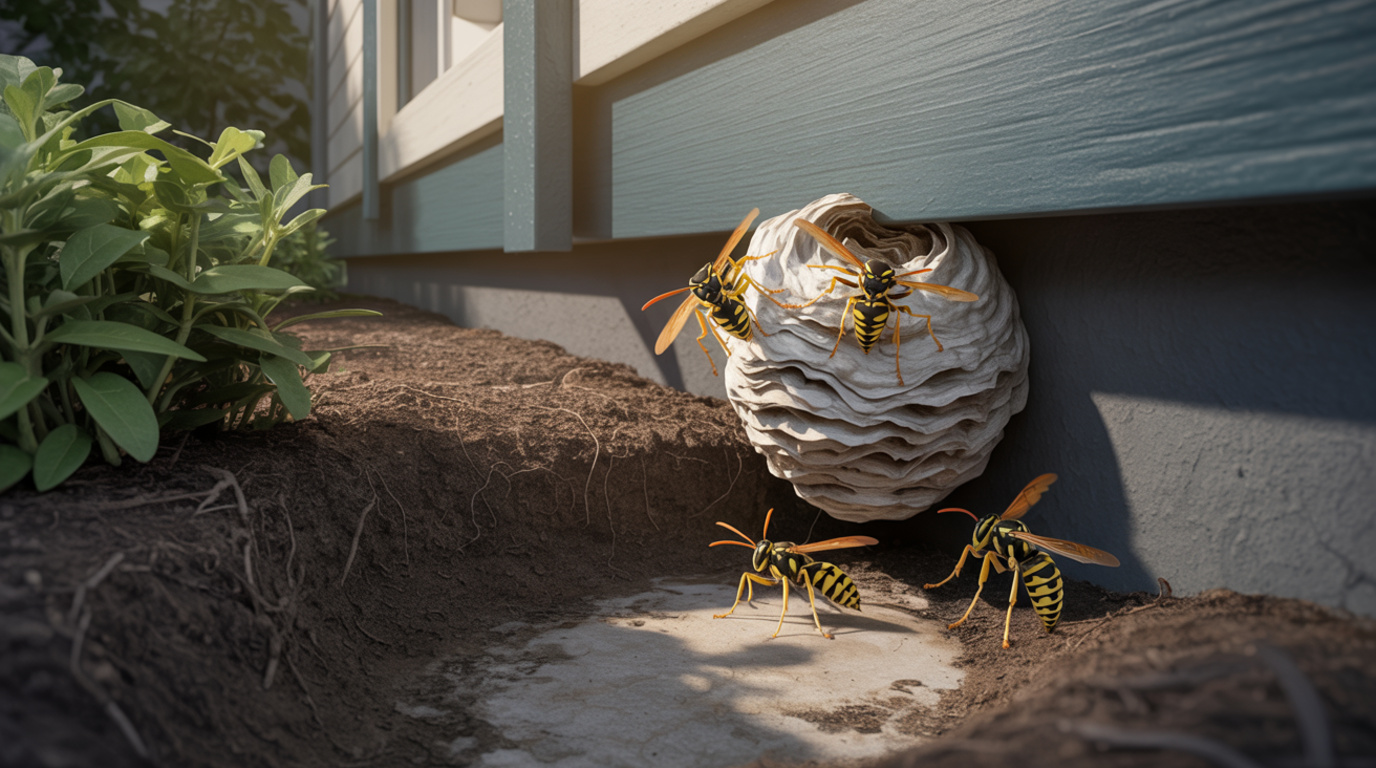
Most yellow jacket nests in Texas and Oklahoma are built underground, often in abandoned rodent burrows or natural soil cavities. The entrance is typically a small hole about the size of a nickel or quarter.
- Edges of lawns and garden beds
- Under landscape timbers or stacked stone
- Near tree roots and stumps
- Along fence lines and property borders
- Near outdoor A/C units
2. Wall Void Nests
Yellow jackets often exploit gaps in home exteriors to build nests inside wall cavities, soffits, or attics. Common entry points include:
- Gaps around windows and doors
- Weep holes in brick veneer
- Cracks in siding or stucco
- Utility penetrations
Professional Tip: If you notice yellow jackets emerging inside your home, they may have built a nest in a wall void. Contact a licensed pest control professional immediately to avoid worsening the infestation.
3. Aerial Nests
Some species, like Dolichovespula, build exposed, football-shaped nests in trees, eaves, or porch ceilings. These nests can grow to the size of a basketball by late summer.
How to Find a Yellow Jacket Nest
Locating the nest is crucial for effective removal. Here’s a step-by-step approach:
Step 1: Observe Flight Patterns
Stand at least 15 feet away and watch yellow jackets fly in a direct line between their food source and the nest entrance. Follow their path from a safe distance.
Step 2: Inspect Common Nesting Sites
Check areas like lawn edges, flower beds, and gaps in your home’s exterior. Look for a steady stream of insects entering and exiting a single point.
Step 3: Use Bait
Place a small piece of meat or sweet fruit on a plate in an open area. Observe the yellow jackets that arrive and follow their flight path back to the nest.
What NOT to Do
- Do not pour water or gasoline into the nest. This is dangerous and ineffective.
- Do not seal the entrance. Trapped yellow jackets will find or chew another exit, often into your home.
- Do not disturb the nest during the day. Yellow jackets are most aggressive during daylight hours.
How to Safely Remove a Yellow Jacket Nest
The removal method depends on the nest’s location and your comfort level. Here are your options:
Option 1: DIY Dust Treatment for Ground Nests
- Wait until dusk or dawn when activity is minimal.
- Wear protective clothing, including long sleeves, gloves, and a hat with a veil.
- Apply insecticidal dust (e.g., deltamethrin) into the nest entrance using a puff duster.
- Do not seal the entrance. Allow returning workers to spread the dust inside.
- Recheck after 48 hours and reapply if necessary.
Option 2: Aerosol Spray for Aerial Nests
- Use a wasp spray with a 15–20 foot reach.
- Treat at dusk and saturate the nest entrance.
- Wait 24 hours before removing the nest.
Option 3: Professional Removal
For wall voids or large nests, contact a licensed pest control professional. Romex Pest Control offers expert wasp and hornet removal services across Texas, Louisiana, Oklahoma, and Mississippi.
Preventing Yellow Jacket Nests
Prevention is key to avoiding yellow jacket infestations. Here are some strategies:
- Seal gaps and cracks in your home's exterior.
- Regularly inspect and maintain outdoor structures.
- Remove potential food sources, such as open trash bins and pet food.
- Schedule regular pest control inspections with Romex Pest Control.
Did You Know? Regular maintenance and inspections can reduce the likelihood of yellow jacket nests by up to 80%.
Case Studies
Explore our successful yellow jacket removal projects:
- Case Study 1: A large underground nest in a residential backyard in Texas was safely removed using professional techniques, preventing potential stings to the homeowners and their pets.
- Case Study 2: Aerial nest removal from a school playground in Louisiana, ensuring the safety of children and staff.
- Case Study 3: Successful removal of a wall void nest in an Oklahoma office building, preventing disruption to business operations.
FAQs
- Are yellow jackets active year-round?
- No, colonies die off in winter, but queens hibernate and establish new nests in spring.
- How can I prevent yellow jacket nests?
- Seal gaps in your home’s exterior, remove food sources, and schedule regular pest control inspections.
- What should I do if I find a nest inside my home?
- Contact a professional pest control service immediately to assess and safely remove the nest.
- Can yellow jackets reuse old nests?
- No, yellow jackets do not reuse old nests. Each spring, new queens build new nests.
About Romex Pest Control
Romex Pest Control has been serving the southern United States for over 20 years, providing expert pest management solutions. Our team of certified technicians is dedicated to ensuring the safety and comfort of your home. We specialize in environmentally responsible pest control techniques and offer a satisfaction guarantee on all our services.
Company Achievements:
- Voted Best Pest Control Service in Texas 2022
- Certified by the National Pest Management Association
- Over 100,000 satisfied customers across Texas, Louisiana, Oklahoma, and Mississippi
Contact Us
For more information or to schedule a consultation, visit our Contact Page or call us at 1-800-555-0199. Our customer service team is available 24/7 to assist you with any pest control needs.
Conclusion
Yellow jackets can pose a significant threat to your home and family. By understanding their behavior and taking proactive measures, you can effectively manage and prevent infestations. Whether you choose DIY methods or professional services, ensure safety and thoroughness in your approach.
Summary & Key Takeaways
- Yellow jackets are aggressive and can sting multiple times, posing a risk to humans and pets.
- Identifying and locating nests is crucial for effective removal.
- Professional pest control services offer safe and reliable solutions for nest removal.
- Preventative measures can significantly reduce the likelihood of future infestations.
- Romex Pest Control provides expert services across the southern United States.