
House Centipede
Scutigera coleoptrata
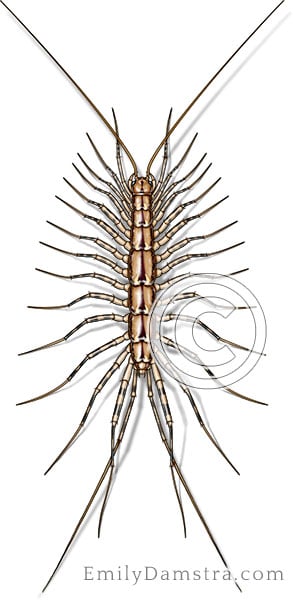
Scientific illustration for identification purposes
Overview
House centipedes are distinctive predators with long legs and rapid movement. While alarming in appearance, they are beneficial because they eat other household pests including spiders, cockroaches, and silverfish. They can bite if handled but rarely do.
How to Identify
- Elongated, flattened body 1 to 1.5 inches
- Yellowish-gray with dark stripes
- Extremely long legs (15 pairs)
- Very fast moving
- Long antennae
Behavior
House centipedes are nocturnal predators that hunt other arthropods. They are extremely fast and can be startling when seen. They hide in damp areas during the day.
Habitat
Found in damp areas including basements, bathrooms, closets, and crawl spaces. Prefer dark, moist environments but will travel throughout homes hunting prey.
Diet
Predators that eat spiders, cockroaches, silverfish, carpet beetle larvae, and other small arthropods.
Reproduction
Females lay eggs in spring. Development is slow, taking 3+ years to reach adulthood. They can live 3-7 years.
Distribution in the Southern U.S.
Common throughout Texas, Oklahoma, Louisiana, and Mississippi in homes and buildings.
Regional Notes
House centipedes are common in Southern homes, especially in older buildings with moisture issues. Their presence often indicates other pest populations.
Signs of Infestation
- Fast-moving, multi-legged creatures seen at night
- Centipedes fleeing when lights turn on
- Dead centipedes in basements or bathrooms
- Other pest populations (their prey)
- Damp conditions in building
Prevention Tips
- Reduce humidity with dehumidifiers
- Fix plumbing leaks and moisture problems
- Seal cracks and gaps in foundation
- Remove debris from basement and crawl space
- Control other pests (their food source)
- Improve ventilation in damp areas
When to Contact a Professional
Professional treatment is often not needed as centipedes are beneficial. Contact a professional if numbers are concerning or to address underlying pest populations they are feeding on.
Romex Pest Control provides professional house centipede control services across Texas, Oklahoma, Louisiana, and Mississippi.
Learn about our house centipede control servicesFrequently Asked Questions
Are house centipedes venomous?
House centipedes can bite and do have venom, but their jaws are usually too weak to pierce human skin. If they do bite (rare), the reaction is similar to a bee sting - minor pain and swelling.
Should I kill house centipedes?
House centipedes are beneficial predators that eat many household pests. Unless you find them disturbing, they help control other pest populations. Their presence indicates other pests are present.
Latest Research & News
Recent developments about house centipede
Get the latest news and research about house centipede
Click "Load News" to fetch recent articles from scientific sources