
Fire Ant Biology & Lifecycle: The Complete Texas Homeowner's Guide
Fire ants aren't just another backyard nuisance—they're a complex social organism whose biology holds the key to effective control. Understanding how these invasive insects live, reproduce, and spread can mean the difference between temporary relief and long-term elimination from your property.
In Texas alone, fire ants cause an estimated $1.2 billion in agricultural and property damage annually, according to Texas A&M AgriLife Extension. But here's what most homeowners don't realize: the ants you see on the surface represent less than 10% of the actual colony population. The real action happens underground, where understanding fire ant biology becomes critical for effective management.
Ready to Get Started?
Free quote • No obligation • Same-day service available
Fire Ant Species Identification: Know Your Enemy
Two primary fire ant species dominate the southern United States, and correctly identifying which species you're dealing with affects your control strategy.
Red Imported Fire Ant (Solenopsis invicta)
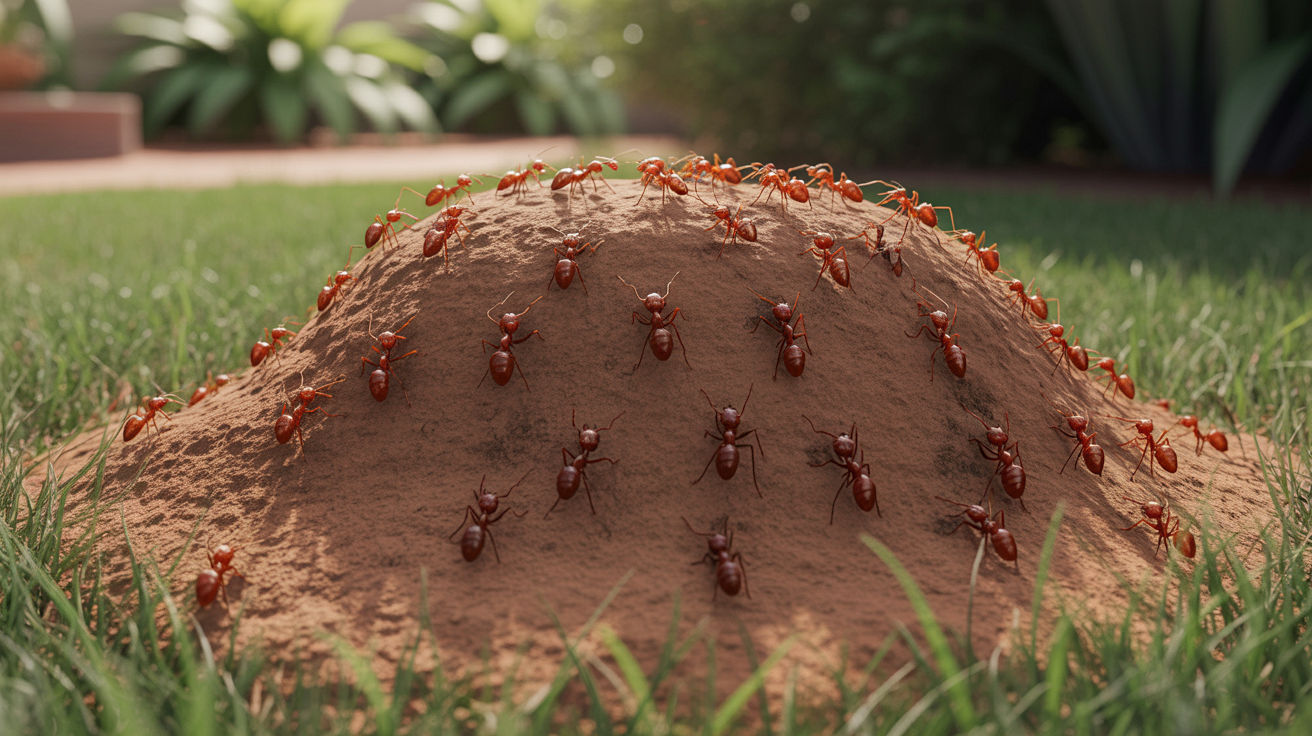
The red imported fire ant, accidentally introduced from South America in the 1930s, represents the most aggressive and widespread species across Texas, Louisiana, Oklahoma, and Mississippi. Workers range from 1/8 to 1/4 inch long with reddish-brown coloration that darkens toward the head.
Key identifying characteristics:
- Aggressive defensive behavior when disturbed
- Painful, burning sting that leaves pustule-filled welts
- Dome-shaped mounds without visible entrance holes
- Workers of multiple sizes (polymorphic)
- Rapid colony expansion—up to 40 mounds per acre in optimal conditions
Native Fire Ant (Solenopsis geminata)
Native fire ants, while less aggressive than their imported cousins, still pose management challenges. These ants typically appear more uniformly sized and exhibit less aggressive swarming behavior when disturbed.
The Fire Ant Colony Structure: An Underground Metropolis
Fire ant colonies operate as superorganisms with distinct castes, each serving specific biological functions that ensure colony survival and expansion.
Queen Ants: The Colony's Foundation
Fire ant queens can live 6-7 years and produce up to 1,600 eggs daily during peak season. A single queen weighs approximately 10 times more than a worker ant and measures 1/4 to 3/8 inch long. Mature colonies may contain multiple queens, dramatically increasing reproductive capacity.
Critical biological facts:
- Queens mate only once during their nuptial flight
- Sperm storage allows egg-laying for years without re-mating
- New queens can establish colonies 5+ miles from parent colonies
- Polygyne colonies (multiple queens) produce 10x more reproductive ants
Worker Ants: The Visible Population
Worker ants comprise 95% of colony population but live only 30-180 days depending on seasonal conditions. Their biological roles include:
- Minor workers: Brood care, nest maintenance, initial food processing
- Major workers: Foraging, colony defense, large prey capture
- Media workers: Food transport, mound construction, tunnel excavation
Reproductive Ants: Future Colony Founders
Winged reproductive ants (alates) emerge during specific environmental conditions—typically 24-72 hours after rainfall when soil temperature reaches 78-85°F and humidity exceeds 80%. This synchronized emergence, called a nuptial flight, can involve thousands of reproductives from multiple colonies simultaneously.
Fire Ant Lifecycle: From Egg to Establishment
Understanding fire ant development stages reveals critical intervention points for effective ant control strategies.
Stage 1: Egg Development (7-10 days)
Fire ant eggs measure approximately 0.5mm and appear pearl-white. Queens adjust egg-laying rates based on colony needs, environmental conditions, and available resources. During optimal conditions (75-85°F), egg development accelerates, while temperatures below 65°F significantly slow development.
Stage 2: Larval Growth (6-12 days)
Fire ant larvae undergo four molting stages (instars) before pupation. Worker ants feed larvae a protein-rich diet of regurgitated food and captured prey. Larval nutrition directly affects adult size and caste determination—well-fed larvae may develop into reproductive ants.
Stage 3: Pupal Transformation (9-15 days)
During pupation, fire ants complete metamorphosis from larvae to adults. Pupae appear white initially, gradually darkening as exoskeleton hardens. Temperature fluctuations during this stage can result in developmental abnormalities or death.
Stage 4: Adult Emergence and Role Assignment
Newly emerged workers require 3-4 days for exoskeleton hardening before assuming colony duties. Worker lifespan varies dramatically by season—summer workers live 30-60 days due to high activity levels, while winter workers may survive 4-6 months.
| Development Stage | Duration (Days) | Temperature Dependent | Control Opportunity |
|---|---|---|---|
| Egg | 7-10 | Yes | Limited |
| Larva | 6-12 | Yes | Bait acceptance high |
| Pupa | 9-15 | Yes | Limited |
| Adult Worker | 30-180 | Moderate | Foraging disruption |
Seasonal Biology Patterns: Timing Your Control Strategy
Fire ant activity follows predictable seasonal patterns driven by temperature, moisture, and colony nutritional needs. Successful fire ant treatment requires understanding these biological rhythms.
Spring Activity (March-May)
Spring represents peak fire ant activity across Texas, Louisiana, Oklahoma, and Mississippi. Soil temperatures reaching 70°F trigger increased foraging, mound construction, and reproductive development. Colonies prioritize protein acquisition to support rapid brood development.
Biological indicators:
- Increased surface activity after 10 AM
- New mound construction following rainfall
- Worker ants carrying white larvae/pupae during mound disturbance
- Aggressive defensive behavior peaks
Summer Adaptations (June-August)
High temperatures force behavioral adaptations that affect control strategies. When soil surface temperatures exceed 95°F, fire ants shift to nocturnal foraging patterns and move deeper underground during daylight hours.
Critical summer biology facts:
- Foraging occurs primarily dawn/dusk when temperatures moderate
- Colonies may relocate entirely during extreme heat
- Water sources become primary attractants
- Bait acceptance decreases during peak heat hours
Fall Preparation (September-November)
Fall activity focuses on colony preparation for winter survival. Fire ants increase fat storage, reduce brood production, and concentrate food resources. This represents an optimal control window as ants actively seek food sources.
Winter Dormancy (December-February)
Fire ants don't truly hibernate but enter a state called diapause when soil temperatures drop below 65°F consistently. Surface activity virtually ceases, but colonies remain viable underground.
Professional Insights and Recommendations
For effective fire ant control, it's crucial to apply treatments at the right time and use the right products. According to the Environmental Protection Agency (EPA), using professional-grade baits and insecticides can significantly reduce fire ant populations. Romex Pest Control offers tailored solutions that address specific colony dynamics, ensuring long-term results.
For more information on our services, visit our Ant Control Services page or contact us directly for a consultation.
By staying informed and proactive, you can protect your property from the costly damage caused by fire ants.