
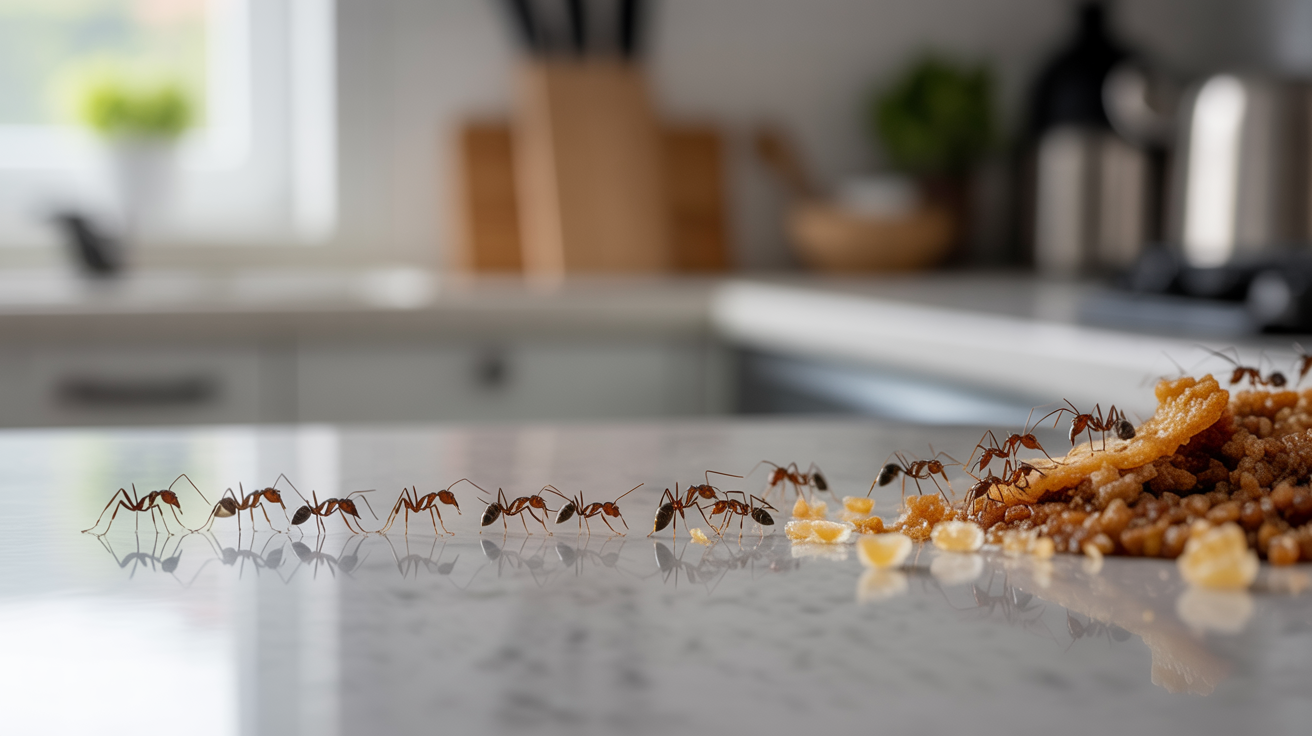
If you've ever stepped barefoot on a fire ant mound or discovered carpenter ants tunneling through your deck, you know that ant control in the South isn't just about convenience—it's about protecting your family and property. The warm, humid climate from the Gulf Coast to North Texas creates perfect conditions for over 40 ant species, many of which can cause serious problems for homeowners.
Unlike northern climates where ant activity slows dramatically in winter, Southern ants remain active year-round. This means traditional "wait it out" approaches simply don't work. You need strategies specifically designed for our region's unique challenges.
The Science Behind Southern Ant Behavior
Understanding why ants thrive in our region starts with recognizing how our climate affects their biology. Most ant species require soil temperatures above 50°F to remain active. In Texas, Oklahoma, Louisiana, and Mississippi, soil rarely drops below this threshold, allowing colonies to continue foraging, reproducing, and expanding throughout winter months.
Research from Texas A&M University shows that fire ant colonies in East Texas can produce up to 4,500 new reproductive ants annually, with peak swarming occurring during warm, humid evenings after rainfall. This explains why you might see massive ant activity after summer thunderstorms.
Ready to Get Started?
Free quote • No obligation • Same-day service available
Identifying Your Ant Species: The Foundation of Effective Control
Successful ant extermination begins with accurate identification. Different species require completely different approaches, and using the wrong treatment can actually make infestations worse by causing colonies to split.
Red Imported Fire Ants (Solenopsis invicta)
Identification: Reddish-brown to black, 1/8 to 1/4 inch long, build distinctive dome-shaped mounds up to 18 inches across. When disturbed, they swarm aggressively and deliver painful, burning stings.
Behavior: Fire ants are particularly problematic because they're both territorial and opportunistic. They'll attack anything that threatens their colony while simultaneously sending scouts to find new food sources in your home.
Peak Activity: Most active when soil temperature reaches 70-95°F, typically March through November in our region.
Carpenter Ants (Camponotus species)
Identification: Large black or dark brown ants, 1/4 to 1/2 inch long. Unlike termites, they have narrow waists and elbowed antennae.
Behavior: Carpenter ants don't eat wood—they excavate it to create galleries for nesting. You'll often find coarse sawdust (called frass) near their entry points. In the South, they're particularly attracted to moisture-damaged wood from our high humidity.
Warning Signs: Rustling sounds in walls at night, sawdust trails, large black ants emerging from baseboards or window frames.
Crazy Ants (Nylanderia fulva)
Identification: Small, golden-brown ants about 1/8 inch long that move in erratic, rapid patterns—hence the name "crazy."
Behavior: These invasive ants form super-colonies with multiple queens. They're attracted to electrical equipment and can cause shorts in air conditioning units, pool equipment, and outdoor lighting.
Regional Impact: Particularly problematic along the Gulf Coast, where they've displaced native ant species and disrupted local ecosystems.
Acrobat Ants (Crematogaster species)
Identification: Small ants with distinctive heart-shaped abdomens they raise over their heads when threatened.
Behavior: Often nest in moisture-damaged wood and foam insulation. They're secondary invaders, meaning they typically follow carpenter ants or termites into structures.
Immediate Action Steps: What to Do Right Now
When you discover an ant problem, your first 48 hours are critical. Here's your step-by-step response plan:
Step 1: Document the Infestation
- Take photos of the ants and their trails
- Note the time of day you see peak activity
- Mark entry points with masking tape
- Identify the species using the descriptions above
Step 2: Eliminate Immediate Attractants
- Clean all surfaces with white vinegar to disrupt scent trails
- Store all food in airtight containers, including pet food
- Fix leaky pipes and eliminate standing water
- Remove grease buildup around stoves and garbage areas
Step 3: Create Barriers
While not a permanent solution, these barriers can provide immediate relief:
- Sprinkle food-grade diatomaceous earth around entry points
- Apply petroleum jelly to table legs and food storage areas
- Use chalk lines—many ant species avoid crossing calcium carbonate
Targeted Extermination Strategies by Species
Fire Ant Control
Fire ants require a two-step approach combining broadcast treatments and individual mound treatments.
Broadcast Treatment: Apply fire ant bait (containing hydramethylnon or indoxacarb) across your entire yard during fall months when ants are actively foraging. University of Arkansas Extension research shows this timing is crucial—baiting during summer heat often fails because ants aren't actively searching for food.
Mound Treatment: For visible mounds, use contact insecticides containing bifenthrin or fipronil. Apply late in the evening when ants are closer to the surface.
Timing is Everything: Treat when soil temperature is 70-85°F and no rain is forecast for 24 hours.
Carpenter Ant Elimination
Carpenter ant control focuses on finding and eliminating the parent colony, which is usually located in moist wood outdoors.
Tracking Method: Follow ant trails during peak activity (typically 10 PM to 2 AM). Place small amounts of honey or sugar water to encourage trail formation.
Treatment Options:
- Boric acid-based baits for indoor satellite colonies
- Foam insecticides injected directly into galleries
- Perimeter treatments around the foundation
Moisture Control: Address underlying moisture problems—carpenter ants rarely infest dry wood.
Crazy Ant Management
Crazy ants are notoriously difficult to control because they don't readily take baits and form massive colonies.
Exclusion Focus: Seal all entry points with silicone caulk, paying special attention to areas around electrical outlets and HVAC penetrations.
Barrier Treatments: Apply residual insecticides in a 10-foot band around your home's perimeter. Reapply monthly during peak season.
Professional Consideration: Due to their complex colony structure, crazy ant infestations often require professional treatment with specialized equipment.
Regional Considerations for Southern States
Texas-Specific Challenges
Texas hosts the highest fire ant density in the United States, with some areas reporting over 400 mounds per acre. The state's diverse climate zones mean ant pressure varies significantly:
- East Texas: High humidity favors carpenter ants and crazy ants
- Central Texas: Rocky soil concentrates fire ant mounds near structures
- South Texas: Year-round warmth means continuous ant activity
Oklahoma Patterns
Oklahoma's temperature fluctuations create unique ant behavior patterns. Fire ants often move deeper underground during brief cold snaps, then surge to the surface during warm periods. This creates unpredictable activity cycles that can catch homeowners off guard.
Louisiana and Mississippi Gulf Coast
High humidity and frequent rainfall in coastal areas create ideal conditions for moisture-loving species like carpenter ants and acrobat ants. Additionally, hurricane damage often creates abundant nesting sites in damaged wood and debris.
Case Studies and Testimonials
At Romex Pest Control, we pride ourselves on delivering effective pest control solutions. Here are some real-world examples of our success:
Case Study: Fire Ant Control in East Texas
In 2022, a homeowner in East Texas reported a severe fire ant infestation with over 300 mounds on their property. Our team implemented a comprehensive treatment plan involving broadcast bait treatments and targeted mound applications. Within six weeks, the infestation was reduced by 90%.
Customer Testimonials
John D., Houston, TX: "Romex Pest Control helped us get rid of a crazy ant infestation that was damaging our pool equipment. Their team was professional and knowledgeable."
Susan L., Baton Rouge, LA: "We had carpenter ants in our deck, and Romex's targeted approach saved us from costly repairs. Highly recommend!"
Company Credentials and Certifications
Romex Pest Control is a certified member of the National Pest Management Association (NPMA) and holds state-specific pest control licenses in Texas, Oklahoma, Louisiana, and Mississippi. Our technicians undergo rigorous training and are certified in the latest pest management techniques.
We are proud to have received the "Excellence in Pest Management" award from the Southern Pest Control Association in 2021, recognizing our commitment to quality and customer satisfaction.