
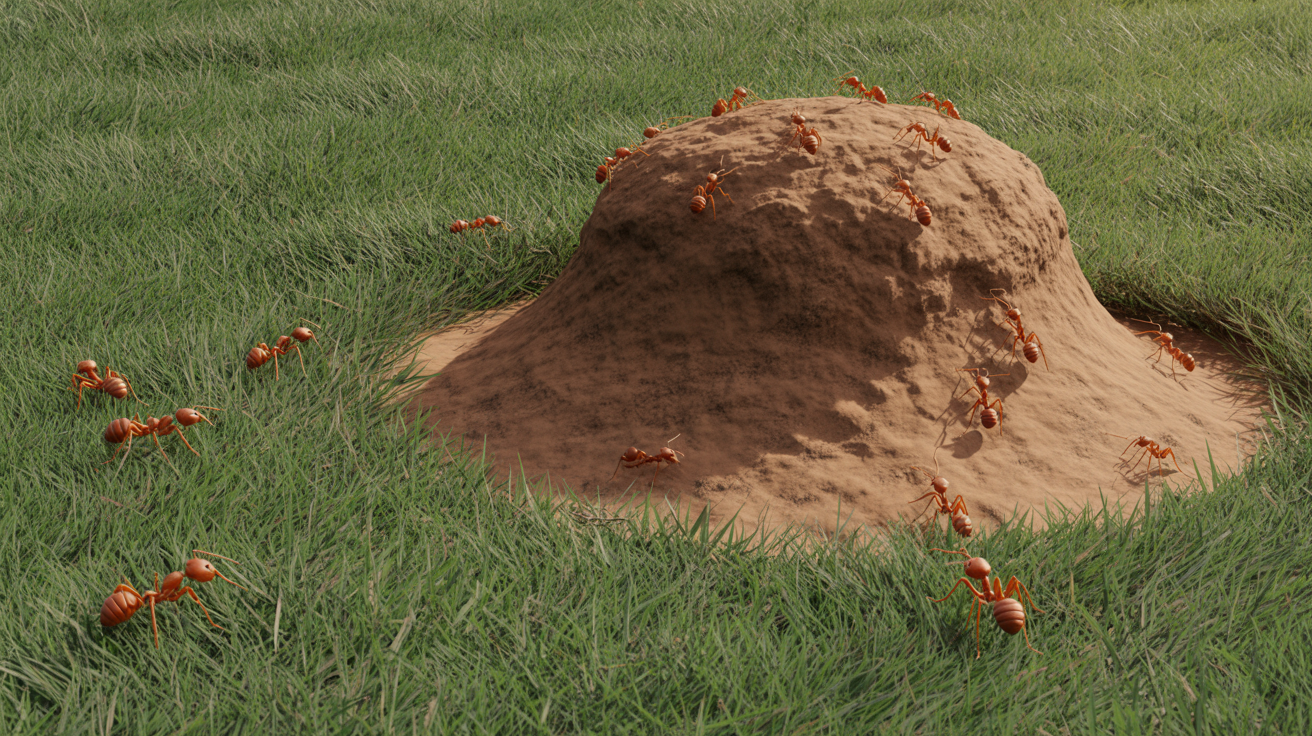
Understanding Fire Ant Biology: Why McKinney Properties Are Prime Real Estate
Red imported fire ants arrived in Texas in the 1950s and have since colonized virtually every county. According to Texas A&M AgriLife Extension, a single colony can contain 100,000 to 500,000 workers and multiple queens, making eradication extremely challenging without understanding their biology.
McKinney's Climate Advantage for Fire Ants
McKinney's average annual rainfall of 38 inches and clay soil composition create ideal nesting conditions. Clay retains moisture while providing structural stability for deep tunnel systems. Fire ants remain active year-round in North Texas, with peak reproductive swarming occurring in late spring and early fall when temperatures range between 70-85°F.
Colony Structure and Behavior
Fire ant colonies operate as superorganisms with distinct castes:
- Queens: Live 6-7 years, lay up to 1,600 eggs daily
- Workers: Live 35-180 days depending on size, forage up to 100 feet from mounds
- Males: Short-lived, exist only for reproductive flights
- Reproductive females: Future queens that establish new colonies
Ready to Get Started?
Free quote • No obligation • Same-day service available
Identifying Fire Ant Infestations: Beyond the Obvious Mounds
Many McKinney homeowners only notice fire ants when mounds appear, but colonies often establish themselves weeks before visible signs emerge. Early detection allows for more effective control.
Visual Identification Markers
| Feature | Fire Ants | Native Texas Ants |
|---|---|---|
| Mound Shape | Dome-shaped, no visible opening | Crater-shaped with central opening |
| Worker Size | Multiple sizes (polymorphic) | Usually uniform size |
| Color | Reddish-brown head, darker abdomen | Varies (black, brown, red) |
| Aggression | Extremely aggressive when disturbed | Generally non-aggressive |
Hidden Signs of Fire Ant Activity
- Electrical issues: Fire ants are attracted to electrical fields and can cause short circuits in AC units, pool equipment, and irrigation systems
- Plant damage: Young plants may show wilting or stunted growth from root damage
- Pet behavior changes: Dogs and cats may avoid certain areas of your yard
- Soil texture changes: Fine, granular soil particles around potential nesting sites
DIY Fire Ant Control Methods: What Actually Works
Based on University of Arkansas Extension research, effective fire ant control requires targeting the entire colony, not just visible workers. Here are proven methods McKinney homeowners can implement:
Bait Treatments: The Most Effective DIY Option
Fire ant baits work by exploiting the colony's food-sharing behavior. Workers carry poisoned bait back to the mound, eventually reaching the queen.
Application timing is critical:
- Apply when soil temperature is 70-85°F (typically early morning or evening)
- Ensure no rain is forecast for 4-6 hours
- Test ant activity by placing a small amount of food near the mound—if workers appear within 30 minutes, they'll take bait
Recommended bait active ingredients:
- Hydramethylnon: Slow-acting, allows maximum colony penetration
- Fipronil: Effective against queen and brood
- Spinosad: Organic option, OMRI-listed for organic gardening
Broadcast Baiting Strategy
For properties with multiple colonies, broadcast baiting covers large areas efficiently:
- Apply bait at 1-1.5 pounds per acre (roughly 1 ounce per 1,000 sq ft)
- Use a seed spreader for even distribution
- Focus on areas where fire ants typically forage: lawn edges, around trees, near water sources
- Reapply every 6-8 weeks during active season (March-November in McKinney)
Individual Mound Treatments
For immediate results on specific mounds, combine baiting with direct treatments:
- Drench treatments: Mix EPA-approved insecticide with water, apply 1-2 gallons per mound
- Granular treatments: Apply around mound perimeter, water in immediately
- Boiling water: Requires 3+ gallons per mound, only 60% effective, may damage nearby plants
Seasonal Fire Ant Management in McKinney
McKinney's climate requires year-round vigilance, with treatment timing adjusted for seasonal ant behavior patterns.
Spring (March-May)
- Peak colony growth period
- Begin broadcast baiting in early March when soil temperature reaches 65°F
- Monitor for new mounds after spring rains
- Pre-treat areas before outdoor entertaining season
Summer (June-August)
- Ants seek moisture and shade during extreme heat
- Focus treatments near irrigation systems and shaded areas
- Apply treatments early morning or evening when ants are active
- Increase watering depth to encourage deeper root growth, making plants less susceptible to ant damage
Fall (September-November)
- Second reproductive flight period
- Critical time for preventing new colony establishment
- Apply broadcast treatments to prevent overwintering populations
- Seal cracks in foundations and sidewalks where ants may shelter
Winter (December-February)
- Reduced activity but colonies remain alive underground
- Plan and prepare for spring treatments
- Remove potential food sources (pet food, fallen fruit)
- Inspect and maintain outdoor electrical equipment
Professional Fire Ant Treatment: When DIY Isn't Enough
While homeowner treatments can manage small infestations, certain situations require professional intervention for effective, long-term control.
Indicators You Need Professional Help
- Multiple large colonies (10+ active mounds)
- Recurring infestations despite consistent DIY efforts
- Fire ants in sensitive areas (play equipment, pool areas, pet spaces)
- Electrical equipment damage from fire ant activity
- Family members with severe allergic reactions to fire ant stings
Professional Treatment Advantages
Licensed pest control professionals have access to more effective products and application methods:
- Restricted-use pesticides: More potent formulations not available to consumers
- Specialized equipment: Injection systems for deep colony penetration
- Integrated approaches: Combination treatments targeting multiple life stages
- Follow-up monitoring: Regular inspections to prevent re-infestation
For professional pest control services, visit Romex Pest Control Services.
Fire Ant Prevention: Long-term Property Protection
Effective fire ant management extends beyond treatment to creating conditions that discourage establishment and reduce attractants.
Landscape Modifications
- Improve drainage: Address standing water that attracts fire ants
- Maintain healthy turf: Dense grass coverage can deter ant colonization
- Regular maintenance: Trim trees and shrubs to reduce shade and moisture retention
Community Engagement
Collaborate with local environmental agencies to stay informed about regional pest control initiatives and regulations. Participating in community workshops can provide additional insights into effective pest management strategies.
Romex Pest Control Expertise
Romex Pest Control has been serving the McKinney area for over 20 years, providing expert pest management solutions tailored to local conditions. Our team includes certified entomologists and licensed pest control technicians dedicated to delivering effective and safe pest control services. Learn more about our history and achievements.
FAQ
What are the signs of a fire ant infestation?
Look for dome-shaped mounds without visible openings, changes in soil texture, and increased ant activity around electrical equipment.
How can I prevent fire ants from returning?
Maintain your landscape, improve drainage, and regularly inspect your property for new mounds.
When should I call a professional?
If you have multiple large colonies, recurring infestations, or fire ants in sensitive areas, it's time to seek professional help.