

Table of Contents
Ready to Get Started?
Free quote • No obligation • Same-day service available
More Than a Nuisance: German Cockroaches Are a Health Hazard
Most people think of cockroaches as disgusting but essentially harmless. The reality is far more serious. German cockroaches are among the most significant indoor allergen sources identified by public health researchers, and they are documented carriers of bacteria, parasites, and viruses that cause human illness. (EPA)
The EPA, CDC, and National Institutes of Health have all identified cockroach allergens as a leading environmental trigger for asthma, particularly in children living in urban and suburban apartments. The health risks are not theoretical—they are backed by decades of clinical research involving thousands of patients. (CDC)
Cockroach Allergens and Asthma
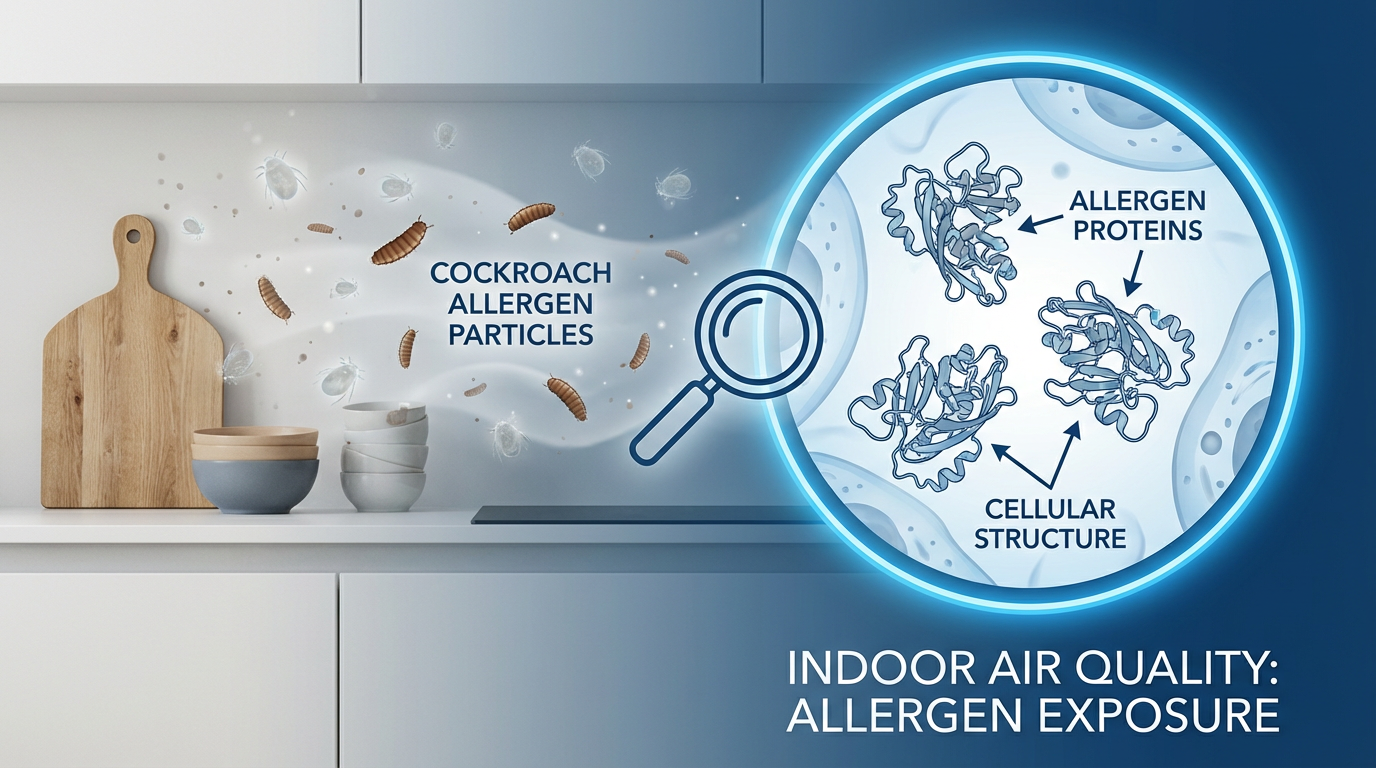
German cockroaches produce potent allergens in their feces, shed exoskeletons (from molting), saliva, and decomposing body parts. As populations grow, these allergen particles accumulate in household dust and become airborne, where they are inhaled by occupants—often without their knowledge.
A landmark 1997 study published in the New England Journal of Medicine found that cockroach allergen exposure was the strongest risk factor for asthma-related hospitalization among inner-city children. Children who were both allergic to cockroaches and exposed to high levels of cockroach allergens at home had 3.3 times more hospitalizations than other asthmatic children.
How Cockroach Allergens Trigger Asthma
Cockroach allergens—proteins designated Bla g 1 and Bla g 2—bind to antibodies in sensitized individuals, triggering an immune response that causes:
- Airway inflammation and bronchial constriction
- Increased mucus production
- Wheezing, coughing, and shortness of breath
- In severe cases, full asthma attacks requiring emergency medical care
According to the EPA, cockroach allergens have been detected in 63% of U.S. homes and in 78% to 98% of urban apartments. The allergen particles are extremely small (10 microns or less) and can remain suspended in air for hours after being disturbed by foot traffic, cleaning, or HVAC systems.
Children at Highest Risk
Children are disproportionately affected because they spend more time on floors and in areas where allergens concentrate, their immune systems are still developing, and their smaller airways are more easily obstructed. The National Institute of Environmental Health Sciences estimates that cockroach allergens play a role in the asthma symptoms of 26% of the 6.1 million children with asthma in the United States.
Allergic Reactions Beyond Asthma
Even in people without asthma, cockroach allergens can cause a range of allergic responses:
- Allergic rhinitis: Chronic nasal congestion, sneezing, runny nose, and postnasal drip triggered by inhaled cockroach proteins
- Allergic dermatitis: Skin rashes, itching, and eczema flare-ups from direct contact with cockroach debris or allergen-laden surfaces
- Allergic conjunctivitis: Red, itchy, watery eyes, particularly when allergen levels are high in sleeping areas
These symptoms are frequently misdiagnosed as seasonal allergies or chronic sinusitis. If your allergy symptoms persist year-round and worsen indoors—especially in the kitchen or at night—cockroach allergens should be considered as a potential cause.
Disease-Causing Pathogens
Beyond allergens, German cockroaches are mechanical vectors for a wide range of disease-causing organisms. As they travel through sewage, garbage, and decaying organic matter, they pick up pathogens on their legs, bodies, and in their digestive tracts—then deposit them on food preparation surfaces, utensils, and stored food.
Bacteria
Research has documented cockroaches carrying over 30 species of bacteria, including:
- Salmonella species — causing salmonellosis (diarrhea, fever, abdominal cramps)
- Escherichia coli (E. coli) — causing gastrointestinal illness, potentially severe in young children and elderly
- Staphylococcus aureus — causing staph infections, food poisoning
- Streptococcus species — contributing to throat and skin infections
- Pseudomonas aeruginosa — associated with urinary tract and respiratory infections
Parasites and Other Pathogens
Cockroaches have also been found carrying:
- Hookworm, pinworm, and tapeworm eggs
- Fungi including Aspergillus species that can cause respiratory infections
- Viruses including poliomyelitis virus (though this route of transmission is not considered primary)
Contamination occurs when cockroaches walk across food, utensils, or preparation surfaces. Their feces and regurgitated digestive fluids also deposit pathogens on contact surfaces. In homes with heavy infestations, surface contamination can be widespread even if roaches are not directly observed on food.
The Connection Between Infestation Severity and Health Risk
Health risks scale directly with infestation size. Research has shown:
- Allergen levels become clinically significant when cockroach populations exceed moderate thresholds—often lower than homeowners expect
- Even after a cockroach population is eliminated, allergen particles remain in dust and surfaces for months unless deep cleaning is performed
- The longer an infestation persists, the more allergens and contaminants accumulate throughout the home, not just in the kitchen
This means that both elimination and thorough cleaning are necessary to fully address the health risks. Killing the roaches stops the production of new allergens, but existing contamination requires cleaning to remove accumulated particles from carpets, upholstery, and dust reservoirs.
Protecting Your Family's Health
The most effective way to reduce cockroach-related health risks is to eliminate the infestation completely and prevent reoccurrence. Here are the steps that matter most:
- Professional treatment: Professional German cockroach service eliminates the population at all life stages, stopping allergen production at the source
- Deep cleaning after treatment: Vacuum all surfaces, wash hard surfaces with soap and water, and launder bedding and soft furnishings to remove accumulated allergen particles
- HEPA air filtration: Air purifiers with HEPA filters can reduce airborne cockroach allergens in living spaces
- Ongoing prevention: Seal entry points, fix moisture issues, and maintain regular monitoring to prevent re-infestation
- Medical consultation: If family members have persistent asthma or allergy symptoms, discuss cockroach allergy testing with your healthcare provider
At Romex Pest Control, we understand that German cockroach treatment is not just about eliminating an annoyance—it is about protecting your family's health. Our treatments start at $149 and are available across Texas, Oklahoma, Louisiana, and Mississippi. Contact us today to schedule treatment.
Professional Tips for Homeowners
To prevent cockroach infestations, ensure all food is stored in airtight containers, fix leaks promptly, and keep your home clean and clutter-free. Regularly inspect your home for signs of cockroach activity and consider professional pest control services if you suspect an infestation.
Conclusion
German cockroaches pose significant health risks, including asthma, allergies, and the spread of pathogens. By understanding these risks and taking proactive measures, homeowners can protect their families. Professional pest control services, combined with diligent cleaning and prevention strategies, are essential in managing these pests effectively.
For more information on how to protect your home, visit our German cockroach service page or contact us directly.