
Table of Contents
Ready to Get Started?
Free quote • No obligation • Same-day service available
Why Early Detection Matters
German cockroaches are adept at hiding and reproducing rapidly, making early detection crucial. According to the EPA, these pests can multiply quickly, turning a minor issue into a significant infestation in just a few weeks. Early detection allows for more manageable and cost-effective treatment. A small colony of 20 to 50 roaches is far easier to eliminate than a large population of several thousand.
Did You Know? The CDC states that cockroaches can spread 33 kinds of bacteria, six types of parasitic worms, and at least seven other human pathogens.
Sign 1: Pepper-Like Droppings in Cabinets and Drawers
One of the first signs of a German cockroach infestation is the presence of droppings that resemble ground black pepper or coffee grounds. These are often found in areas where roaches travel regularly:
- Inside upper corners of cabinets and along shelf edges
- In the crevices where cabinet doors meet frames
- Along the top edges of door frames, especially in kitchens and bathrooms
- Inside drawers, particularly in silverware and utensil drawers
- Behind and underneath appliances
Heavy accumulations of droppings leave dark, streak-like stains that are difficult to remove. If you find droppings concentrated in a specific area, the harborage site is nearby—German cockroaches do not travel far from their hiding spots.
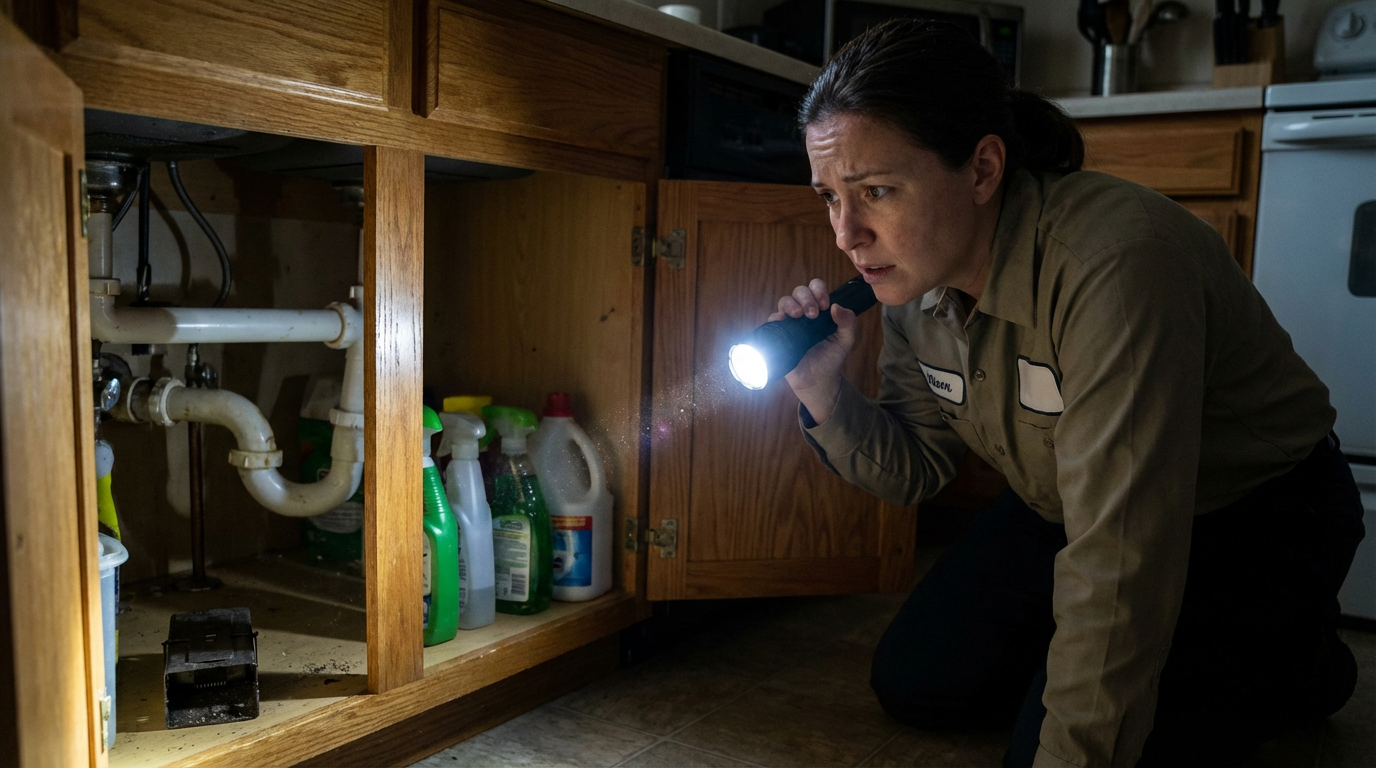
Professional Tip: Use a flashlight to inspect cabinet hinges, drawer slides, and the junction where countertops meet backsplashes. These are common harborage points where droppings accumulate first.
Sign 2: Egg Cases (Oothecae)
Finding empty or intact oothecae is a clear sign of an active breeding population. German cockroach egg cases are light brown, capsule-shaped, about 8 millimeters long, and have a ridged seam running along one edge. You may find them:
- In the gap between the refrigerator and wall
- Inside the motor housing area of refrigerators
- Glued to the underside of shelves and cabinet tops
- In boxes and paper bags stored in the pantry
- Behind picture frames and wall decorations in the kitchen
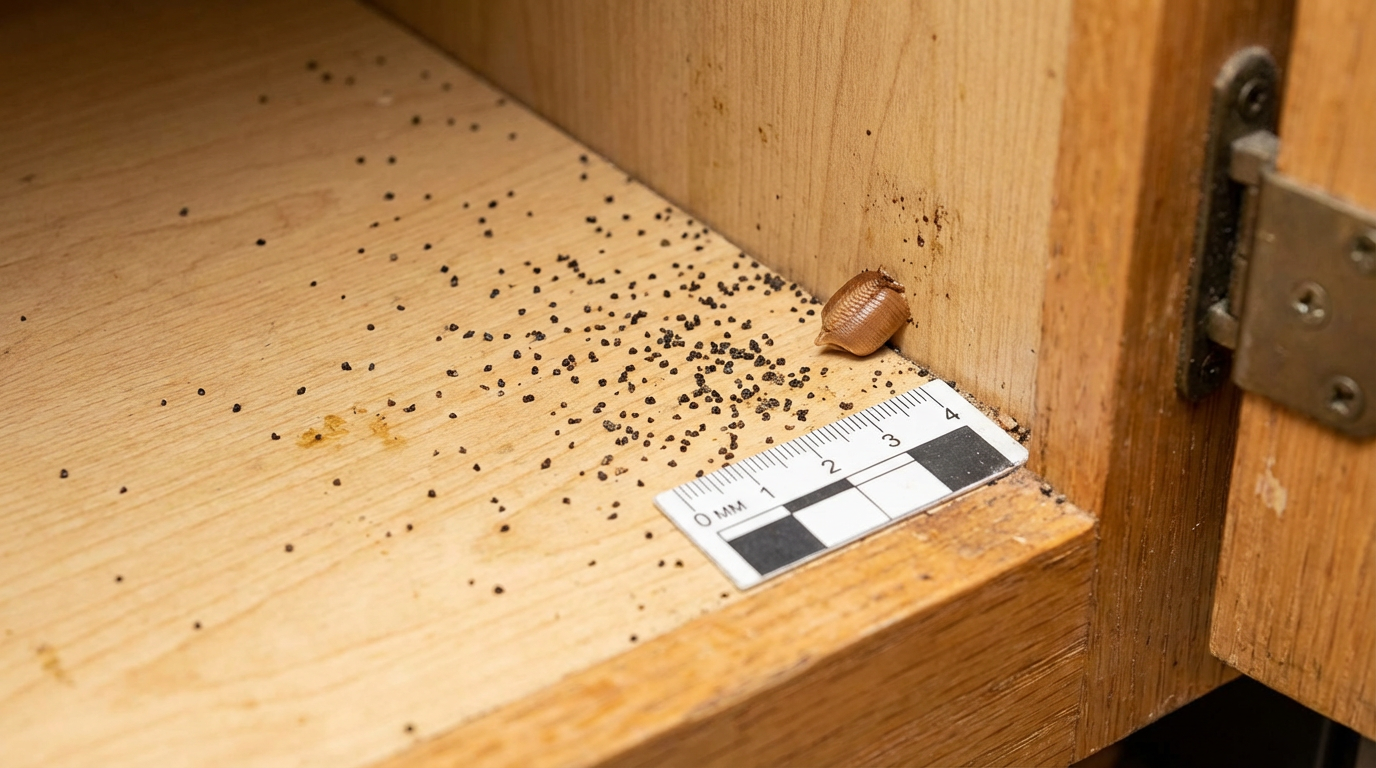
German cockroach droppings (dark pepper-like specks) and an ootheca egg case discovered during a cabinet inspection.
Empty oothecae (split open along the seam) indicate that eggs have already hatched—meaning nymphs are already active in your home. Intact oothecae mean eggs are still developing. Either finding demands immediate action. Here is what that action actually involves, from the first treatment through elimination.
Sign 3: Musty, Oily Odor
German cockroaches produce aggregation pheromones—chemical signals that attract other roaches to join the colony in a harborage area. These pheromones, combined with the odor of accumulated droppings and shed exoskeletons, create a distinctive musty, oily smell that is sometimes described as "stale" or "sour." In moderate to heavy infestations, you can often detect it when opening cabinets under sinks, pulling out the refrigerator, or entering a closed room first thing in the morning.
Sign 4: Nighttime Sightings in the Kitchen or Bathroom
Seeing a cockroach at night is a more significant indicator than most people realize. German cockroaches are strongly nocturnal—they leave their harborage areas to forage only when they sense darkness, quiet, and safety. If you walk into a dark kitchen, turn on the light, and see roaches scatter, you are witnessing a foraging event that happens nightly.
A single sighting at night suggests a resident population. Where there is one, there are many—German cockroaches live in groups, and the one you see represents a fraction of the colony hiding in nearby cracks and voids.
Sign 5: Daytime Sightings (A Red Flag for Severe Infestation)
If you see German cockroaches during daylight hours, the infestation is likely severe. Daytime activity means the harborage areas are so overcrowded that some individuals are being pushed out into open spaces to find food, water, and new hiding spots. University entomologists consider daytime cockroach activity one of the most reliable indicators of a heavy infestation requiring immediate professional intervention.
Sign 6: Shed Exoskeletons (Molt Skins)
As German cockroach nymphs grow through their 5 to 7 instar stages, they shed their exoskeleton at each molt. These translucent, light brown cast skins accumulate in harborage areas and are often found:
- Behind appliances near the wall
- Inside motor compartments of refrigerators and dishwashers
- In the gaps between cabinets and walls
- Under sink cabinets near plumbing penetrations
Shed exoskeletons are also a significant source of cockroach allergens, contributing to asthma and allergy symptoms in sensitized individuals. Finding them is both a sign of active infestation and a health concern.
Sign 7: Smear Marks on Walls and Surfaces
In areas with high moisture—around sinks, near dishwashers, in bathroom cabinets—German cockroaches leave dark, irregular smear marks on horizontal surfaces and where walls meet floors or countertops. These marks are a combination of droppings and body oils left by roaches traveling along regular pathways.
Smear marks tend to follow specific routes: along the top edges of baseboards, along pipe entry points, and along the back edges of countertops. If you find dark streaking in these patterns, it indicates regular roach traffic and established colony pathways.
Prevention Methods for German Cockroach Infestations
Preventing a German cockroach infestation involves a combination of sanitation, exclusion, and professional pest control measures. Here are some steps you can take:
- Seal cracks and crevices around doors, windows, and plumbing penetrations.
- Keep food stored in airtight containers and clean up spills promptly.
- Regularly inspect and clean areas where food is prepared and stored.
- Reduce clutter to eliminate potential hiding spots.
- Consider professional pest control services for ongoing monitoring and treatment.
How Romex Pest Control Handles Infestations
At Romex Pest Control, we utilize a comprehensive approach to manage German cockroach infestations. Our methods include:
- Thorough inspections to identify harborage sites and infestation severity.
- Targeted treatments using tested and approved products.
- Follow-up visits to ensure complete eradication and prevent re-infestation.
- Providing clients with detailed reports and recommendations for prevention.
Our team is certified by local and national pest control associations, ensuring that we adhere to the highest industry standards. We have received numerous awards for our effective and customer-focused services.
Conclusion
Early detection and professional intervention are key to managing German cockroach infestations effectively. By recognizing the warning signs and taking prompt action, you can protect your home and health from these persistent pests.
FAQ
Q: How quickly can German cockroaches multiply?
A: German cockroaches can reproduce rapidly, with a single female capable of producing up to 300 offspring in her lifetime.
Q: Are German cockroaches harmful to health?
A: Yes, they can spread bacteria, trigger allergies, and exacerbate asthma symptoms.
About Romex Pest Control
Romex Pest Control is a leading provider of pest management services in Texas, Louisiana, Oklahoma, and Mississippi. Our team of experts is dedicated to delivering effective solutions tailored to each client's needs. We are proud of our industry certifications and commitment to customer satisfaction.
Contact Us
For more information or to schedule a consultation, please visit our Contact Us page.