
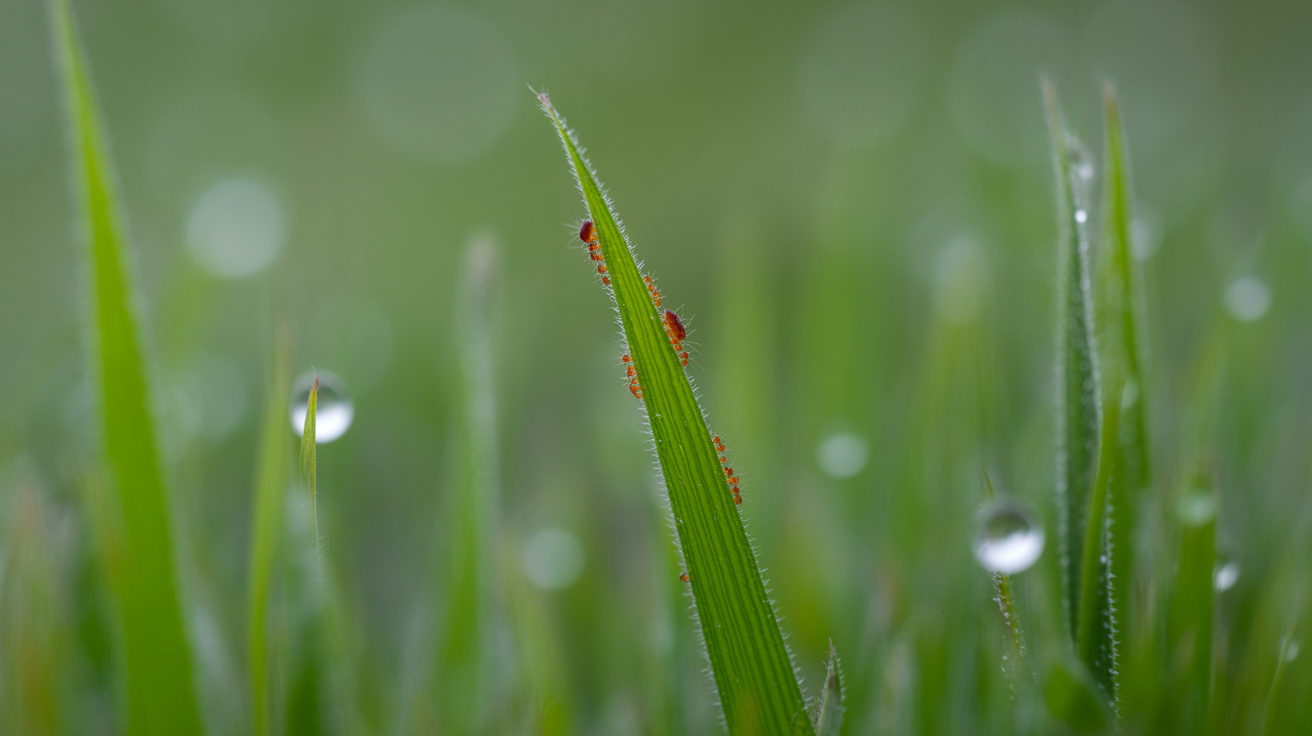
Understanding Chiggers: Can You Actually See Them?
Chigger larvae, the stage that bites, are nearly microscopic, measuring just 0.15 to 0.3 millimeters. They are pale orange to bright red, making them difficult to see without magnification. Typically, a chigger problem is only discovered after the itching starts, usually 1 to 3 hours post-exposure.
To spot chiggers, look for tiny red or orange specks moving across your skin or clothing, especially around sock lines and waistbands. Using a magnifying glass or a zoomed-in phone camera can help confirm their presence. They are easier to spot against dark clothing than bare skin.
Ready to Get Started?
Free quote • No obligation • Same-day service available
Lifecycle of Chiggers: What They Look Like at Each Stage
Understanding the lifecycle of chiggers can help in identifying and managing them effectively:
Larvae (the stage that bites)
- Size: 0.15–0.3 mm (nearly microscopic)
- Color: Pale orange to bright red-orange
- Legs: 6 (unlike adult mites which have 8)
- Body shape: Round to oval, slightly flattened
- Surface: Covered in fine, feathery setae (hair-like projections) visible under magnification
Nymphs and Adults (do not bite humans)
- Size: 1–2 mm (visible to the naked eye)
- Color: Bright red to reddish-brown (often called "red velvet mites" when seen in soil)
- Legs: 8
- Body shape: Figure-eight (two distinct body sections)
- Behavior: Found in soil and leaf litter, feeding on insect eggs
If you see bright red mites 1–2 mm in size walking across soil, pavement, or concrete, those are likely adult chiggers or closely related velvet mites. They are harmless at this stage. The larvae that bite are far too small to notice without careful inspection.
How to Identify Chigger Bites
Chigger bites have distinctive characteristics that set them apart from other common pest bites:
Typical Chigger Bite Characteristics
- Appearance: Small, raised red bumps (papules) that often develop a bright red halo. The center may show a tiny red dot where the stylostome formed.
- Pattern: Bites appear in clusters or lines, often along clothing boundaries—sock lines, waistbands, bra lines, and underwear elastic.
- Location: Concentrated around ankles, behind knees, groin, armpits, and anywhere clothing fits snugly against skin.
- Timing: Itching begins 1–3 hours after exposure. Red bumps become fully developed within 24–48 hours.
- Duration: Intense itching lasts 2–4 days, with welts persisting 1–2 weeks. Some people experience itching for up to 3 weeks.
- Itch intensity: Extremely intense—often described as worse than mosquito or flea bites. The itch is caused by your immune system reacting to the dissolved stylostome, not the mite itself.
Chigger Bites vs. Other Pest Bites
Misidentification is common. Here is how chigger bites compare to the pests most frequently confused with them:
| Feature | Chigger Bites | Mosquito Bites | Flea Bites | Bed Bug Bites |
|---|---|---|---|---|
| Pattern | Clusters at clothing lines | Random, isolated | Clusters on ankles/legs | Lines of 3 ("breakfast, lunch, dinner") |
| Location | Waist, ankles, armpits, groin | Any exposed skin | Lower legs, ankles | Arms, neck, face, torso |
| Onset | 1–3 hours after exposure | Minutes | Minutes to hours | Hours to days |
| Itch Duration | 1–3 weeks | 1–2 days | 2–5 days | 1–2 weeks |
| Appearance | Red papule with central dot | Raised white/pink welt | Small red bump with halo | Flat to slightly raised, red |
| Season | Late spring through early fall | Spring through fall | Year-round (indoors) | Year-round (indoors) |
The most reliable distinguishing factor is location on the body. Chigger bites concentrate where clothing meets skin—a pattern unique to chiggers. If your bites cluster around your waistband, sock lines, or underwear elastic after time spent outdoors, chiggers are the most likely culprit.
Signs of a Chigger Infestation in Your Yard
You cannot see a chigger "infestation" the way you might spot a wasp nest or ant mound. Instead, look for environmental conditions that support chigger populations:
- Overgrown vegetation: Tall grass, weeds, and brushy areas—especially along property edges and fence lines
- Thick leaf litter: Accumulations of leaves, pine straw, or organic debris in shaded areas
- Persistent moisture: Areas that stay damp due to poor drainage, sprinkler runoff, or shade
- Wildlife activity: Rodents, rabbits, birds, and lizards that serve as hosts and carry chigger populations
- Repeated bites: Multiple family members getting bites after spending time in specific areas of the yard
The Black Card Test
Place a 6-inch square of black cardboard or dark fabric flat on the ground in a suspected area. Leave it for 10–15 minutes, then examine the surface closely (a magnifying glass helps). Chigger larvae will appear as tiny orange-red dots that move slowly when disturbed. Repeat this test in multiple locations to map the infestation.
What to Do If You Identify Chiggers
If you confirm chiggers in your yard, the first step is reducing their habitat through mowing, brush removal, and improving drainage. For persistent problems, professional perimeter treatments with residual insecticides create a barrier that lasts 60 to 90 days.
Romex Pest Control provides targeted chigger treatments across Texas, Oklahoma, Louisiana, and Mississippi. Our technicians identify high-risk zones on your property and apply treatments where larvae concentrate—not just a blanket spray. Request a quote to get started.
Preventive Measures for Chigger Infestations
Preventing chigger infestations involves a combination of landscape management and personal protection:
- Maintain your yard: Regularly mow your lawn, trim shrubs, and remove leaf litter to reduce chigger habitats.
- Wear protective clothing: When spending time in areas prone to chiggers, wear long sleeves, pants, and tuck your pants into your socks.
- Use repellents: Apply insect repellent containing DEET or permethrin to clothing and exposed skin.
- Shower after outdoor activities: Showering immediately after being outdoors can help remove any chiggers before they bite.
For more tips on preventing pest infestations, visit our Pest Prevention Services page.
🛡️ Tired of Chigger Bites?
Our Yard Guard program eliminates chiggers, ticks, mosquitoes & fleas in one treatment plan. Enjoy your yard again — starting at $99/treatment.
Learn MoreFAQs About Chiggers
- Can chiggers infest my home? Chiggers typically do not infest homes as they prefer outdoor environments.
- How can I treat chigger bites? Over-the-counter anti-itch creams and antihistamines can help relieve symptoms. Consult a healthcare provider for severe reactions.
- Are chiggers dangerous? While chigger bites are intensely itchy, they do not transmit diseases in the United States.
Summary
Chiggers are a common nuisance in outdoor areas, especially in the southern United States. Understanding their lifecycle and identifying signs of infestation can help manage and prevent bites. Professional pest control services, such as those offered by Romex Pest Control, provide effective solutions for reducing chigger populations and protecting your yard.
Did You Know?
According to the Centers for Disease Control and Prevention (CDC), chiggers are most active in late spring through early fall, particularly in regions with warm and humid climates. This makes areas like Texas, Louisiana, Oklahoma, and Mississippi prime locations for chigger activity.
Professional Tip
For best results, combine professional pest control treatments with regular yard maintenance. This dual approach not only reduces chigger populations but also helps prevent other pests from taking hold. Regular inspections and treatments can keep your outdoor spaces comfortable and pest-free.