
About Romex Pest Control
Romex Pest Control has been a leader in pest management services across Texas, Oklahoma, Louisiana, and Mississippi for over 20 years. Our commitment to innovation and customer satisfaction has earned us numerous industry awards and a reputation for excellence. We specialize in professional pest control solutions that are both effective and tested and approved for families and pets.
Ready to Get Started?
Free quote • No obligation • Same-day service available
Why Personal Protection Matters
Chigger larvae are microscopic, nearly invisible, and live at ground level in vegetation across the Southern United States. You cannot see them coming, you will not feel them attach, and by the time the itching starts hours later, the damage is done. Personal protection is your first line of defense when spending time outdoors during chigger season (May through September in Texas, Oklahoma, Louisiana, and Mississippi).
The good news: chiggers are slow. They crawl upward from ground-level vegetation, taking 15 to 30 minutes to find a suitable attachment site. This gives you a significant window to prevent bites if you use the right strategies.
Clothing Strategy: Your Physical Barrier
What you wear is the single most effective protection against chigger bites. Chiggers cannot bite through fabric—they must reach bare skin to feed. Your clothing strategy should create an unbroken barrier from ground level up:
Essential Clothing Choices
- Long pants: Tuck pant legs into socks or boots. This forces chiggers to crawl over fabric rather than directly onto skin.
- Long-sleeved shirts: Tuck into pants at the waist. Chiggers that make it past your legs will encounter another barrier.
- Tall socks: Crew or knee-high socks over tucked pant legs create the most effective lower-body seal.
- Closed-toe shoes or boots: No sandals, flip-flops, or open-toed shoes in chigger habitat.
- Tight weave fabrics: Chiggers can penetrate loose weaves. Tightly woven synthetics or treated cotton are best.
- Light colors: Light-colored clothing makes it easier to spot chiggers crawling on you before they reach skin.
Repellents: What Works Best Against Chiggers
Two classes of repellent provide reliable chigger protection, and they work best when used together:
DEET (Applied to Skin)
DEET (N,N-Diethyl-meta-toluamide) remains the gold standard for skin-applied insect repellent. For chigger protection:
- Use products containing 20–30% DEET for outdoor activities lasting 2–5 hours
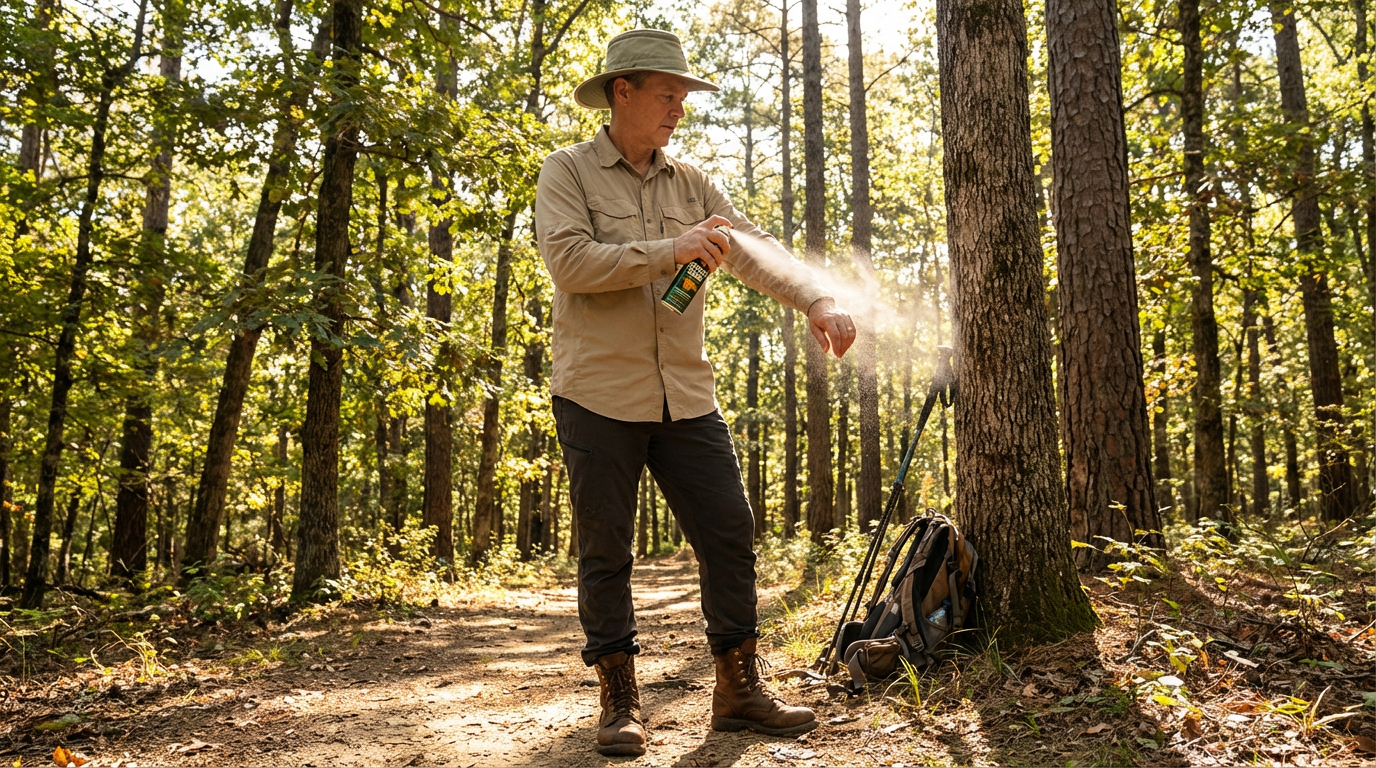
- Apply to exposed skin AND the outside of clothing at contact points: ankles, wrists, waistline, and neckline
- Reapply every 4–6 hours during extended outdoor activity
- Focus application on the lower body: ankles, calves, and around the waist, where chiggers most commonly enter
Permethrin (Applied to Clothing)
Permethrin is a synthetic insecticide that kills chiggers on contact when applied to fabric. It is the single most effective chigger deterrent when properly applied:
- Spray permethrin (0.5% concentration) on clothing, shoes, socks, and gear before wearing them
- Allow treated items to dry completely before putting them on
- Treatment lasts through 5–6 washings or about 6 weeks
- Pre-treated clothing (Insect Shield brand) maintains protection for 70+ washings
- Never apply permethrin directly to skin—it is only for fabric treatment
The combination of DEET on exposed skin and permethrin-treated clothing provides the highest level of protection available. Studies by the U.S. military found this combination prevents over 99% of chigger attachments.
Alternative Repellents
If you prefer alternatives to DEET:
- Picaridin (20%): Comparable effectiveness to DEET, with less odor and skin irritation. Apply the same way.
- Oil of Lemon Eucalyptus (OLE): The only plant-based repellent recommended by the CDC. Effective for 2–4 hours. Not recommended for children under 3.
- Sulfur powder: Traditional Southern remedy. Dusting sulfur powder on socks, shoes, and pant cuffs deters chiggers. Effective but has a strong odor.
Best Practices by Activity
Your protection strategy should match your activity level and duration:
🛡️ Tired of Chigger Bites?
Our Yard Guard program eliminates chiggers, ticks, mosquitoes & fleas in one treatment plan. Enjoy your yard again — starting at $99/treatment.
Learn About Yard Guard →📞 Or call 844-955-2447 for a free yard assessment
Yard Work and Gardening
- Wear permethrin-treated clothing, especially if working near brush, mulch beds, or property edges
- Apply DEET to exposed skin at ankles, wrists, and waistline
- Shower immediately after finishing—within 30 minutes if possible
- Keep your yard mowed and free of leaf litter to reduce chigger habitat in your working areas
Hiking and Trail Activities
- Stay on cleared trails. Avoid sitting directly on the ground, logs, or in tall grass
- Use a blanket or tarp if you need to sit or rest on the ground
- Apply repellent before hitting the trail, and reapply every 4 hours
- Inspect clothing for chiggers periodically, especially around ankles and waistline
Hunting and Fishing
- Treat all clothing, boots, and gear with permethrin 24 hours before your trip
- Carry DEET wipes for quick reapplication in the field
- Use a treated tarp or stand rather than sitting directly on vegetation
- Shower and change clothing as soon as you return to camp or home
Post-Exposure: The Critical 2-Hour Window
Even with protection, some chiggers may get through. What you do in the first 1–2 hours after returning indoors can prevent or dramatically reduce bites:
- Shower with soap and warm water within 30 minutes. Scrub thoroughly, especially at ankles, waistline, armpits, and behind the knees. This dislodges larvae that have not yet formed a stylostome.
- Use a washcloth or loofah. Physical scrubbing is more effective than soap alone at removing attached larvae.
- Wash clothing in hot water (130°F+) and dry on high heat. Do not toss worn clothing into a hamper where larvae can crawl to other items.
- Inspect yourself carefully. Use a magnifying mirror to check areas where clothing was tight against skin.
- Apply anti-itch cream preemptively to areas that commonly develop bites (ankles, waistline), even before itching starts.
Protecting Your Yard: The Long-Term Solution
Personal protection works well for occasional outdoor activities, but if chiggers live in your own yard, the most effective strategy is eliminating them at the source. Consistent yard maintenance combined with professional perimeter treatments can keep your property chigger-free for the entire season.
Romex Pest Control provides targeted chigger treatments across Texas, Oklahoma, Louisiana, and Mississippi. Our every-other-month to quarterly service schedule maintains a continuous barrier that protects your family and pets. Get a quote to find out if your yard has a chigger problem.
Environmental Impact of Repellents
While repellents like DEET and permethrin are effective, it's important to use them responsibly to minimize environmental impact. According to the Environmental Protection Agency (EPA), following label instructions and applying only as needed can help reduce potential risks.
FAQ: Common Questions About Chigger Protection
What are chiggers?
Chiggers are the larval stage of a type of mite found in grassy and wooded areas. They are known for causing itchy bites.
Can chiggers transmit diseases?
According to the CDC, chiggers in the United States do not transmit diseases, but their bites can cause significant itching and discomfort.
How can I treat chigger bites?
Over-the-counter anti-itch creams and antihistamines can help relieve itching. Avoid scratching to prevent infection.