Walk outside during summer in Texas, Oklahoma, Louisiana, or Mississippi and you are sharing the landscape with dozens of biting insects and arachnids. Most bites are minor annoyances. A few, however, can carry disease, trigger dangerous allergic reactions, or signal a pest problem inside your home that needs professional attention.
Identifying which insect bit you is the single most important first step. The right identification tells you whether to apply a cold compress and move on, call your doctor, or book a licensed pest inspection before the problem spreads.
This guide—written by licensed pest control professionals with boots-on-the-ground experience across the Southern United States—walks you through the most common bites you are likely to see, what they look like, how they feel, and how to treat them safely.
Why Insect Bite Identification Matters
Not all bug bites are created equal. A mosquito welt fades in a day; a tick bite can deliver Lyme disease that lingers for months; bed bug bites reveal a bigger infestation hiding in your mattress seams. Misidentifying a bite wastes time on the wrong treatment and lets the underlying pest problem grow.
- Health risk. Mosquitoes can transmit West Nile virus and Zika. Ticks can transmit Lyme disease, Rocky Mountain spotted fever, and alpha-gal syndrome. Certain spider bites need urgent medical care.
- Pest control clues. Bed bug bites in a line on exposed skin point to an infestation you cannot ignore. Flea bites on the ankles signal an untreated pet or contaminated carpet.
- Proper treatment. A topical anti-itch cream is perfect for a mosquito bite but wholly inadequate for a suspected brown recluse bite.
How to Identify a Bug Bite: The Four Features That Matter
When a new bite appears, look for these four features before you guess who was responsible:
- Pattern and location. Is it a single bite, a cluster, or a neat straight line? Bites on ankles and lower legs point to fleas or chiggers; bites on arms and shoulders while you slept suggest bed bugs; a lone bite on an exposed area usually means mosquito.
- Appearance. Small and flat, or raised and red? Is there a bullseye? A blister? A darkening center? Each pattern narrows the likely culprit.
- Symptoms. Light itch, burning pain, numbness, swelling, or fever all tell different stories.
- Timing. Did the welt appear within minutes (mosquito) or hours later (chigger, bed bug)? When did you last spend time outdoors, sleep away from home, or visit a pet-friendly space?
With these four clues, you can usually narrow the field to one or two culprits. The comparison photos and descriptions below take it the rest of the way.
Common Insect Bites and Their Symptoms
Most of the biting pests we treat in the Southern United States fall into five categories. Here is how to recognize each one in the field.
1. Mosquito Bite
Mosquito bites are the most common insect bite worldwide and the one most people recognize. Symptoms usually appear within minutes.
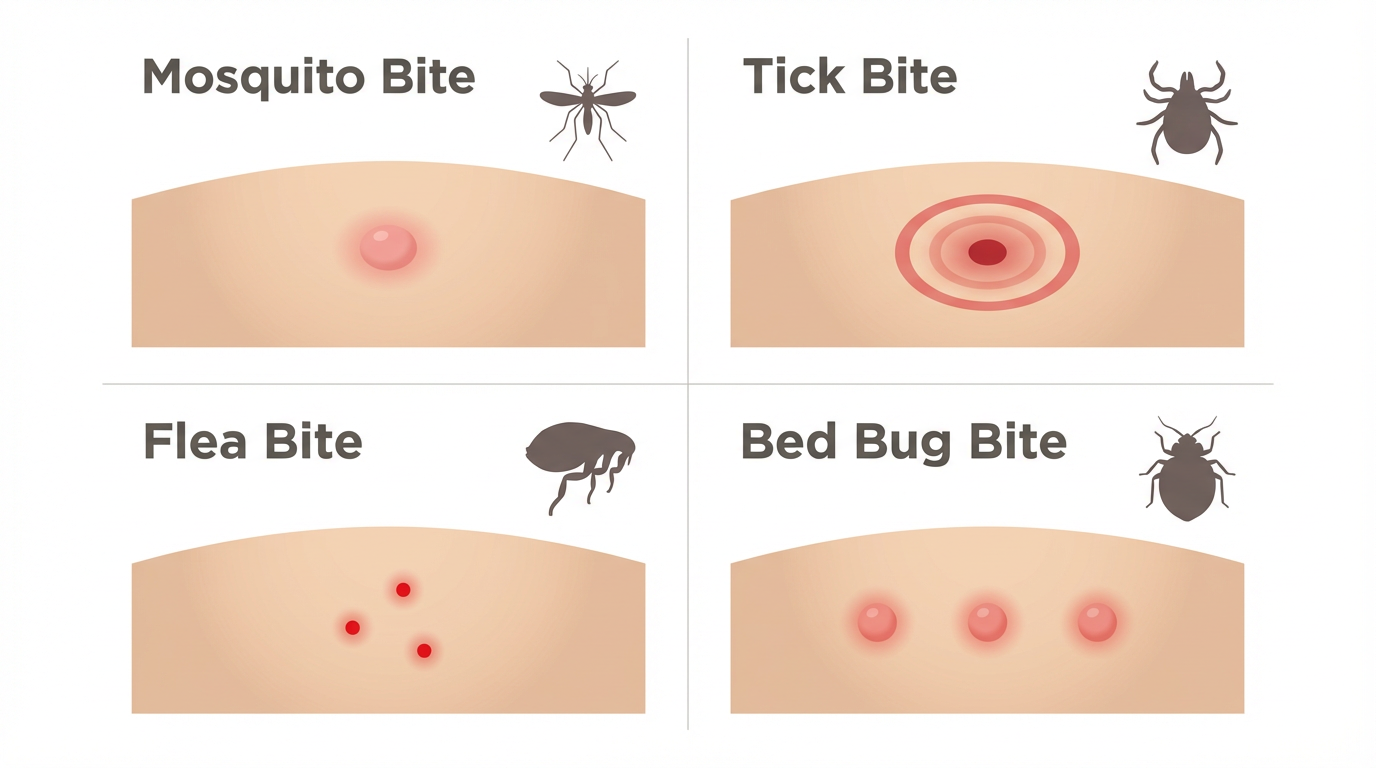
- Appearance: A small round, raised pink or red bump—often with a tiny puncture in the center.
- Sensation: Immediate itching that may last a few hours to a few days.
- Location: Anywhere exposed skin is available—ankles, arms, neck, face, and scalp are common.
- Health concern: Mosquitoes are vectors for West Nile virus, Zika, dengue, and Eastern equine encephalitis in parts of our service area. Fever, headache, body aches, or rash after a bite warrants a call to your doctor.
Most single mosquito welts resolve on their own. Persistent swarms around your yard, however, usually point to standing water or untreated harborage. A professional mosquito control program targets breeding sites and resting vegetation to break the cycle.
2. Tick Bite
Ticks are arachnids, not insects, but they are one of the most medically significant biters in our region. A tick bite often goes unnoticed until you find the tick itself still attached.
- Appearance: A small red bump that may develop into a larger red area. The classic warning sign is a bullseye rash (erythema migrans) 3 to 30 days after the bite—a potential sign of Lyme disease.
- Sensation: Often painless. Many people never feel the bite itself.
- Location: Warm, hidden areas—scalp, behind ears, armpits, groin, waistline, behind knees.
- Health concern: Ticks can transmit Lyme disease, Rocky Mountain spotted fever, ehrlichiosis, anaplasmosis, and alpha-gal syndrome (a red-meat allergy caused by the Lone Star tick common across TX, OK, LA, and MS).
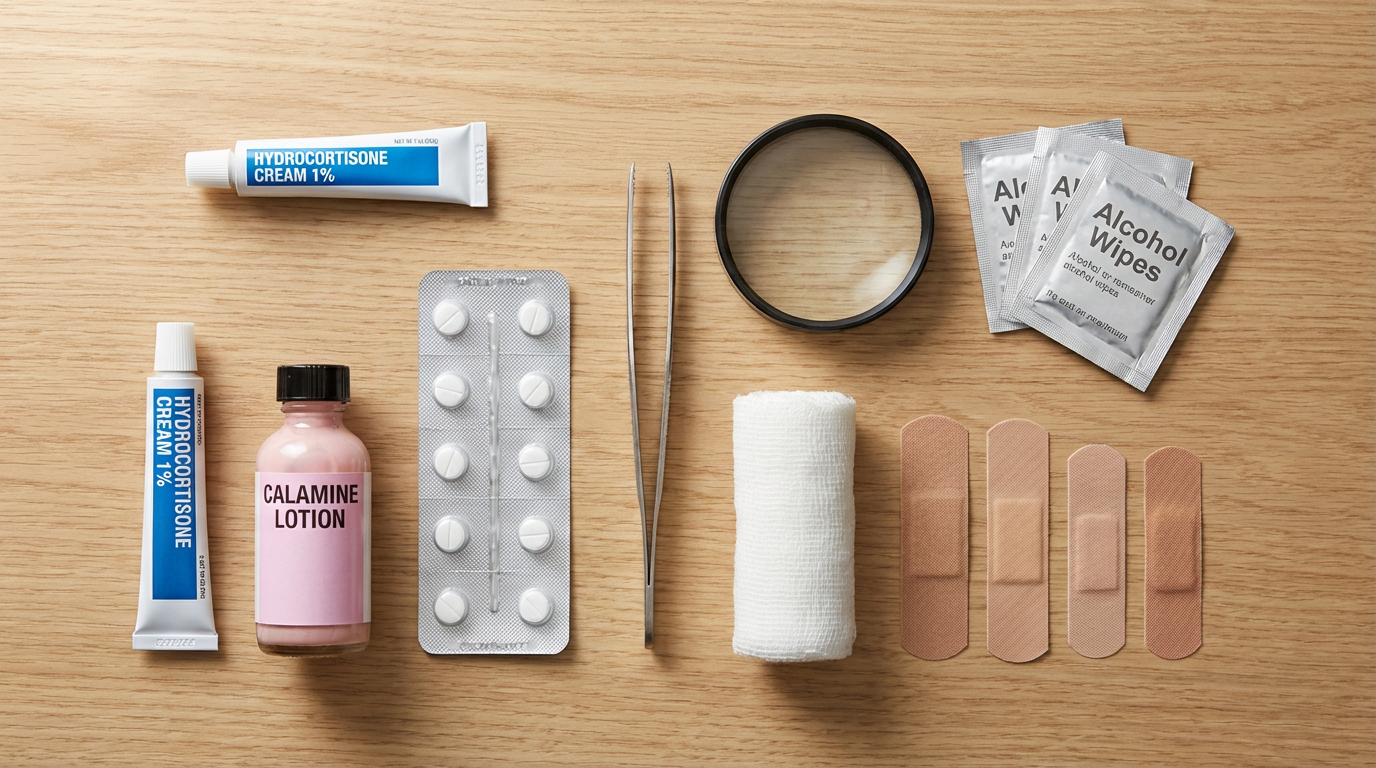
If you find an embedded tick, remove it with fine-tipped tweezers by grasping as close to the skin as possible and pulling straight up with steady pressure. Clean the area with soap and water or rubbing alcohol. Save the tick in a sealed bag in case testing is needed. If you develop a rash, fever, joint pain, or fatigue within 30 days, see a physician and mention the tick exposure.
Persistent tick issues usually trace back to tall grass, brush, and leaf litter near the home. Our flea and tick yard treatments reduce populations at the source.
3. Flea Bite
Flea bites are small but unmistakable once you know the pattern.
- Appearance: Tiny red bumps, each with a darker red center. Usually arranged in clusters of three—sometimes called the "breakfast, lunch, and dinner" pattern.
- Sensation: Intense itching, sometimes with a halo of red irritation around each bite.
- Location: Almost always on the lower legs—ankles, shins, and feet—because fleas jump up from the floor or pet bedding.
- Health concern: Fleas can transmit typhus and, in rare cases, plague; they can also trigger allergic reactions and serve as intermediate hosts for tapeworm (especially in pets).
Flea bites on humans almost always mean pets or wildlife have introduced fleas into the home. Treating only the people will not help—you need a coordinated approach that addresses the pet, the home interior, and the yard. Our flea and tick control program handles all three.
4. Bed Bug Bite
Few bites cause more alarm than bed bug bites because of the infestation they signal.
- Appearance: Small, flat or slightly raised red welts, often in a straight line or zigzag of three or four bites along an exposed area.
- Sensation: Itchy, but usually no immediate sharp pain. Bites are often not noticed until hours after waking.
- Location: Arms, shoulders, neck, face—anywhere skin is exposed during sleep.
- Health concern: Bed bugs do not transmit disease, but severe reactions, secondary skin infections from scratching, and anxiety-related insomnia are common. The bigger problem is the infestation itself: adult bed bugs are visible and multiply quickly.
Inspect mattress seams, box spring folds, and headboard crevices for rusty-brown stains, shed skins, or tiny apple-seed-shaped adults. If you find evidence, do not attempt DIY fumigation—bed bugs are notoriously resistant to over-the-counter sprays. Our professional bed bug treatments use a multi-step approach that eliminates eggs, nymphs, and adults in a single course.
5. Spider Bite
The vast majority of "spider bites" diagnosed at home are actually mosquito bites, skin infections, or bites from other insects. True spider bites are uncommon, but a handful of species warrant caution.
- Appearance: Two small puncture marks close together, often with redness and swelling.
- Sensation: Varies widely. Most bites sting briefly and fade. Bites from medically significant spiders cause worsening pain or tissue changes over hours.
- Location: Usually on hands, arms, or legs after reaching into stored boxes, wood piles, or clothing left on the floor.
- Of concern in our region:
- Black widow: Sharp pinprick pain followed by muscle cramping, sweating, and abdominal pain. Seek emergency care.
- Brown recluse: Painless at first. Over 24 to 72 hours the wound may develop a dark center and progress to a deep ulcer. Seek medical attention promptly.
If a spider bite produces worsening pain, blistering, a necrotic-looking wound, fever, or muscle spasms, go to urgent care or the ER. For ongoing spider problems around the home, our spider control service targets webs, egg sacs, and harborage to prevent encounters before they happen.
6. Other Common Biting Pests
Beyond the big five, you may also encounter:
- Lice: Small itchy bumps on the scalp accompanied by visible tiny eggs (nits) attached to the hair shaft. Most often seen in school-aged children.
- Fire ants: Red, raised bites that quickly develop into a white pustule within 24 hours. Ant bites cluster where your foot or ankle brushed a mound. If you see a red earthen mound in your yard, approach it carefully—fire ants are aggressive and will swarm. Our pest pros can pinpoint and treat fire ant mounds before children or pets are stung.
- Chiggers: Extremely itchy welts that appear 1 to 3 hours after exposure, typically clustered where clothing fits tightly—sock lines, waistbands, and behind the knees. Learn more about identifying chigger bites or our dedicated chigger control service.
- Bee stings: Sharp, immediate pain, redness, and swelling around a visible stinger (honeybees leave theirs behind). Most people recover with ice and an antihistamine; those with known allergies should carry epinephrine.
- Wasp and hornet stings: Similar to bee stings but more painful and more likely to sting multiple times. Wasps do not leave a stinger. A nest near the home is best handled by our wasp and hornet control team.
Insect Bite Identification Chart
Use this quick reference table to narrow down a bite in seconds. Cross-reference with the detailed descriptions above to confirm.
| Bite Source | Appearance | Typical Location | Key Symptom |
|---|---|---|---|
| Mosquito | Single raised pink-red bump with tiny puncture in center | Any exposed skin | Immediate itching |
| Tick | Red bump, sometimes with bullseye ring around it | Scalp, waistline, groin, armpits, behind knees | Often painless; tick may still be attached |
| Flea | Tiny red bumps in triangular clusters of three | Ankles, shins, lower legs | Intense itching, red halo |
| Bed bug | Flat or slightly raised red welts in straight line or zigzag | Arms, shoulders, neck, face | Noticed on waking; delayed itch |
| Spider | Two close puncture marks, variable swelling | Hands, arms, legs | Sting; may worsen over 24–72 hours |
| Chigger | Intensely itchy red welts clustered at clothing edges | Ankles, waistband, behind knees | Delayed itch 1–3 hours after exposure |
| Fire ant | Red bump that becomes a white pustule within 24 hours | Feet, ankles | Burning pain; multiple bites in a cluster |
| Bee / wasp | Red welt around sting site; stinger may be visible (bees) | Any exposed skin | Immediate sharp pain |
Using Apps and Field Guides
When you are not sure what bit you, a reputable identification app or field guide can help. Many state extension services publish free pest identification tools that are tailored to your region and updated annually.
- State extension services: Texas A&M AgriLife, Oklahoma State University, LSU AgCenter, and Mississippi State Extension publish excellent free pest guides.
- CDC resources: The CDC tick and mosquito pages offer authoritative information on vector-borne diseases.
- Photo-based apps: Tools like iNaturalist and Picture Insect help identify the insect itself when you can capture a clear photo.
Apps are a great starting point, but they are not a substitute for medical evaluation when symptoms are severe or for a professional pest inspection when bites keep recurring.
When to Seek Medical Attention
Most bug bites can be treated at home. Go to urgent care or the emergency room if you experience any of the following:
- Difficulty breathing, wheezing, or tightness in the throat or chest
- Rapid swelling of the face, lips, or tongue
- Dizziness, fainting, or rapid heartbeat
- Severe pain, muscle cramping, or abdominal pain after a suspected black widow bite
- A darkening or ulcerating wound after a suspected brown recluse bite
- Fever, chills, or body aches in the days or weeks after a tick bite
- A bullseye rash on the skin within 30 days of a tick exposure
- Pus, spreading redness, red streaks, or warmth at the bite site (signs of secondary infection)
People with known stinging-insect allergies should carry an epinephrine auto-injector and use it immediately at the first sign of anaphylaxis.
How to Treat Insect Bites
For mild to moderate bites, the following step-by-step routine handles symptoms safely and effectively. These recommendations align with current guidance from the American Academy of Dermatology and the Mayo Clinic.
- Clean the area. Wash the bite with mild soap and warm water to remove saliva, venom residue, and surface bacteria. Pat dry with a clean towel.
- Cool the site. Apply an ice pack or cool compress (wrapped in a cloth) for 10 to 15 minutes to reduce swelling and numb the itch.
- Use a topical anti-itch product. Over-the-counter hydrocortisone cream (1%) or calamine lotion applied 2 to 3 times per day calms the immune reaction and provides fast relief.
- Take an oral antihistamine. Diphenhydramine (Benadryl), cetirizine (Zyrtec), or loratadine (Claritin) reduce itching and swelling system-wide. Follow package directions.
- Consider a cool oatmeal bath. For widespread bites, 15 to 20 minutes in a cool oatmeal bath soothes multiple sites at once.
- Do not scratch. Scratching breaks the skin, invites bacterial infection, and prolongs healing. Keep fingernails trimmed.
Most bites resolve in 3 to 10 days. If a bite site worsens, spreads, or fails to heal within 2 weeks, see a physician.
Prevention: Stop Bites Before They Happen
Treatment helps after the fact—but prevention is easier, safer, and more effective. A consistent prevention routine cuts encounter rates dramatically.
- Dress for protection. Long sleeves, long pants, and closed-toe shoes reduce exposed skin outdoors. Tuck pants into socks when hiking or working in tall grass.
- Use EPA-registered repellents. The EPA lists DEET, picaridin, IR3535, oil of lemon eucalyptus (OLE), and 2-undecanone as proven active ingredients. Apply to exposed skin and re-apply according to product label.
- Treat clothing and gear. Permethrin-treated clothing (sold pre-treated or applied as a spray) repels and kills ticks, mosquitoes, and chiggers on contact.
- Eliminate standing water. Empty plant saucers, bird baths, gutters, and outdoor containers weekly to break the mosquito breeding cycle.
- Check window and door screens. Repair tears, replace worn weather stripping, and keep doors closed during peak mosquito and fly activity.
- Inspect after outdoor time. Do a head-to-toe tick check after hiking, gardening, or yard work. Shower within two hours to wash off unattached ticks and chiggers.
- Pet flea prevention. Keep dogs and cats on year-round flea and tick preventives prescribed by your vet—this is the single most effective step to keep fleas out of the home.
- Regular pest control. A professional perimeter treatment every other month to quarterly keeps mosquitoes, ticks, fleas, spiders, and fire ants away from the areas where your family spends time. Contact Romex Pest Control for a free inspection.
Frequently Asked Questions
How can I tell what insect bit me?
Start with the four clues covered above—pattern, appearance, symptoms, and timing. Mosquito welts appear immediately; chigger and bed bug bites appear hours later. Fleas cluster on the ankles; bed bugs cluster on exposed upper body; ticks often embed in hidden folds of skin. When in doubt, cross-check against the chart above or consult a field guide from your state extension service.
Are all insect bites dangerous?
No. The vast majority of insect bites are minor and self-resolving. A small subset carry health risk—especially tick, mosquito, and certain spider bites. Watch for systemic symptoms like fever, spreading rash, difficulty breathing, or a bullseye rash, and seek medical care if any develop.
What is the best at-home treatment for a bug bite?
Wash the bite with soap and water, apply a cold compress, then use hydrocortisone cream or calamine lotion for topical relief. Add an oral antihistamine for stronger symptoms. Avoid scratching to prevent secondary infection.
How can I prevent insect bites outdoors?
Cover exposed skin with long sleeves and pants, apply an EPA-registered repellent (DEET, picaridin, IR3535, OLE, or 2-undecanone), and treat clothing with permethrin. Eliminate standing water around your home and schedule regular professional pest control.
When should I see a doctor for a bug bite?
Seek medical attention for difficulty breathing, facial swelling, widespread hives, a darkening or ulcerating wound, a bullseye rash after a tick exposure, or any bite that produces fever, severe pain, or spreading redness over 24 to 48 hours.
How do I know if my house has a bed bug or flea problem?
Bed bug bites cluster on exposed upper-body skin and are often noticed on waking; look for rusty-brown stains and apple-seed-sized adults in mattress seams and headboard crevices. Flea bites cluster on lower legs and ankles; check pet bedding and carpet edges for tiny dark specks (flea dirt). If you suspect either, our bed bug or flea and tick teams can confirm with a free inspection.
When Bites Keep Coming, Call the Pros
One mosquito welt is a nuisance. Repeated bites month after month point to an unresolved pest problem on your property—and no amount of topical cream can fix that. A licensed pest control technician can identify harborage areas, treat breeding sites, and put a preventive program in place so the bites stop at the source.
Romex Pest Control has protected homeowners across Texas, Oklahoma, Louisiana, and Mississippi since 2016. Our technicians are licensed, experienced, and committed to solving the pest problems behind the bites—not just masking the symptoms. Schedule a free inspection today and stop fighting your yard alone.