
Ready to Get Started?
Free quote • No obligation • Same-day service available
Scorpions Start Outside — So Should Your Prevention
Every scorpion that shows up in your Oklahoma bedroom or bathroom started its journey in your yard. The conditions around the exterior of your home — landscaping, debris, moisture, lighting — determine how much scorpion pressure your property attracts.
Oklahoma State University Extension emphasizes that habitat modification is the foundation of effective scorpion management. Chemical treatments work best when combined with reducing the conditions that draw scorpions to your property in the first place.
According to the CDC, scorpions are nocturnal and prefer warm, dry climates, making habitat modification crucial in areas like Oklahoma.
The 7 Outdoor Changes That Reduce Scorpion Pressure
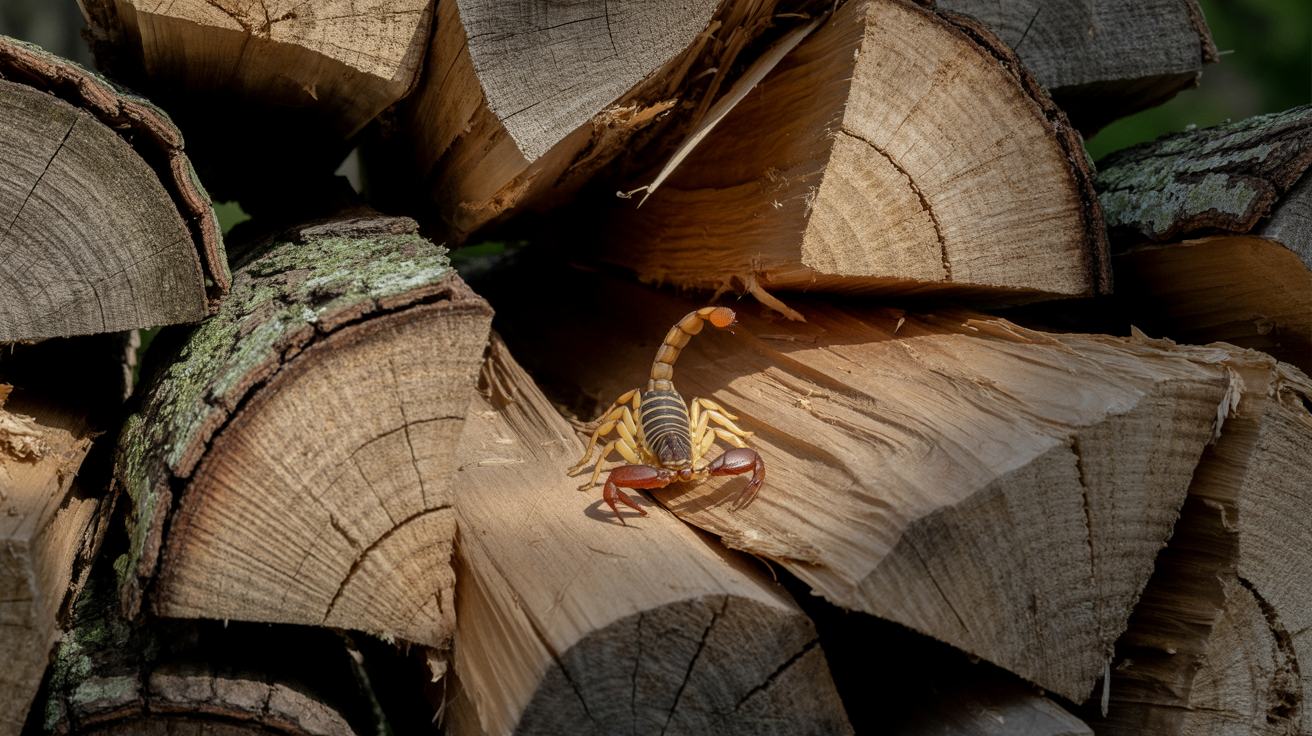
1. Move Firewood Away from the House
Stacked firewood is one of the most concentrated scorpion habitats on a typical Oklahoma property. The gaps between logs create perfect daytime hiding spots with stable temperatures and access to prey insects.
What to do: Store firewood at least 20 feet from the house, elevated off the ground on a rack. Only bring logs inside immediately before burning — never stockpile firewood indoors.
2. Eliminate Ground-Level Debris
OSU Extension specifically identifies rocks, logs, boards, bricks, and trash piled near the home as scorpion harborage. Any object sitting on the ground near your foundation provides a daytime shelter.
What to do: Remove landscape timbers, decorative rock borders, construction debris, and stored materials from within 5 feet of your foundation. If you use decorative stone in landscaping, keep it away from the structure.
3. Maintain Tight Lawn Mowing Near the Foundation
Tall grass and overgrown vegetation along the foundation creates a humid microclimate that scorpions prefer. It also conceals their movement toward entry points.
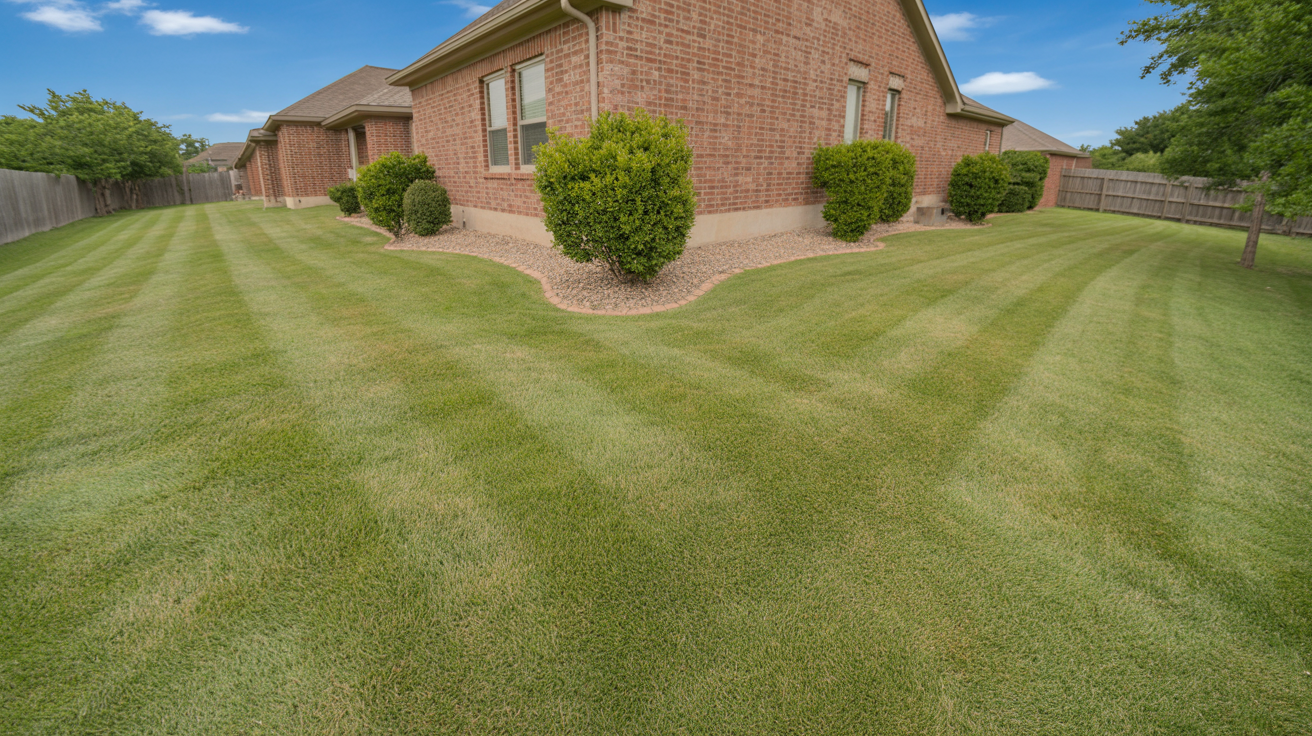
What to do: Keep grass mowed short within 3 feet of the foundation. Edge along sidewalks, driveways, and the foundation line. Trim ground cover plants so they don't touch the structure.
4. Manage Landscaping Proximity
Shrubs, bushes, and ornamental plantings that touch or overhang the house create a direct bridge from yard to structure. Scorpions climb vegetation and transfer to walls, soffits, and roof eaves.
What to do: Maintain at least 18 inches of clearance between all vegetation and the exterior walls. Prune tree branches that overhang the roof. Remove dead plants and clear leaf litter from beds near the house.
5. Address Moisture Sources
Scorpions need moisture to survive. Leaking hose bibs, overwatered flower beds, clogged gutters, and poorly graded soil that pools water against the foundation all increase scorpion pressure.
What to do: Fix dripping faucets and hose connections. Ensure gutters and downspouts direct water at least 4 feet from the foundation. Adjust irrigation to avoid saturating soil near the structure. Ensure proper grading so water flows away from the foundation.
6. Switch Exterior Lighting
Standard white outdoor lights attract the insects that scorpions feed on. By changing your lighting, you reduce the prey population that draws scorpions to your home's exterior.
What to do: Replace white exterior bulbs with warm-amber LED or sodium vapor "bug lights." Position lighting fixtures away from doorways and windows. Consider motion-activated lights instead of always-on fixtures.
7. Elevate Outdoor Storage
Garbage cans, recycling bins, potted plants, and outdoor equipment sitting directly on the ground create harborage points.
What to do: Store garbage containers on elevated platforms or racks. Keep potted plants on stands rather than directly on the ground. Store outdoor tools and equipment on wall-mounted hooks or shelving.
The Professional Layer: Residual Barrier Treatment
Habitat modification reduces scorpion pressure — but professional perimeter treatment creates a chemical barrier that eliminates scorpions as they attempt to cross from your yard into your home. This two-layer approach (modification + barrier) is the most effective strategy available.
Romex Pest Control applies residual treatments to the foundation, entry points, and transition zones where scorpions travel. Combined with your habitat modifications, this creates a defense that works 24 hours a day between service visits.
Our recommended service cadence is every 60–90 days to maintain an effective barrier. Locally managed and operated, serving since 2016.
Case Studies: Successful Scorpion Prevention
In a study conducted by Romex Pest Control in Oklahoma City, a combination of habitat modification and professional treatments reduced scorpion sightings by over 80% within three months. This case highlights the importance of a comprehensive approach to scorpion management.
How Climate Affects Scorpion Activity in Oklahoma
Scorpions thrive in warm, dry climates, but they also need moisture to survive. Oklahoma's climate, with its hot summers and occasional rainfall, creates an ideal environment for scorpions. Understanding these conditions can help in planning effective prevention strategies.
According to the National Weather Service, Oklahoma experiences significant temperature fluctuations, which can influence scorpion behavior and habitat preferences.
Environmental Impact of Treatments
While professional treatments are effective, it's important to consider their environmental impact. Romex Pest Control uses tested and approved methods to minimize environmental disruption while ensuring effective scorpion management. According to the EPA, integrated pest management (IPM) strategies can help reduce the environmental impact of pest control.
Company History and Mission
Romex Pest Control has been serving the communities of Texas, Louisiana, Oklahoma, and Mississippi since 2016. Our mission is to provide professional pest management solutions that protect homes and businesses while prioritizing customer satisfaction and safety.
We are committed to using tested and approved methods to ensure the safety and effectiveness of our services.
FAQ
- How often should I have my yard treated for scorpions? We recommend a professional treatment every 60–90 days for optimal protection.
- What precautions should I take with pets and children? All-natural options are available on request. Whatever the treatment, our licensed technicians use EPA-registered products applied according to label directions and explain the precautions for your household.
- What should I do if I see a scorpion inside my home? Contact Romex Pest Control immediately for a professional assessment and treatment plan.
Did You Know?
Scorpions have been around for over 400 million years, making them one of the oldest known terrestrial arthropods. They are incredibly resilient and can survive in harsh environments, which is why effective prevention is crucial.
Professional Tip
For the best results, combine habitat modification with regular professional treatments. This dual approach not only reduces scorpion pressure but also provides a long-term solution to keep your home scorpion-free.