
Argentine Ant
Linepithema humile
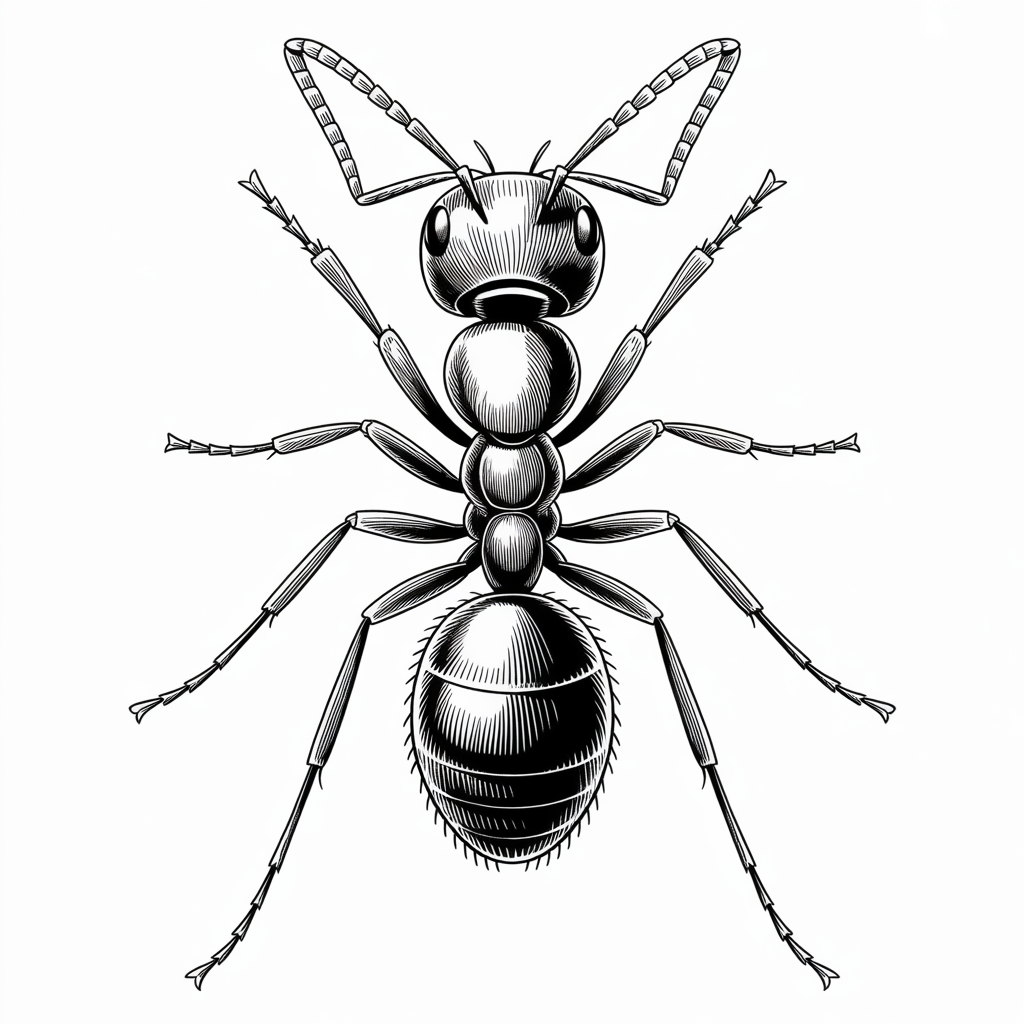
Scientific illustration for identification purposes
Overview
Argentine ants are an invasive species that forms massive "supercolonies" containing millions of ants and multiple queens. They aggressively displace native ant species and are a significant nuisance pest, often invading homes in huge numbers.
How to Identify
- Small size - 1/16 to 1/4 inch
- Uniform light to dark brown color
- Single node petiole
- 12-segmented antennae without club
- Workers are monomorphic (same size)
- Give off musty odor when crushed
Behavior
Argentine ants do not fight with ants from other Argentine ant colonies, allowing them to form massive supercolonies. They follow well-defined trails and invade homes in large numbers seeking food and water. They protect aphids and scale insects for honeydew.
Habitat
Nest in moist soil near foundations, under debris, mulch, and stones. Will nest in wall voids and under floors when outdoor conditions become unfavorable. Prefer areas with consistent moisture.
Diet
Prefer sweet foods and honeydew from aphids but will eat proteins, fats, and other insects. Highly attracted to sugary substances.
Reproduction
Colonies have multiple queens that can produce thousands of eggs. New colonies form through budding, similar to pharaoh ants.
Distribution in the Southern U.S.
Common in urban areas of Texas, Louisiana, and parts of Oklahoma and Mississippi, especially in coastal and humid regions.
Regional Notes
Argentine ants thrive in irrigated landscapes and are spreading northward with climate change. They often invade during dry periods seeking moisture.
Signs of Infestation
- Long, wide ant trails with thousands of ants
- Ants moving in steady streams along foundation
- Multiple entry points into home
- Aphid populations on plants (ants farm them)
- Ants appearing after watering lawn or irrigation
Prevention Tips
- Reduce moisture around foundation
- Trim vegetation away from house
- Fix irrigation leaks promptly
- Remove debris and mulch from foundation
- Seal entry points around doors and windows
- Control aphid populations on plants
When to Contact a Professional
Contact a professional when you see large numbers of ants or trails that persist despite DIY efforts. Professional perimeter treatments and baiting programs are most effective.
Romex Pest Control provides professional argentine ant control services across Texas, Oklahoma, Louisiana, and Mississippi.
Learn about our argentine ant control servicesFrequently Asked Questions
Why are there so many Argentine ants?
Argentine ants form "supercolonies" because ants from different nests cooperate instead of fighting. This allows their populations to grow to massive sizes with millions of interconnected workers.
How do I know if I have Argentine ants?
Look for long, steady trails of uniformly-sized brown ants, often along edges of sidewalks, foundations, and walls. They give off a musty smell when crushed and do not bite or sting.
Latest Research & News
Recent developments about argentine ant
Get the latest news and research about argentine ant
Click "Load News" to fetch recent articles from scientific sources