
Tawny Crazy Ant
Nylanderia fulva
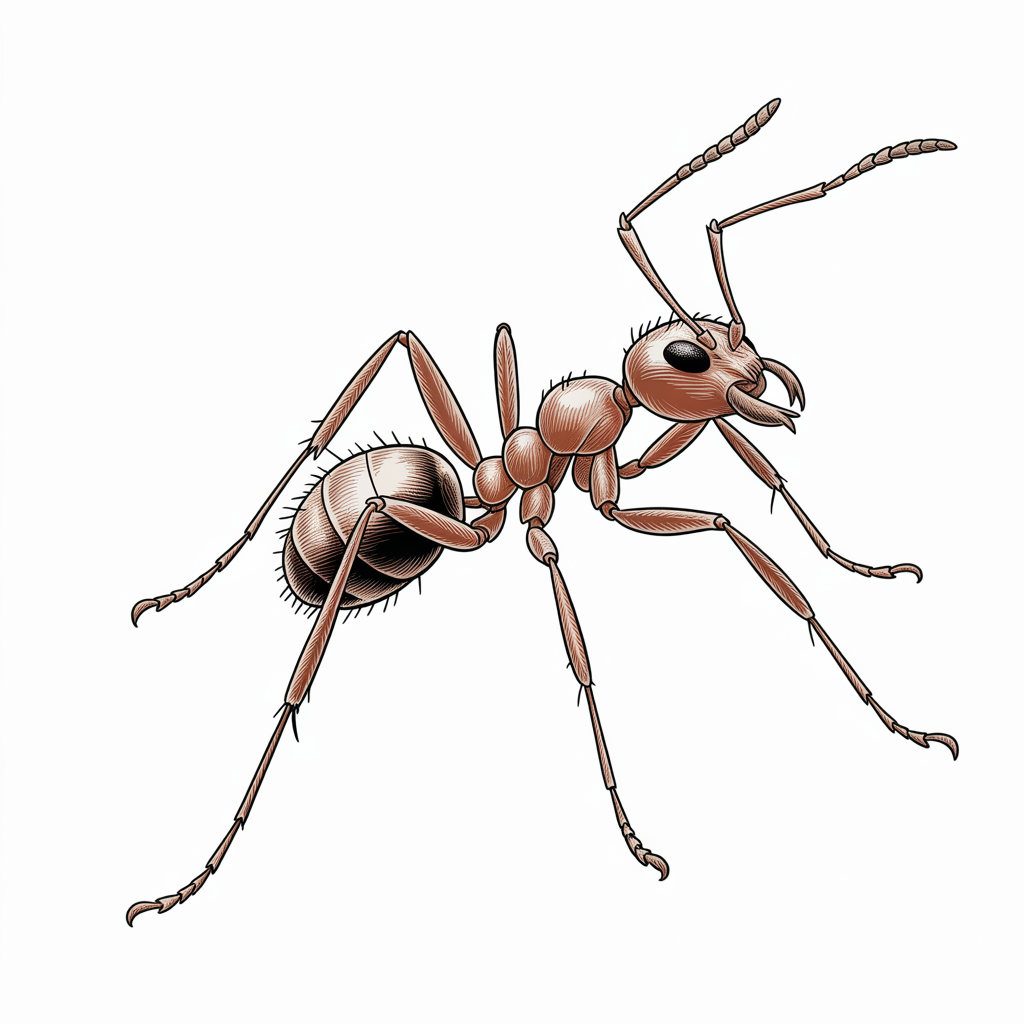
Scientific illustration for identification purposes
Overview
Tawny crazy ants (formerly called Rasberry crazy ants) are an invasive species from South America that has rapidly spread across the Gulf Coast. They get their name from their erratic, jerky movement patterns. They form enormous supercolonies and are known for damaging electrical equipment.
How to Identify
- Small size - about 1/8 inch
- Reddish-brown to grayish-brown color
- Long legs and antennae relative to body size
- Erratic, fast, unpredictable movement
- Densely hairy body
Behavior
Crazy ants move erratically rather than in organized trails. They form massive supercolonies with billions of ants and multiple queens. They are strongly attracted to electrical equipment and have caused millions in damage by shorting out electronics and air conditioning units.
Habitat
Nest in leaf litter, mulch, soil, and debris outdoors. Readily move into wall voids, electrical boxes, air conditioning units, and any available cavity. Prefer moist areas.
Diet
Omnivorous - eat insects, honeydew, and sweets. They are displacing fire ants by monopolizing food resources.
Reproduction
Colonies have multiple queens and can reach enormous sizes. New colonies form through budding and human transport of infested materials.
Distribution in the Southern U.S.
Established in Southeast Texas, Louisiana Gulf Coast, and spreading. First detected in Houston area in 2002.
Regional Notes
Crazy ants are displacing fire ants in infested areas. While they do not sting, their sheer numbers and electrical damage make them a serious pest.
Signs of Infestation
- Massive numbers of erratically-moving ants
- Ants inside electrical equipment
- Electrical failures and short circuits
- Dead ants accumulated around outlets
- Ants swarming around landscape features
Prevention Tips
- Keep vegetation and mulch away from foundation
- Seal gaps around electrical and plumbing penetrations
- Regular inspection of electrical equipment
- Remove leaf litter and debris from property
- Contact professional immediately if detected
When to Contact a Professional
Contact a professional immediately if you suspect crazy ants. These are extremely difficult to control and require professional management. Do not attempt DIY treatment.
Romex Pest Control provides professional tawny crazy ant control services across Texas, Oklahoma, Louisiana, and Mississippi.
Learn about our tawny crazy ant control servicesFrequently Asked Questions
Why do crazy ants damage electronics?
Crazy ants are attracted to electrical fields and nest in electrical equipment. When one ant is electrocuted, it releases alarm pheromones that attract more ants. The buildup of dead ants and live ants causes short circuits and equipment failure.
Are crazy ants replacing fire ants?
Yes, in areas where crazy ants are established, they are displacing fire ants. While crazy ants do not sting, they cause significant property damage and are even more difficult to control than fire ants.
Latest Research & News
Recent developments about tawny crazy ant
Get the latest news and research about tawny crazy ant
Click "Load News" to fetch recent articles from scientific sources