
Why Termite Inspections Matter in McKinney
Termites cause over $5 billion in property damage annually in the United States (EPA). McKinney, Texas, is located in a "heavy" termite pressure zone as per the Termite Infestation Probability Zone (TIP Zone) map. This makes routine termite inspections essential for homeowners in the area.
McKinney homeowners, particularly those in Historic Downtown and older sections of Stonebridge Ranch, face elevated termite risks due to:
- Home age: Pre-1990 construction methods and materials are more susceptible to termite damage.
- Mature landscaping: Large trees and mulch beds near foundations create pathways for termites.
- Clay soil: Collin County's clay soil retains moisture, creating ideal conditions for subterranean termites.
- Warm climate: North Texas winters rarely freeze deep enough to impact termite colonies.
Did You Know?
Subterranean termites, the most common type in McKinney, can form colonies of up to 2 million termites! These colonies can cause significant structural damage if left untreated.
Ready to Get Started?
Free quote • No obligation • Same-day service available
Termite Warning Signs Every McKinney Homeowner Should Know
Early detection can save homeowners thousands of dollars in repair costs. Here are some visible and hidden signs of termite activity:
Visible Signs
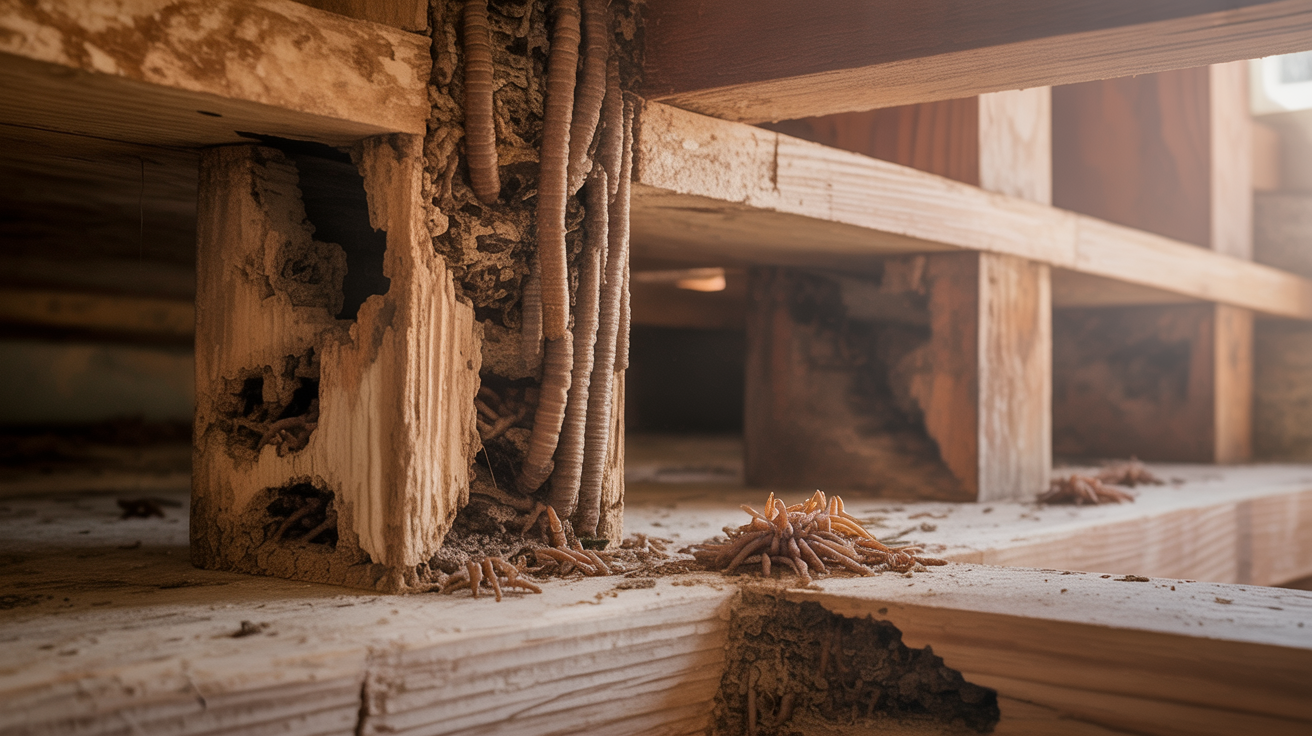
- Mud tubes: Pencil-width tubes on foundation walls, pipes, or crawl spaces.
- Discarded wings: Piles of small wings near windows or doors, especially in spring.
- Damaged wood: Wood that sounds hollow when tapped or shows maze-like patterns.
- Swarmers: Flying termites inside your home, typically seen March through May in McKinney.
Hidden Signs
- Tight-fitting doors/windows: Termite damage can cause frames to warp.
- Buckling floors: Subterranean termites attacking floor joists.
- Paint bubbles: Moisture from termite activity can cause paint to bubble.
Professional Tip from Romex Technicians
"If you notice mud tubes or discarded wings, schedule an inspection immediately. These are often the first signs of an active infestation." – John Smith, Sentricon® Certified Technician at Romex Pest Control
When to Schedule a Termite Inspection in McKinney
We recommend scheduling termite inspections in the following situations:
- Annually: Especially for homes over 15 years old.
- Before buying: Required by most lenders for real estate transactions.
- After seeing swarmers: Typically March through May in North Texas.
- When selling: Provides buyer confidence and speeds up the closing process.
- Following flooding: Moisture events can attract termites.
McKinney Areas with Highest Termite Risk
Historic Downtown McKinney
Homes built before 1950 near the Downtown Square and Chestnut Square Historic Village have the highest termite risk. Original construction often used untreated lumber, and mature landscaping creates ideal termite habitats.
Older Stonebridge Ranch Sections
Stonebridge's first phases (built in the 1980s-1990s) are now reaching the age where termite damage becomes more common. Mature oak trees and extensive landscaping provide perfect concealment for termite activity.
Eldorado Parkway Corridor
Homes along the Eldorado Parkway corridor, particularly those backing up to creek areas, see elevated termite pressure due to moisture and wooded areas.
What Happens During a Professional Termite Inspection?
Our Sentricon® certified technicians follow a thorough inspection process:
Exterior Inspection
- Foundation walls for mud tubes
- Wood-to-soil contact points
- Fence posts and deck attachments
- Mulch beds and landscaping near the home
- Trees and stumps within 20 feet of the structure
Interior Inspection
- Crawl spaces and basements
- Garage walls and door frames
- Window frames and door frames
- Attic spaces and roof eaves
- Behind appliances and in cabinets
Inspection Report
You'll receive a detailed report that includes:
- Current termite activity (if any)
- Evidence of past infestations
- Conditions conducive to termites
- Recommended treatment options
- Prevention recommendations
Termite Treatment Options for McKinney Homes
Sentricon® System (Our Recommendation)
As Sentricon® certified specialists, we recommend this baiting system for most McKinney properties:
- How it works: Bait stations installed around your home's perimeter; termites feed and share bait with the colony.
- Advantages: Eliminates entire colonies, minimal disruption, continuous monitoring.
- Timeline: Colony elimination typically occurs within 2-6 months.
- Ongoing protection: Annual monitoring ensures new colonies don't establish.
Liquid Barrier Treatments
Traditional liquid treatments create a chemical barrier in the soil around your foundation:
- Best for: Active infestations requiring immediate knockdown.
- Application: Trenching around the foundation, drilling through slabs.
- Duration: Protection typically lasts 5-10 years.
Termite Prevention Tips for McKinney Homeowners
Reduce your termite risk with these strategies:
- Maintain drainage: Ensure water drains away from the foundation.
- Keep mulch minimal: Maintain a 6-inch gap between mulch and the foundation.
- Eliminate wood-soil contact: Don't let wooden structures touch soil.
- Store firewood away: Keep firewood at least 20 feet from your home.
- Fix leaks promptly: Termites need moisture; eliminate water sources.
- Ventilate crawl spaces: Proper ventilation reduces moisture.
Schedule Your McKinney Termite Inspection
Don't wait for visible damage—by the time you see termite signs, significant damage may have already occurred. Our Sentricon® certified technicians provide thorough inspections for McKinney homes from Historic Downtown to Craig Ranch.
Call (844) 955-2447 to schedule your free termite inspection today.
Related: McKinney Pest Control Services | Termite Control & Treatment
About Romex Pest Control
Romex Pest Control has been serving the McKinney area for over 20 years, providing expert pest management solutions. Our team of certified technicians is dedicated to protecting your home from pests, using the latest technologies and methods.
FAQ
How much does a termite inspection cost?
Termite inspection costs can vary based on the size of the property and the extent of the inspection. Contact us for a personalized quote.
What should I expect during a termite inspection?
Our technicians will conduct a thorough examination of both the interior and exterior of your home, looking for signs of termite activity and conditions conducive to infestations.