
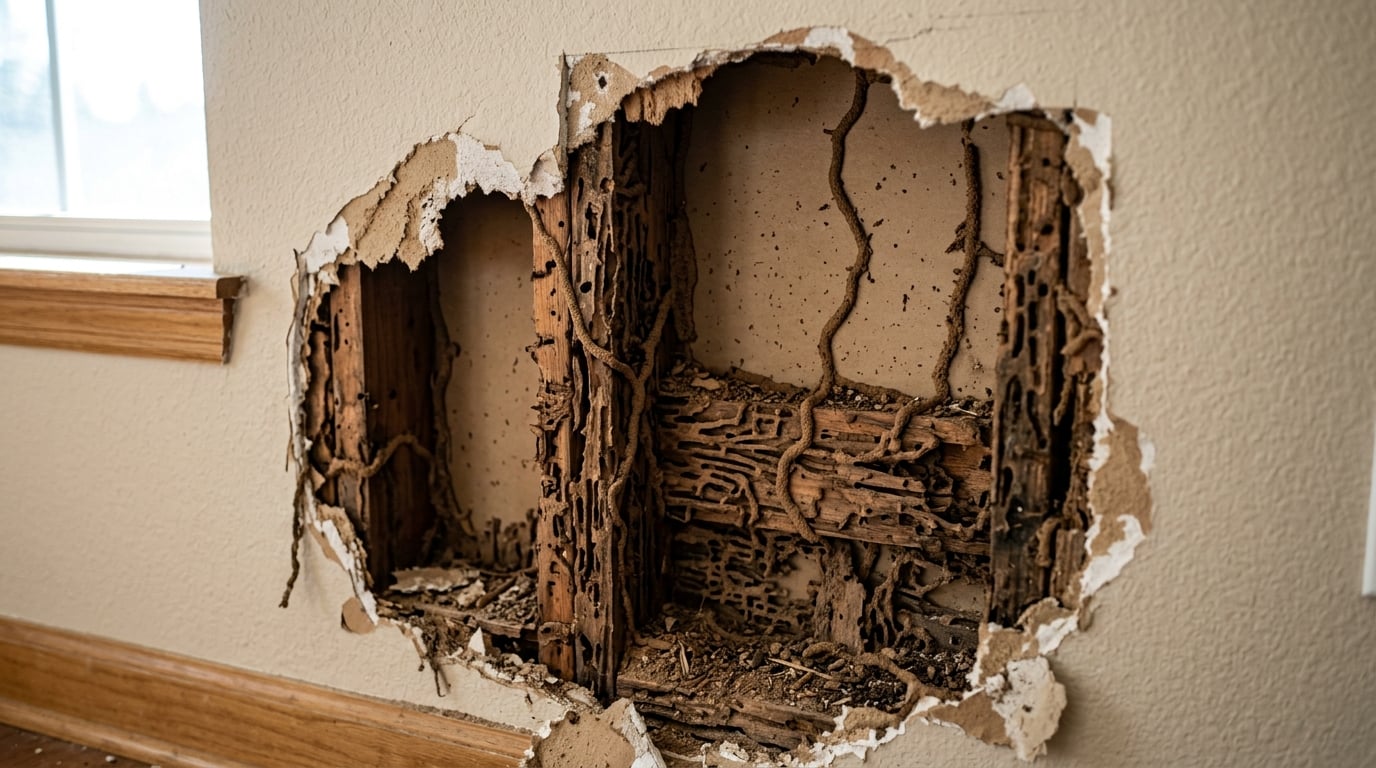
Termites, often referred to as "silent destroyers," can cause extensive damage to wood, flooring, and even wallpaper before any visible signs appear. According to the EPA, termites are responsible for billions of dollars in structural damage annually in the United States. Early detection is crucial and can save homeowners thousands in repair costs. Learn more about our services.
This guide focuses on identifying termite activity in Texas, Louisiana, Oklahoma, and Mississippi, regions particularly prone to termite infestations.
Signs of Termites in Walls
1. Hollow-Sounding Wood
Tap along your baseboards and door frames with a screwdriver handle. If the wood sounds hollow or papery, termites may have eaten the interior while leaving the surface intact. This is especially common with subterranean termites.
2. Bubbling or Peeling Paint
Paint that bubbles, peels, or appears water-damaged — without any water source — is a classic termite sign. Termites produce moisture as they tunnel through wood, causing paint and wallpaper to warp.
3. Pin-Sized Holes in Drywall
Tiny holes in drywall, sometimes called "kick-out holes," are where drywood termites push frass (termite droppings) out of their galleries. If you see small piles of what looks like sawdust near your walls, it's likely termite frass.
4. Mud Tubes on Interior Walls
Subterranean termites build pencil-width mud tubes to travel between their soil colony and their food source. Finding mud tubes on interior walls, especially near the foundation line, is a definitive sign of active termites.
Ready to Get Started?
Free quote • No obligation • Same-day service available
Signs of Termites in Ceilings
1. Sagging or Buckling Ceiling
A ceiling that appears to sag, buckle, or develop unexplained water stains may be compromised by termite damage to the structural joists above. This can indicate significant structural weakness.
2. Visible Termite Swarmers
During swarm season (typically March through June in the South), you may see winged termites emerging from your ceiling, light fixtures, or vents. Finding shed wings near windows or ceiling lights is a telltale sign.
3. Frass on Furniture Below
If you notice tiny, pellet-like droppings on furniture, countertops, or floors directly below ceiling areas, drywood termites may be actively tunneling above.
Signs of Termites in Foundations
1. Mud Tubes on Foundation Walls
This is the #1 indicator of subterranean termite activity. These pencil-width tubes run vertically up foundation walls, often in corners, behind utilities, or in crawl spaces. Break a section open — if you see live termites inside, the infestation is active.
2. Damaged Wood Near Soil Line
Check where wood framing meets the foundation (the sill plate). Probe with a screwdriver — if it sinks in easily, termites have likely been feeding.
3. Cracks with Mud Fill
Termites exploit foundation cracks to access your home. If you find cracks in your foundation with dried mud or soil packed into them, termites may be using these as entry points.
What to Do If You Find Signs
- Don't panic — but don't ignore it either. Termite damage gets worse over time, never better.
- Don't disturb the area — spraying store-bought products can scatter termites and make professional treatment harder.
- Document what you found — take photos of mud tubes, damaged wood, or swarmers.
- Schedule a professional inspection immediately — a licensed inspector can confirm the species, assess the extent of damage, and recommend the right treatment. Schedule now.
Most homeowners can't tell the difference between old damage and active infestation, or between termite damage and water damage. That's exactly what professional inspectors are trained to determine.
How Romex Inspectors Find Hidden Termites
Our licensed inspectors use a systematic approach that goes far beyond what any homeowner can do:
- Moisture meters to detect hidden water and termite activity behind walls
- Sounding techniques on all accessible wood members
- Crawl space and attic inspection (where 80% of termite activity begins)
- Foundation perimeter check — every linear foot
- Identification of termite species (critical for choosing the right treatment)
And at Romex, this inspection is completely free. We've been serving homeowners across Texas, Oklahoma, Louisiana, and Mississippi since 2016. Learn more about our history.
Prevention Methods for Termites
Preventing termite infestations involves a combination of regular inspections and proactive measures. According to the CDC, maintaining a dry environment and reducing wood-to-soil contact can significantly reduce the risk of termite infestations.
- Ensure proper drainage around your home's foundation.
- Keep firewood and debris away from your home.
- Seal cracks and crevices in your home's exterior.
Environmental Impact of Pest Control Treatments
While professional pest control treatments are tested and approved, it's important to understand their environmental impact. The EPA provides guidelines on using pesticides responsibly to minimize environmental harm.
Romex Pest Control follows these guidelines to ensure responsible treatment applications. Read more about our practices.
FAQ: Common Termite Concerns
What time of year are termites most active?
Termites are most active during the warmer months, typically from March to June in the southern United States. This is when swarming occurs, indicating a mature colony is nearby.
Can I treat termites myself?
While there are DIY treatments available, professional inspections and treatments are recommended for effective termite control. DIY methods often fail to reach the root of the infestation.
What are the benefits of professional pest control over DIY methods?
Professional pest control offers comprehensive inspections, accurate species identification, and targeted treatments that DIY methods can't match. Professionals also provide ongoing monitoring and prevention strategies.
Professional Tip
Regularly schedule professional inspections, especially if you live in a termite-prone area. Early detection is key to preventing extensive damage. Book your inspection today.
About the Author
Ella Hansen is a pest control marketing specialist at Romex Pest Control, leveraging in-house expertise and external industry resources to deliver actionable pest management content. With years of experience in the field, Ella ensures homeowners are informed about the latest in pest control technologies and practices.
Team Credentials and Certifications
Our team at Romex Pest Control is composed of certified professionals with extensive training in pest management. We hold certifications from the National Pest Management Association (NPMA) and adhere to standards set by the EPA and CDC. Our commitment to excellence is reflected in our ongoing education and adherence to industry best practices.
Case Studies: Successful Termite Control Interventions
At Romex Pest Control, we have successfully managed numerous termite infestations across Texas, Louisiana, Oklahoma, and Mississippi. One notable case involved a historic home in Louisiana where our team utilized advanced detection techniques and targeted treatments to preserve the structure's integrity. Our approach not only eradicated the termites but also prevented future infestations.
Staying Updated with the Latest Technologies
Romex Pest Control stays at the forefront of pest management by continuously updating our techniques and technologies. We collaborate with industry leaders and participate in workshops and seminars to ensure our methods are aligned with the latest advancements in pest control.