
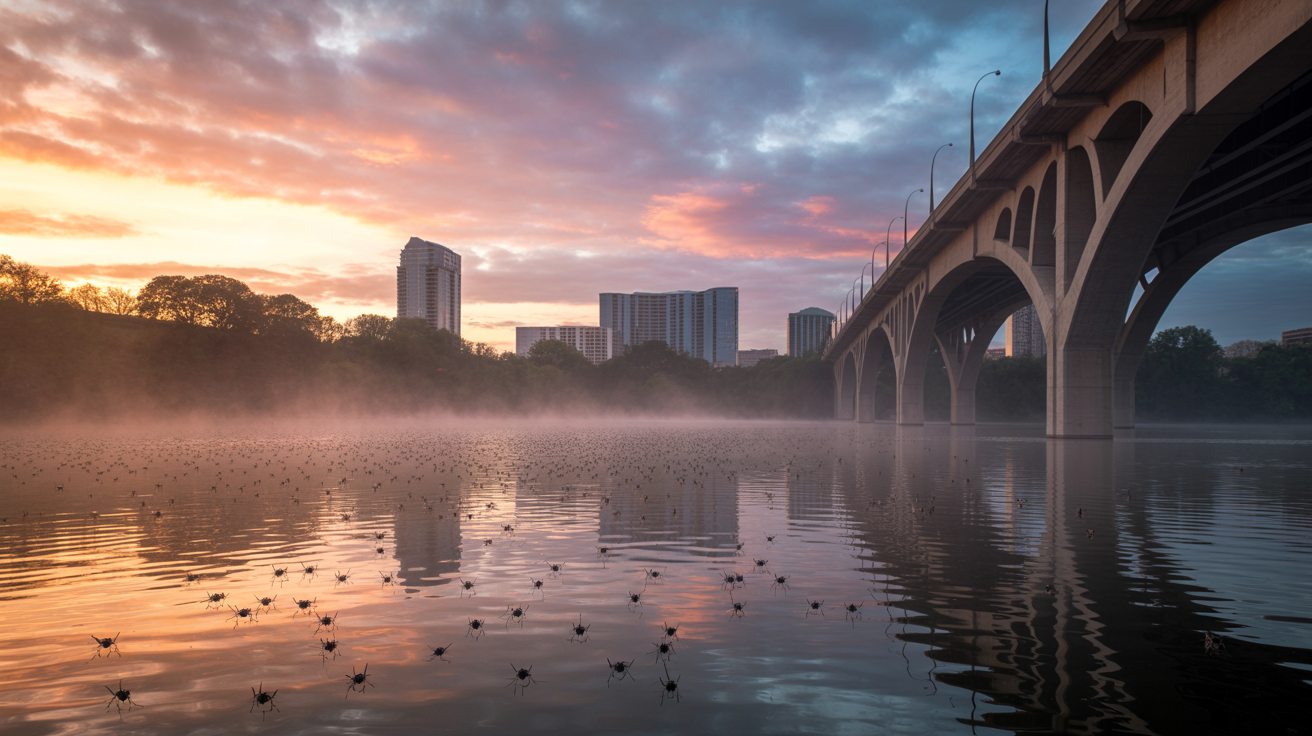
Understanding Mosquito Proliferation at Lady Bird Lake
Lady Bird Lake is a beloved feature of Austin's outdoor lifestyle, offering activities like paddle boarding and scenic trails. However, its environment is also ideal for mosquitoes. The combination of standing water, lush vegetation, and high humidity creates a breeding ground for these pests from March through November. According to the EPA, mosquitoes thrive in such conditions.
Data from Romex Pest Control indicates that mosquito treatments rank among the top three service requests in the Austin area, with heightened demand in neighborhoods near Lady Bird Lake, Barton Creek, and Shoal Creek. Explore our mosquito control solutions.
Ready to Get Started?
Free quote • No obligation • Same-day service available
Factors Contributing to Mosquito Populations
1. Abundant Standing Water
Mosquitoes require only a small amount of stagnant water to breed. The Lady Bird Lake area provides ample opportunities:
- Creek tributaries: Barton Creek, Shoal Creek, and Waller Creek contribute to the lake, leaving pools in rock ledges and debris piles after rain, perfect for mosquito breeding.
- Stormwater infrastructure: Retention ponds and drainage ditches in areas like Zilker and South Lamar hold water post-storms.
- Vegetated shoreline: Dense vegetation along the lake retains moisture, offering resting spots for adult mosquitoes.
2. Climate Conditions
The hot and humid climate of Central Texas accelerates mosquito breeding. With temperatures reaching 90–100°F and humidity levels at 60–70%, mosquito eggs can hatch in 24–48 hours, with larvae maturing in 7–10 days. According to the National Weather Service, these conditions are typical for Austin during summer months.
3. Limited Natural Predators
While Austin's Congress Avenue Bridge bat colony consumes large quantities of insects, mosquitoes are not their primary target, allowing mosquito populations to thrive.
Neighborhoods Most Affected by Mosquitoes
Properties within a half-mile of Lady Bird Lake or its tributaries face significant mosquito pressure. Key neighborhoods include:
- Zilker / Barton Hills: Proximity to Barton Creek and dense tree canopies.
- South Lamar / Bouldin Creek: Older homes with mature landscaping near Bouldin Creek.
- East Riverside / Pleasant Valley: Low-lying areas with multiple retention ponds.
- Travis Heights / South Congress: Creek-side lots with heavy vegetation.
- Tarrytown / Deep Eddy: Lake-adjacent areas with irrigation systems.
- East Austin / Holly: Industrial drainage patterns near the lake's terminus.
Common Mosquito Species in Austin
| Species | Peak Activity | Disease Risk | Habitat |
|---|---|---|---|
| Aedes aegypti (Yellow Fever Mosquito) | Daytime | Zika, Dengue, Chikungunya | Urban containers |
| Aedes albopictus (Asian Tiger Mosquito) | Day & dusk | Similar to aegypti | Shaded containers |
| Culex quinquefasciatus (Southern House Mosquito) | Dusk to dawn | West Nile Virus | Stagnant water |
Effective Mosquito Control Strategies
Homeowner Tips
- Regularly dump standing water: Check and empty containers weekly.
- Maintain gutters: Clear debris to prevent water accumulation.
- Pool care: Ensure proper chlorine levels and filtration.
- Trim vegetation: Reduce mosquito resting spots by thinning dense shrubs.
- Repair irrigation leaks: Prevent puddles from forming.
Professional Mosquito Control
Romex offers comprehensive mosquito control services:
- Perimeter barrier spray: Applied to areas where mosquitoes rest.
- Larvicide applications: Target standing water features.
- Monthly service: Essential for maintaining control during peak season.
Request a mosquito control quote for your property, especially if located near Lady Bird Lake.
Romex Pest Control: Expertise and Credentials
Romex Pest Control is a leader in pest management, known for innovative solutions and customer satisfaction. Our team holds certifications like the National Pest Management Association's QualityPro, ensuring high service standards.
Founded in 2005, Romex serves Texas, Louisiana, Oklahoma, and Mississippi, with technicians trained in the latest pest control techniques.
Our approach is tailored to the unique environmental challenges of each region, ensuring effective pest management solutions.
Community Involvement
Romex Pest Control actively participates in community education initiatives, offering workshops on pest management and collaborating with local environmental organizations to promote sustainable practices.
Frequently Asked Questions
- How does climate change affect mosquito populations in Austin?
- Climate change can lead to warmer temperatures and increased rainfall, potentially expanding mosquito breeding seasons and habitats. According to a study by the University of Texas, these changes could increase mosquito-borne disease risks.
- What are Austin's pest control regulations?
- Austin follows state regulations for pest control, requiring licensed professionals to apply treatments. Romex Pest Control adheres to all local and state guidelines to ensure professional and tested service.
- What impact does mosquito control have on local wildlife?
- While mosquito control is essential, it is important to consider its impact on local wildlife. Romex Pest Control uses methods that minimize disruption to beneficial insects and local ecosystems.
- How do different mosquito control methods compare?
- There are various mosquito control methods, including chemical treatments, biological controls, and physical barriers. Each has its advantages and limitations, and the choice depends on specific environmental conditions and goals.