

Understanding the Risks: Mosquitoes and Your Pets
Mosquitoes are more than just a nuisance; they pose significant health risks to pets, primarily through the transmission of heartworm disease. According to the American Heartworm Society, heartworm disease affects pets in all 50 states, with the highest incidence in the Gulf Coast region, where Romex Pest Control operates. The CDC also emphasizes the importance of prevention due to the severe health implications of heartworm disease.
Heartworm disease is a severe condition that can be fatal if untreated. A single mosquito bite can introduce heartworm larvae into your pet's bloodstream, which can develop into adult worms that reside in the heart and lungs.
- Key Takeaway: Mosquitoes are more than just a nuisance; they pose a significant health risk to pets.
Ready to Get Started?
Free quote • No obligation • Same-day service available
How Mosquitoes Transmit Heartworm
- An infected animal, such as a dog or coyote, carries adult heartworms that produce microscopic larvae (microfilariae) in the bloodstream.
- A mosquito bites the infected animal and picks up the larvae.
- The larvae develop inside the mosquito for 10–14 days.
- The mosquito bites your dog or cat, depositing larvae through the bite wound.
- Larvae migrate through tissue for 6 months, eventually reaching the heart and lungs as adult worms.
Adult heartworms can grow up to 12 inches long. A heavily infected dog may harbor 30+ worms, causing severe damage to the heart, lungs, and blood vessels, potentially leading to heart failure.
- Key Takeaway: Understanding the heartworm lifecycle is crucial for effective prevention.
Heartworm Symptoms in Dogs
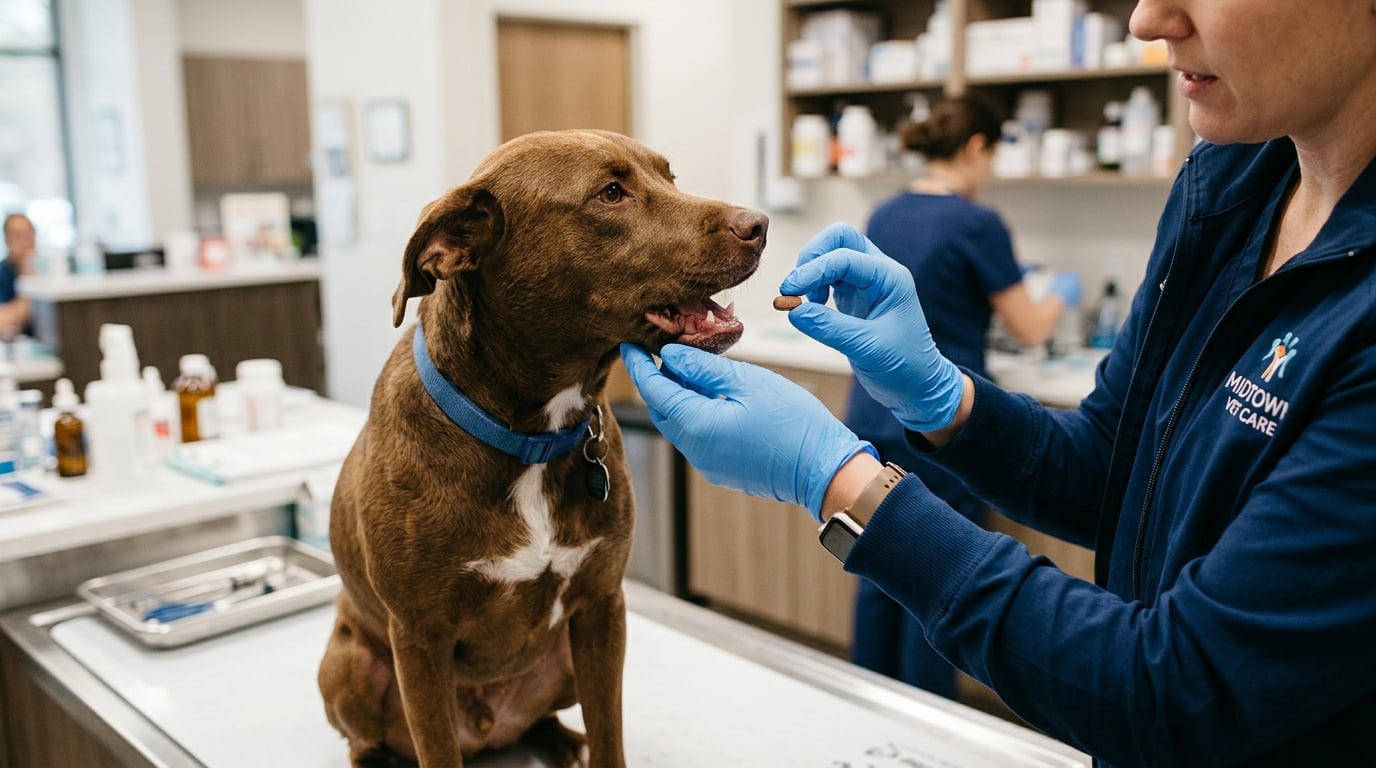
Heartworm disease develops silently for months before symptoms appear:
- Early stage: Mild cough, especially after exercise
- Moderate stage: Persistent cough, fatigue, reluctance to exercise, decreased appetite
- Advanced stage: Swollen belly (fluid accumulation), labored breathing, pale gums
- Caval syndrome: Life-threatening blockage of blood flow; requires emergency surgery
- Key Takeaway: Early detection and prevention are vital to avoid severe health issues.
Can Cats Get Heartworm?
Yes, cats can get heartworm, but it presents differently. Cats are not natural hosts, so most larvae don't survive to adulthood. However, even immature worms can cause Heartworm Associated Respiratory Disease (HARD), with symptoms including:
- Coughing and asthma-like attacks
- Vomiting (not related to eating)
- Weight loss and decreased appetite
- Difficulty walking or sudden collapse
There is no approved treatment for heartworm in cats—only supportive care. Prevention is the only option.
- Key Takeaway: Prevention is the best strategy for protecting cats from heartworm.
Year-Round Prevention Is Essential
In Texas, Oklahoma, Louisiana, and Mississippi, mosquitoes are active 10+ months per year. The American Heartworm Society recommends year-round prevention for all dogs and cats in our region. Options include:
- Monthly oral chewables (Heartgard Plus, Interceptor Plus, Simparica Trio)
- Monthly topical treatments (Revolution, Advantage Multi)
- Injectable prevention (ProHeart 6 or ProHeart 12—lasts 6–12 months)
Cost ranges from $5–$15 per month for prevention. Heartworm treatment for an infected dog costs $1,000–$3,000+ and involves months of restricted activity. Prevention is clearly the better investment.
- Key Takeaway: Consistent prevention is cost-effective and crucial for pet health.
Protecting Pets from Mosquito Bites
Beyond heartworm prevention, you can reduce your pet's mosquito exposure:
- Keep dogs indoors during peak biting hours (dawn and dusk)
- Use only mosquito repellents labeled for use on pets—never apply human DEET products to pets
- Eliminate standing water in your yard (see our prevention checklist)
- Ensure window and door screens are intact
- Consider professional mosquito yard treatment to reduce the population around your home
Professional barrier spray is tested and approved for use around pets once dry (typically 30 minutes after application). We always advise keeping pets indoors during treatment and for 30 minutes afterward.
- Key Takeaway: Simple steps can significantly reduce mosquito exposure for pets.
The Bigger Picture: Protect Your Whole Family
Mosquito control protects everyone under your roof—two-legged and four-legged. Between heartworm risk for pets and West Nile virus risk for humans, reducing mosquito populations around your home is a family safety issue.
Read our complete mosquito control guide for the full prevention strategy, or request a quote for professional yard treatment.
- Key Takeaway: Comprehensive mosquito control is a family-wide health measure.
Did You Know?
According to the American Heartworm Society, heartworm disease has been diagnosed in all 50 states, making prevention crucial no matter where you live.
Professional Tip
Consult with your veterinarian to select the best heartworm prevention method for your pet's specific needs and lifestyle.
About the Author
Ella Hansen is a pest control marketing specialist at Romex Pest Control who leverages in-house expertise and external industry resources to deliver actionable pest management content. With a focus on E-E-A-T principles, Ella ensures that pet owners receive reliable and accurate information to protect their furry family members. She has contributed to several industry publications and holds a degree in Environmental Science.
Company History and Achievements
Romex Pest Control has been serving the Texas, Oklahoma, Louisiana, and Mississippi regions since 2016. Our commitment to excellence has earned us a reputation for reliable and effective pest management solutions. We pride ourselves on using the latest technology and methods to ensure the safety and satisfaction of our clients.