
Understanding Mosquito Bites
Mosquito bites are a common nuisance, particularly in the Southern United States, including Texas, Louisiana, Oklahoma, and Mississippi. Only female mosquitoes bite, as they require blood proteins to produce eggs. When a mosquito pierces your skin, it injects saliva containing anticoagulants and proteins that trigger your immune system.
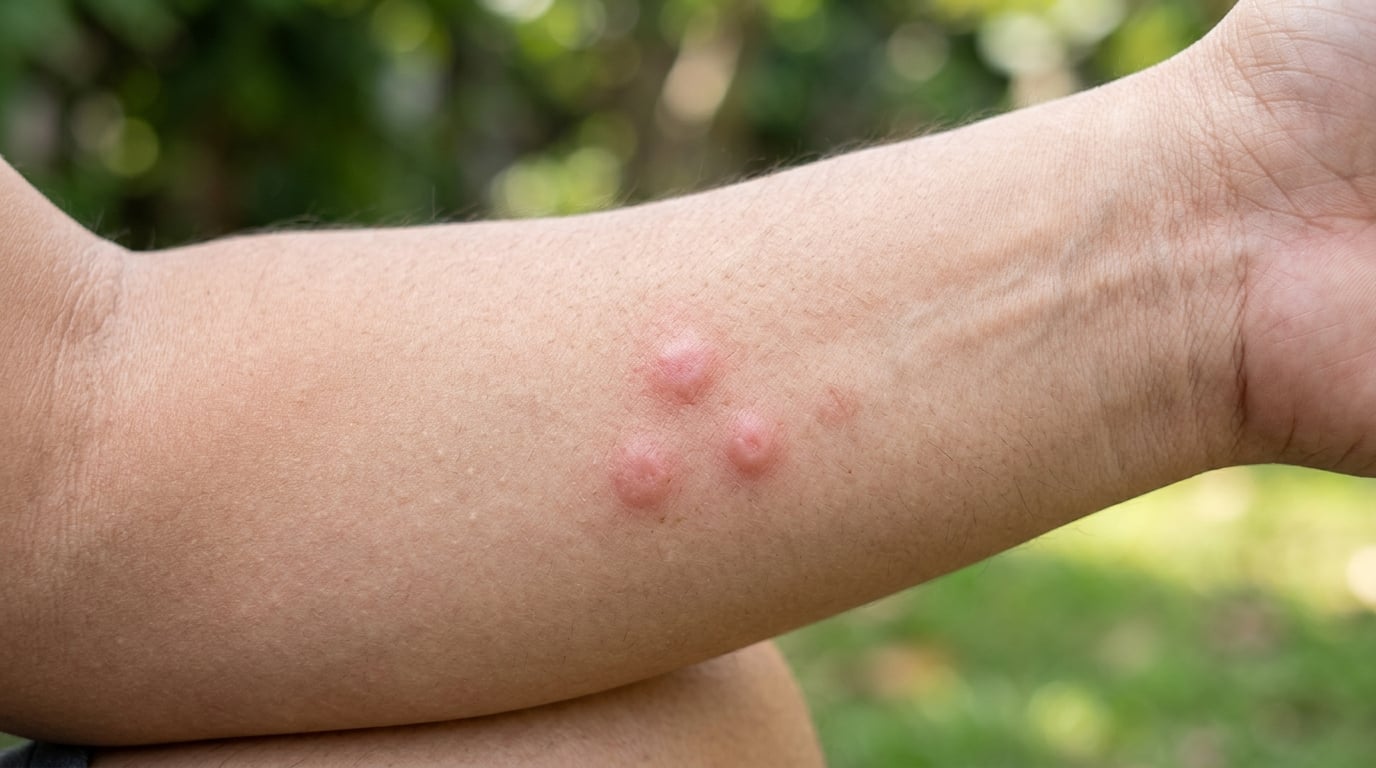
The typical mosquito bite results in a round, puffy, reddish bump that appears within minutes. Over the next day, it often hardens into a darker, itchy welt. Depending on skin type and sensitivity, some individuals may develop small blisters or dark bruise-like spots.
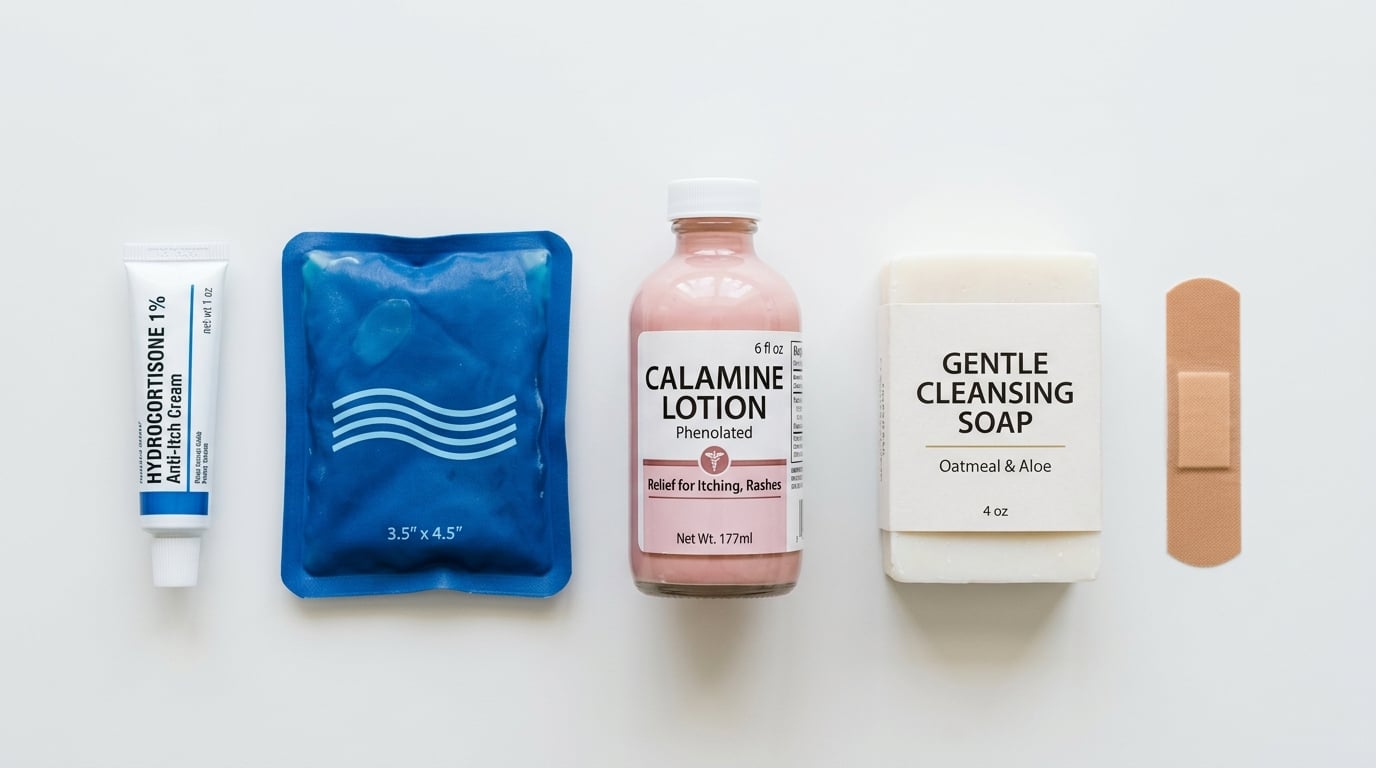
Basic supplies for treating mosquito bites at home: hydrocortisone cream, ice pack, calamine lotion, and soap.
Ready to Get Started?
Free quote • No obligation • Same-day service available
Mosquito Bites vs. Other Insect Bites
Bite Type | Appearance | Pattern | Duration |
|---|---|---|---|
Mosquito | Round, puffy bump | Random, on exposed skin | 3–7 days |
Bed Bug | Flat, red welts | Lines or clusters of 3+ | 1–2 weeks |
Flea | Tiny red dots with halo | Clusters around ankles/legs | 2–7 days |
Chigger | Intense red bump with hard center | Clusters at waistband/socks | 1–3 weeks |
Spider | Two puncture marks, swelling | Single bite, not clusters | Varies widely |
The key difference: mosquito bites are random and on exposed skin (arms, legs, neck), while bed bug bites follow lines, flea bites cluster around ankles, and chigger bites concentrate where clothing meets skin. For a complete visual guide, see our insect bite identification chart.
What Is Skeeter Syndrome?
Skeeter syndrome is a large local allergic reaction to mosquito bites. Instead of a small bump, the bite area swells to several inches in diameter, becomes hot and painful, and may look like an infection. It's most common in children, people with immune conditions, and travelers exposed to new mosquito species.
Symptoms of skeeter syndrome include:
Swelling 2–10 inches in diameter around the bite
Redness and warmth that spreads beyond the bite
Blistering or bruising at the bite site
Low-grade fever in some cases
Swollen lymph nodes near the bite area
Skeeter syndrome is uncomfortable but not dangerous on its own. Treat it with oral antihistamines (like Benadryl or Zyrtec), ice packs, and topical hydrocortisone. See a doctor if the swelling doesn't improve within 48 hours or you develop a fever above 101°F.
How to Treat Mosquito Bites at Home
Most mosquito bites resolve on their own within a week. Here's how to speed healing and stop the itch:
Wash immediately — Soap and water removes residual mosquito saliva
Apply ice — 10 minutes on, 10 minutes off to reduce swelling
Use hydrocortisone cream — 1% OTC cream reduces inflammation and itching
Try calamine lotion — Provides a cooling, drying effect on the bite
Take an antihistamine — Oral diphenhydramine (Benadryl) or cetirizine (Zyrtec) for multiple bites
Don't scratch — Scratching breaks the skin and invites bacterial infection
Home remedy that actually works: A paste of baking soda and water applied to the bite for 10 minutes can reduce itching. The alkaline paste helps neutralize the acidic mosquito saliva.
When to See a Doctor
Most mosquito bites are harmless. Seek medical attention if you experience:
Fever, headache, or body aches within 2–14 days of bites (possible mosquito-borne disease)
Spreading redness, warmth, or pus around the bite (bacterial infection)
Facial swelling or difficulty breathing (anaphylaxis—call 911)
Nausea, confusion, or stiff neck (possible West Nile virus symptoms)
Skeeter syndrome that doesn't improve within 48 hours with antihistamines
Texas leads the nation in West Nile virus cases. If you develop flu-like symptoms after heavy mosquito exposure, mention the bites to your doctor. According to the CDC, mosquitoes are responsible for more human deaths than any other animal due to the diseases they spread (CDC).
How to Prevent Mosquito Bites
The best treatment is prevention. To learn more in depth about how to prevent mosquitoes in your yard, take a look at our mosquito prevention “How-to” guide. These strategies reduce your bite risk:
Apply EPA-registered repellent containing DEET (20–30%), picaridin, or oil of lemon eucalyptus (EPA)
Wear light-colored, loose-fitting long sleeves and pants during dawn and dusk
Use fans on porches and patios—mosquitoes are weak fliers
Avoid perfumes and scented lotions that attract mosquitoes
Professional mosquito barrier treatment reduces yard populations by 85–90%
For a complete yard protection strategy, read our mosquito control guide.
Romex Pest Control Expertise
At Romex Pest Control, we pride ourselves on our expertise in managing mosquito populations effectively. Our team is trained in the latest pest control techniques and uses only tested and approved methods to ensure your safety and comfort.
We offer a range of services tailored to local pest challenges in Texas, Louisiana, Oklahoma, and Mississippi. Our professional team is ready to assist you with any pest control needs.
Explore our pest control services to learn more about how we can help protect your home and family.
Company History and Achievements
Romex Pest Control was established in 2016 and has since become a trusted name in pest management across TX, OK, LA, and MS. Our commitment to customer satisfaction and effective pest control solutions has earned us numerous accolades, including recognition from industry leaders and positive testimonials from our clients.
Our team continually updates its knowledge base with the latest research and techniques to provide the best service possible. We are proud to contribute to safer, more comfortable living environments for our clients.
Did You Know?
According to the CDC, mosquitoes are responsible for more human deaths than any other animal on the planet due to the diseases they spread.
Professional Tip
For optimal protection, apply mosquito repellent after sunscreen and reapply as directed, especially after swimming or sweating.
For more information on mosquito control and prevention, visit our mosquito control guide or contact us for a consultation.