
Ready to Get Started?
Free quote • No obligation • Same-day service available
Why Species Identification Matters
Understanding mosquito species is crucial for effective pest control. Some mosquitoes are vectors for serious diseases, while others are merely nuisances. Their breeding habits and biting times vary, influencing control strategies. According to the Centers for Disease Control and Prevention (CDC), mosquitoes are responsible for more human deaths than any other animal due to the diseases they transmit.
In the Southern United States, over 80 mosquito species exist. Here are the six most common species in Texas, Oklahoma, Louisiana, and Mississippi.
1. Asian Tiger Mosquito (Aedes albopictus)
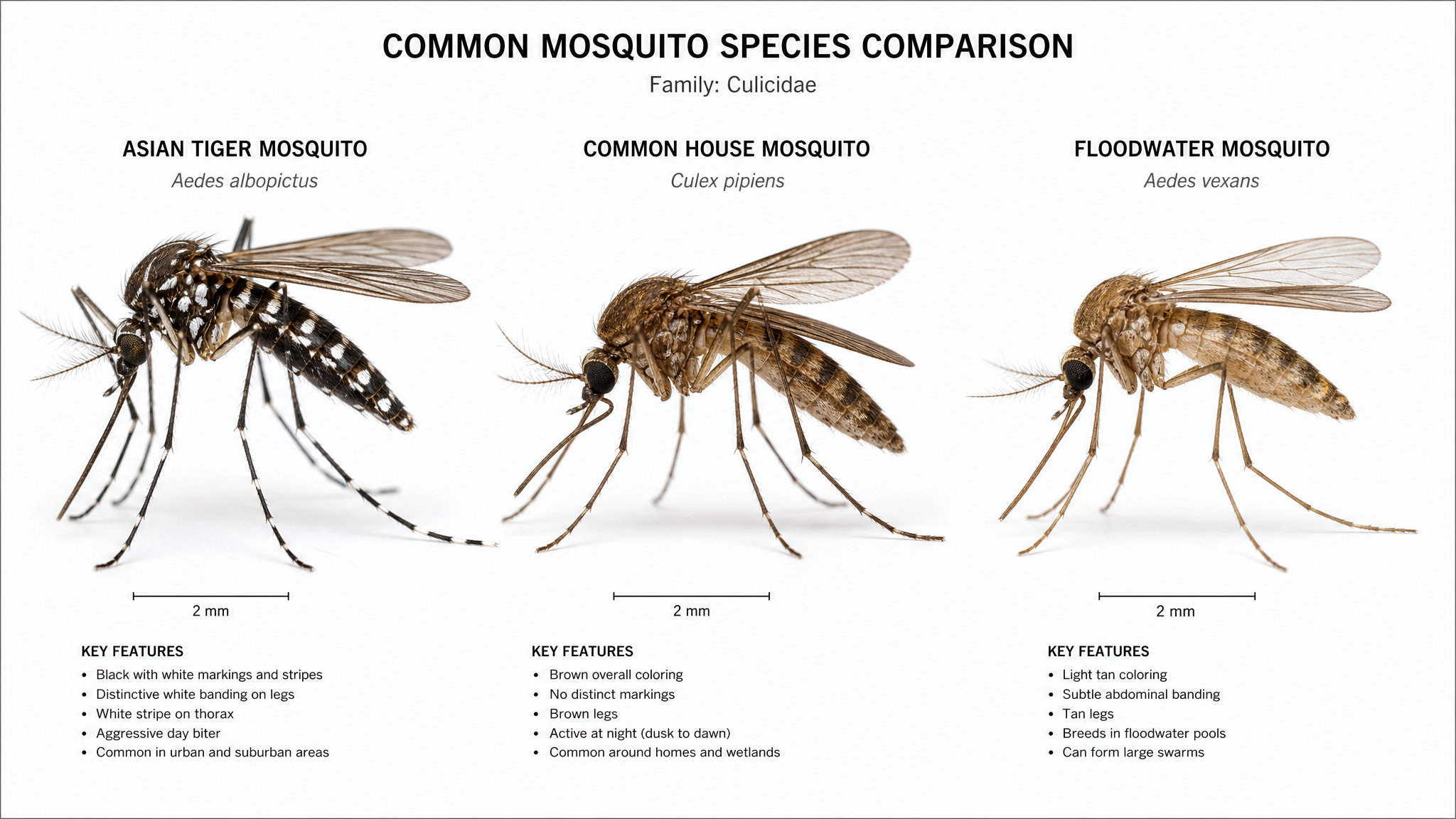
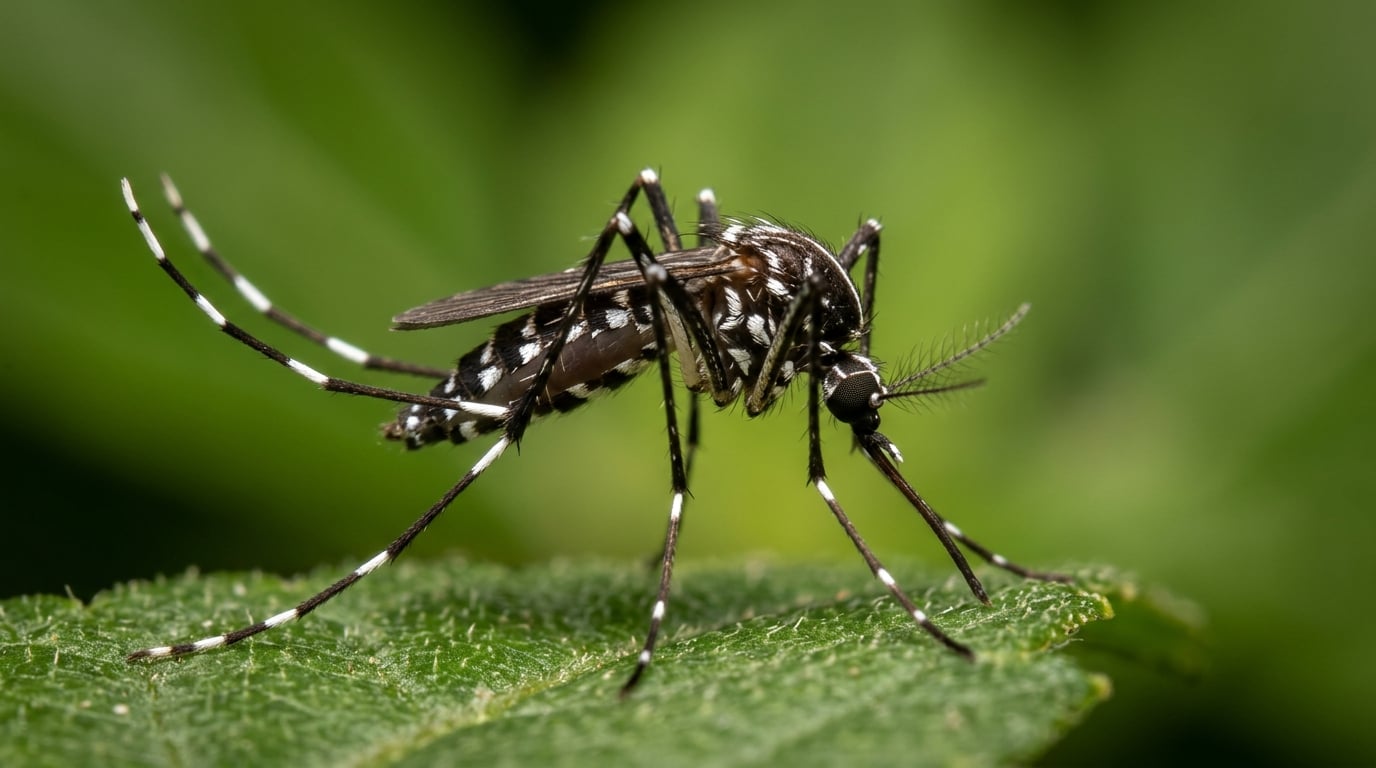
How to identify it: Striking black body with bright white stripes on legs and a single white stripe down the center of its back. Smaller than most mosquitoes (about 1/4 inch).
When it bites: Aggressive daytime biter. Prefers shaded areas. Most active in early morning and late afternoon, but will bite anytime.
Where it breeds: Container breeder. Flower pots, tires, bird baths, gutters, bottle caps. Prefers small amounts of clean water.
Disease risk: Can transmit Zika virus, dengue, and chikungunya. Invasive species that has spread rapidly across the Southern U.S. since the 1980s.
Why it matters: This is likely the mosquito biting you in your backyard during the day. Its eggs survive dry conditions for months, hatching when containers refill with rain.
2. Southern House Mosquito (Culex quinquefasciatus)
How to identify it: Medium-sized, brown body with lighter bands on the abdomen. Unremarkable appearance.
When it bites: Dusk to dawn. This is the mosquito buzzing around your head at night. Enters homes through torn screens.
Where it breeds: Polluted, stagnant water. Storm drains, septic areas, clogged gutters, abandoned pools.
Disease risk: The primary vector for West Nile virus in our region. Also transmits St. Louis encephalitis and can carry dog heartworm larvae.
Why it matters: Texas leads the nation in West Nile virus cases, and this is the mosquito responsible. It's drawn to light and enters homes at night.
3. Yellow Fever Mosquito (Aedes aegypti)
How to identify it: Black with distinctive white lyre-shaped (harp-shaped) markings on the top of its thorax and white-banded legs.
When it bites: Daytime biter. Unusually, it prefers to bite indoors. Often bites ankles and lower legs.
Where it breeds: Clean standing water in and around homes. Flower vases, pet dishes, rain barrels.
Disease risk: Yellow fever, dengue, Zika, and chikungunya. The most medically significant mosquito species in history.
Why it matters: Found year-round in South Texas and coastal Louisiana. Its preference for indoor biting and human blood makes it exceptionally efficient at transmitting disease.
4. Floodwater Mosquito (Aedes vexans)
How to identify it: Brown with narrow white bands on the abdomen. Medium-sized. Very aggressive flier.
When it bites: Day and night. Most aggressive immediately after rain events when populations explode.
Where it breeds: Temporary flood pools, ditches, low-lying areas that collect rain water.
Disease risk: Primarily a nuisance pest. Can carry dog heartworm. Rarely linked to human disease transmission.
Why it matters: This is the species that appears in massive swarms 7–10 days after heavy rain or flooding. Numbers can be extreme but populations crash as temporary pools dry up.
5. Eastern Saltmarsh Mosquito (Aedes sollicitans)
How to identify it: Medium-sized, golden-brown with white bands. Strong flier that travels up to 40 miles from breeding sites.
When it bites: Primarily evening and night. Will bite during the day in shaded areas.
Where it breeds: Coastal salt marshes, brackish pools. Common along the Gulf Coast from Texas to Mississippi.
Disease risk: Can transmit Eastern equine encephalitis (EEE) and dog heartworm.
Why it matters: If you live within 40 miles of the Gulf Coast, this mosquito can reach your property even without local breeding sites. Professional treatment is the main defense.
6. Dark Rice Field Mosquito (Psorophora columbiae)
How to identify it: Large, dark brown to black. One of the biggest mosquito species in our region.
When it bites: Day and night. Extremely aggressive biters that attack in swarms.
Where it breeds: Irrigated fields, rice paddies, and temporarily flooded agricultural land. Common in rural Texas, Louisiana, and Mississippi.
Disease risk: Primarily a nuisance. Can transmit Venezuelan equine encephalitis in rare cases.
Why it matters: Rural and suburban properties near agricultural land experience massive swarms of this species. Their large size makes bites more painful than other species.
What to Do About Mosquitoes on Your Property
No matter which species is biting you, the control strategy starts the same way: eliminate breeding sites and reduce resting habitat. For a complete walkthrough, see our mosquito control guide.
If you're dealing with persistent mosquito problems despite eliminating standing water, professional barrier treatment targets adults where they rest. Request a quote to get started.
Company Credentials and Certifications
Romex Pest Control is a certified member of the National Pest Management Association (NPMA) and holds state licenses in Texas, Oklahoma, Louisiana, and Mississippi. Our team includes certified entomologists and pest control experts dedicated to providing effective solutions. We have been recognized for our innovative pest control methods and customer satisfaction.
Key Takeaways
- Identify mosquito species to tailor control strategies effectively.
- Asian Tiger Mosquitoes are aggressive daytime biters, while Southern House Mosquitoes are active at night.
- Yellow Fever Mosquitoes prefer indoor environments, increasing disease transmission risks.
- Eliminate breeding sites and consider professional treatments for persistent issues.
Frequently Asked Questions
- How can I reduce mosquito populations on my property?
- Eliminate standing water, maintain your yard, and consider professional mosquito control services.
- What diseases do mosquitoes in the Southern U.S. carry?
- Mosquitoes in this region can carry diseases such as West Nile virus, Zika virus, and dengue fever.