
Introduction
Understanding the mosquito lifecycle is crucial for effective pest control, especially in regions like Texas, Louisiana, Oklahoma, and Mississippi where mosquitoes thrive. Mosquitoes are not just a nuisance; they are vectors of diseases like West Nile Virus and Zika. This guide provides a comprehensive look at each stage of the mosquito lifecycle and offers professional tips for controlling their populations effectively.
Author Bio: Ella Hansen is a pest control marketing specialist at Romex Pest Control. With a background in environmental science and over five years of experience in pest management, Ella leverages in-house expertise and external industry resources to deliver actionable pest management content.
Ready to Get Started?
Free quote • No obligation • Same-day service available
The Four Stages of the Mosquito Lifecycle
Every mosquito goes through four distinct life stages: egg, larva, pupa, and adult. In warm Southern weather, this entire cycle takes just 7 to 14 days. That speed is what makes mosquitoes so difficult to control—by the time you notice adults biting, the next generation is already growing in standing water on your property.
Understanding each stage reveals where mosquitoes are most vulnerable and why professional treatment targets multiple stages simultaneously. According to the CDC, targeting multiple stages is crucial for effective mosquito management (CDC).
Stage 1: Eggs (24–48 Hours)
Female mosquitoes lay 100 to 300 eggs at a time, and they can do this every 3 days throughout their adult life. Different species have different egg-laying strategies:
- Culex mosquitoes (house mosquitoes) lay eggs in rafts of 100–300 that float on the water surface
- Aedes mosquitoes (tiger mosquitoes) lay individual eggs just above the waterline on container walls
The critical fact: Aedes eggs can survive dry conditions for months. They sit dormant on the inside of a flower pot, tire, or gutter until the next rain fills the container—then they hatch within hours. This is why you see mosquito populations explode after storms.
A single female mosquito can produce 1,000 to 3,000 eggs in her lifetime. Eliminate her breeding site, and you eliminate thousands of future mosquitoes.
Stage 2: Larvae — "Wrigglers" (4–14 Days)
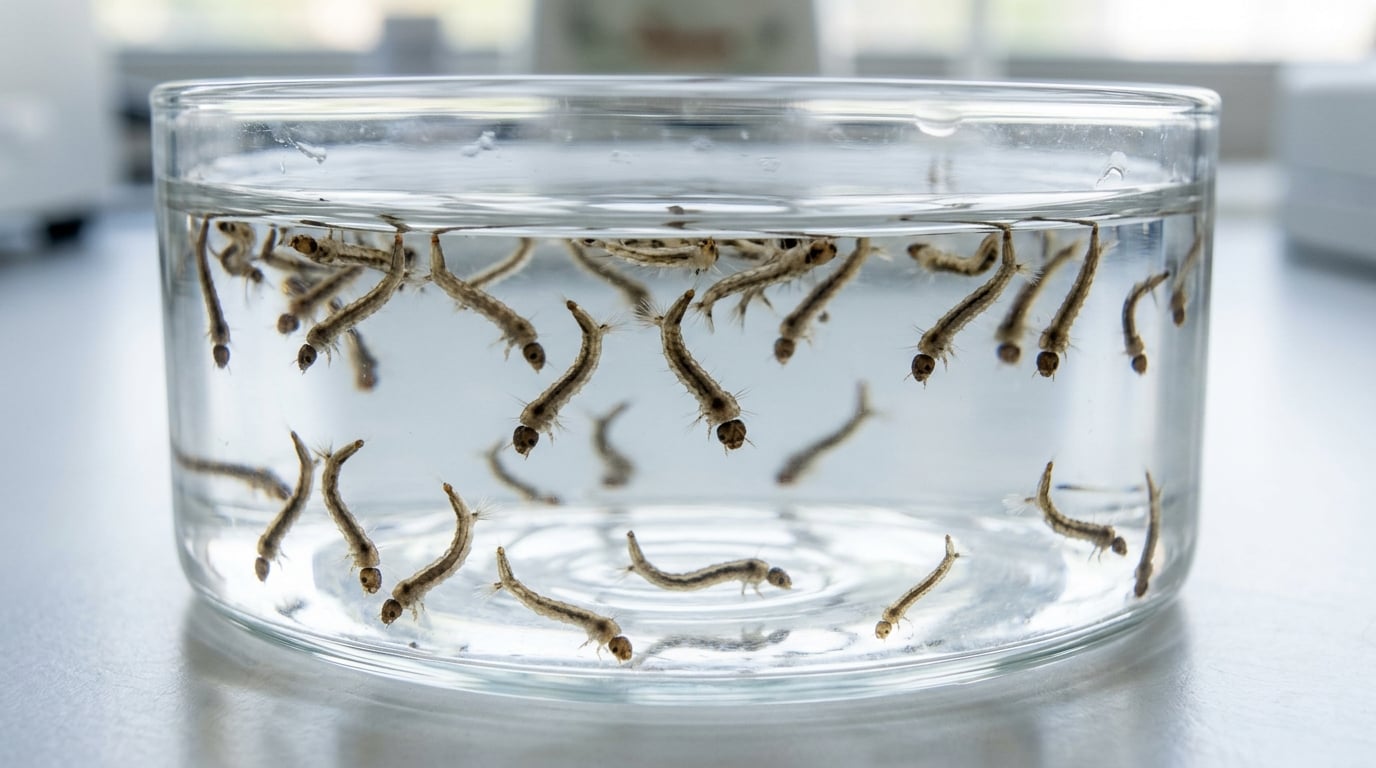
Larvae hatch from eggs and live entirely in water. They're called "wrigglers" because of their characteristic wiggling motion as they swim. Larvae go through four growth stages called instars, shedding their skin each time.
Larvae feed on microorganisms and organic matter in the water. They breathe by hanging from the water surface through a siphon tube—which is why adding a thin layer of oil to standing water was a historic mosquito control method (it suffocates them).
This is the most vulnerable stage for control. BTI (Bacillus thuringiensis israelensis) mosquito dunks or granules kill larvae in standing water without harming fish, pets, or wildlife. Professional larvicide treatments target birdbaths, ponds, drainage areas, and other breeding sites.
Stage 3: Pupae — "Tumblers" (1–4 Days)
Pupae are the "cocoon" stage. They don't feed but remain in the water, tumbling when disturbed (hence the nickname). Inside the pupal case, the mosquito transforms from a water-dwelling larva into a flying adult.
Adults emerge by splitting the pupal case at the water surface and resting briefly while their wings dry and harden. This entire stage takes just 1 to 4 days in warm weather.
The practical takeaway: if you dump standing water and find pupae (small comma-shaped creatures that tumble), adults will emerge within days. Don't just dump the water—dump it on dry soil away from any container that could re-collect water.
Stage 4: Adults (2–8 Weeks)
Adult mosquitoes emerge, mate within 24–48 hours, and females begin seeking blood meals immediately. Here's what happens next:
- Males feed only on nectar and live about 10 days. They don't bite.
- Females bite humans and animals to get blood proteins for egg production. They live 6–8 weeks.
- A female needs a blood meal every 3 days to produce a new batch of 100–300 eggs
- Females can fly 1–3 miles from their breeding site to find hosts
This is where barrier spray treatments are most effective. Professional mosquito control applies residual insecticide to vegetation, fences, and shaded resting areas where adult mosquitoes hide during the day. The spray kills adults on contact and continues working for 21–30 days.
For the best protection, professional mosquito treatment combines larvicide (targeting stages 1–3) with barrier spray (targeting stage 4).
How Long Do Mosquitoes Live?
| Species | Female Lifespan | Male Lifespan | Eggs Per Lifetime |
|---|---|---|---|
| Asian Tiger Mosquito | 30–40 days | 10 days | ~300 |
| Southern House Mosquito | 42–56 days | 10 days | ~1,000–3,000 |
| Yellow Fever Mosquito | 14–28 days | 7–10 days | ~500 |
In the Gulf Coast's warm, humid climate, mosquitoes are active from March through November—and year-round in coastal areas of Texas, Louisiana, and Mississippi.
Break the Cycle on Your Property
Knowing the lifecycle helps you take the right action at the right time:
- Weekly: Dump and scrub all standing water containers
- Monthly: Apply BTI dunks to ponds, ditches, and rain barrels
- Every 21–30 days: Professional barrier spray during peak season
Read our complete mosquito control guide for a full prevention checklist, or request a quote for professional yard treatment.
Company History and Achievements
Founded in 2016, Romex Pest Control has been a leader in pest management across Texas, Oklahoma, Louisiana, and Mississippi. Our team is certified by the National Pest Management Association and continuously updates its practices based on the latest research and technology.
We have partnerships with leading pest control organizations and have received numerous awards for our innovative approaches to pest management.
FAQ
- What are the most common mosquito species in Texas? The Asian Tiger Mosquito and the Southern House Mosquito are prevalent in Texas.
- How does mosquito control impact local ecosystems? Professional treatments are designed to target mosquitoes specifically, minimizing impact on other wildlife.
- What regulations should I be aware of? Local guidelines often require permits for large-scale pesticide applications. Check with your local government for specific regulations.
- How can I prevent mosquito breeding on my property? Regularly remove standing water and apply larvicides to potential breeding sites.
Summary
Understanding the mosquito lifecycle is crucial for effective control. By targeting each stage with professional treatments, you can significantly reduce mosquito populations on your property. For expert assistance, contact Romex Pest Control today.