

The Problem with Mosquito Myths
Americans spend over $300 million annually on mosquito control products, yet much of that expenditure is on products that are ineffective. According to a study by the University of Florida, many popular mosquito solutions offer limited to no protection. Let's debunk 10 common myths and discuss what actually works.
Ready to Get Started?
Free quote • No obligation • Same-day service available
10 Mosquito Myths — Busted
Myth 1: Citronella Candles Keep Mosquitoes Away
Reality: Studies, including one from the University of Guelph, show citronella candles reduce mosquito landings by only about 42% compared to 23% for unscented candles. The small amount of citronella oil released is quickly diluted outdoors. You'd need one candle per person at arm's length to see any effect—and even then, mosquitoes will still bite.
Summary: Citronella candles provide minimal protection and are not a reliable mosquito deterrent.
Myth 2: Bug Zappers Eliminate Mosquitoes
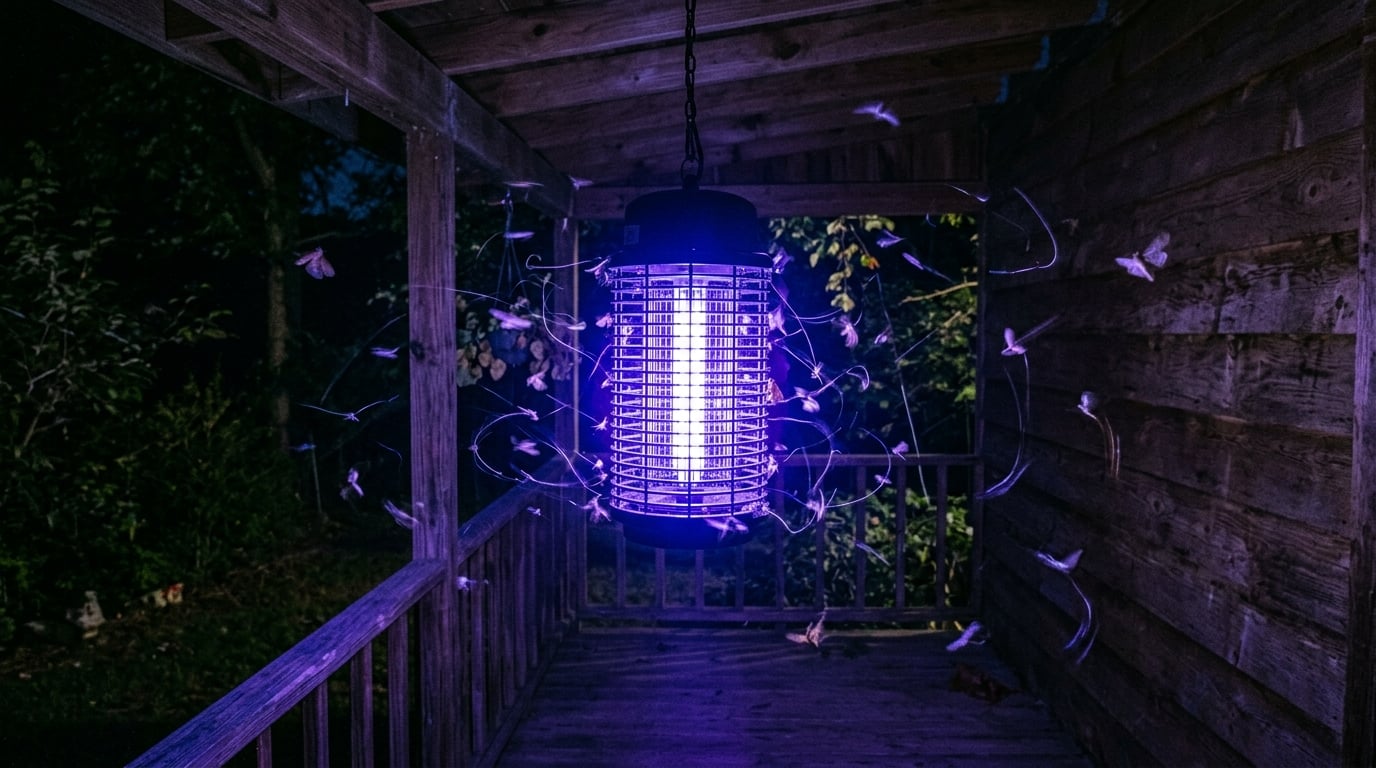
Reality: A landmark University of Delaware study found that of 13,789 insects killed by bug zappers over a summer, only 31 (0.22%) were mosquitoes. Mosquitoes aren't attracted to UV light—they follow CO2 and body heat. Bug zappers may actually make things worse by killing mosquito predators like dragonflies and beetles.
Summary: Bug zappers are ineffective against mosquitoes and may disrupt local ecosystems.
Myth 3: Eating Garlic or Bananas Repels Mosquitoes
Reality: No food has been scientifically shown to repel mosquitoes. Your diet doesn't change your carbon dioxide output or body chemistry enough to matter. This myth likely persists because garlic contains allicin, which has insecticidal properties in concentrated form—not at the levels you'd get from eating it.
Summary: Dietary changes do not affect mosquito attraction.
Myth 4: Blue Porch Lights Don't Attract Mosquitoes
Reality: No color of light attracts or repels mosquitoes. They navigate by CO2 and body heat, not light. Yellow "bug lights" attract fewer flying insects overall, but mosquitoes aren't among the insects attracted to standard lights in the first place.
Summary: Light color does not impact mosquito behavior.
Myth 5: Ultrasonic Devices Repel Mosquitoes
Reality: The FTC has warned multiple companies for false advertising on ultrasonic pest devices. Multiple peer-reviewed studies show zero effectiveness. Mosquitoes don't respond to ultrasonic frequencies. Don't waste your money.
Summary: Ultrasonic devices are ineffective against mosquitoes.
Myth 6: Bats and Purple Martins Eliminate Mosquitoes
Reality: While both eat mosquitoes, stomach-content studies show mosquitoes make up less than 1% of their diet. Bats prefer moths and beetles; purple martins prefer dragonflies. They're great for your ecosystem—just don't rely on them for mosquito control.
Summary: Bats and purple martins are not effective mosquito control agents.
Myth 7: Mosquitoes Only Bite at Night
Reality: Depends on the species. Asian tiger mosquitoes (extremely common in our region) are aggressive daytime biters. Yellow fever mosquitoes bite during the day too, often indoors. Culex (house) mosquitoes are the main nighttime biters. Read our species guide to know what's biting you.
Summary: Mosquito activity varies by species and time of day.
Myth 8: Mosquitoes Die After They Bite You
Reality: Completely false. Unlike honeybees, mosquitoes bite multiple times. A single female bites every 3 days throughout her 6–8 week adult life. Killing the one that bit you doesn't stop the next 20 from trying.
Summary: Mosquitoes can bite multiple times throughout their lifespan.
Myth 9: DEET Is Dangerous to Use
Reality: DEET has been used safely for over 60 years and is approved by the EPA and CDC. At 20–30% concentration, it's the gold standard for mosquito repellent. Side effects are extremely rare when used as directed. The real danger is not using repellent in areas with mosquito-borne disease.
Summary: DEET is a safe and effective mosquito repellent when used as directed.
Myth 10: Dryer Sheets Repel Mosquitoes
Reality: A University of Kansas study found that while dryer sheets (specifically Bounce brand) showed mild repellent effects against fungus gnats, there is no evidence they repel mosquitoes at any meaningful level. Another folk remedy that sounds good but doesn't hold up to testing.
Summary: Dryer sheets do not effectively repel mosquitoes.
5 Things That Actually Work
- EPA-registered repellent (DEET, picaridin, or oil of lemon eucalyptus) — Proven to reduce bites by 90%+ when applied correctly. Source: EPA
- Eliminating standing water — Removes 80% of breeding potential from your property. See our yard prevention checklist
- Fans — Mosquitoes can't fly in wind over 1 mph. A box fan or patio ceiling fan provides real protection
- Professional barrier spray — Residual treatment on vegetation and structures reduces yard populations 85–90%
- BTI larvicide dunks — Kills larvae in standing water you can't eliminate (ponds, ditches, rain barrels) without harming wildlife
For a complete protection plan, read our mosquito control guide.
Regional Context: Mosquitoes in TX, LA, OK, MS
In the southern United States, including Texas, Louisiana, Oklahoma, and Mississippi, mosquito activity is influenced by warm, humid climates. The CDC notes that these conditions are ideal for mosquito breeding, making professional control measures essential in these areas.
Case Studies
Explore our detailed case studies showcasing successful mosquito control interventions in various regions. From residential areas to commercial properties, see how Romex Pest Control has effectively managed mosquito populations.
Frequently Asked Questions
- How often should I apply mosquito repellent?
- Reapply repellent every few hours, especially if you're sweating or in a high mosquito area.
- Can I use mosquito repellent on my pets?
- Always use products specifically designed for pets. Human repellents can be harmful to animals.
- What time of day are mosquitoes most active?
- While it varies by species, many mosquitoes are most active during dawn and dusk.
Did You Know?
Mosquitoes have been around for over 100 million years, and there are over 3,500 species worldwide. Only female mosquitoes bite, as they require blood to produce eggs.
Professional Tip
For optimal mosquito control, integrate multiple strategies: use repellents, eliminate standing water, and consider professional treatments. This multi-pronged approach is the most effective way to keep mosquitoes at bay.
Company History and Achievements
Romex Pest Control has been a leader in the pest management industry for over 20 years, providing innovative solutions and exceptional service. Our team is committed to continuous learning and improvement, ensuring we offer the best possible service to our clients.
Certifications and Affiliations
Romex Pest Control is certified by the National Pest Management Association and is a member of the Better Business Bureau. Our technicians are trained and certified in the latest pest control techniques and safety protocols.
Community Involvement
We believe in giving back to the communities we serve. Romex Pest Control regularly participates in local events and supports various charitable organizations to help make a positive impact.
Conclusion
Understanding the myths and realities of mosquito control is crucial for effective management. By debunking common myths and focusing on proven strategies, you can protect yourself and your family from mosquito bites. For expert advice and professional services, contact Romex Pest Control today.