

Table of Contents
- Introduction
- What Your Technician Knows Before They Arrive
- What We Need You to Tell Us
- Why This Two-Way Flow Matters
- How to Communicate Between Visits
- Technician Credentials and Certifications
- Company Values and Mission
- Case Studies
- Pest Prevention Tips
- Did You Know?
- Professional Tip
- The Bottom Line
- FAQs
Ready to Get Started?
Free quote • No obligation • Same-day service available
Introduction
At Romex Pest Control, effective pest management is built on a foundation of communication and expertise. Our technicians are equipped with the latest knowledge and tools to provide you with the best service possible. This article outlines the critical information exchange between you and your technician, enhancing the effectiveness of our pest control solutions.
What Your Technician Knows Before They Arrive
Before pulling into your driveway, your technician reviews your property's service history:
- Previous activity notes: Where were ants trailing last time? Was there evidence of rodent activity in the garage? Did the last inspection flag moisture under the master bath?
- Exclusion history: What's been sealed, screened, or repaired—and what's pending.
- Product application records: What was applied, where, and how long ago. This prevents redundant treatment and ensures proper rotation.
- Your reported concerns: If you called between visits about a new ant trail in the kitchen, that's in the notes. Your technician will start there.
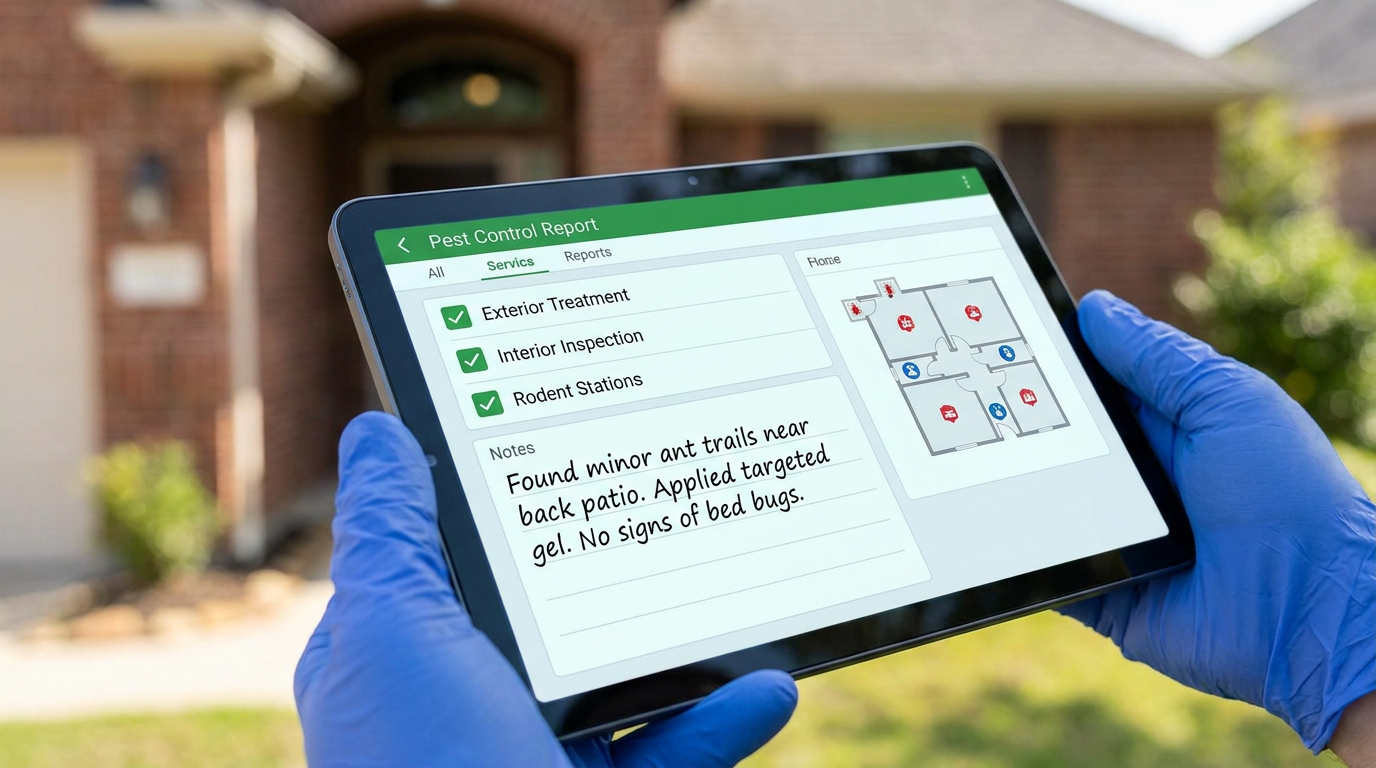
This continuity is one of the biggest advantages of recurring service over one-time treatments. Every visit builds on the last one.
What We Need You to Tell Us
Your technician's training and tools can detect a lot—but they can't observe what happens when they're not there. The information you provide fills critical gaps:
Between Visits
- New pest sightings (what, where, when, how many)
- Plumbing leaks or water damage you've discovered
- Home renovations that may have opened new entry points
- Neighbor activity (construction next door, abandoned property, new landscaping)
- Pet behavior changes (excessive scratching could indicate fleas)
During the Visit
- Which rooms have been most active since the last visit
- Whether recommended changes (food storage, moisture fixes) have been implemented
- Areas you'd like re-inspected or treated
- Questions about anything you've seen or read about pest activity in your area
Why This Two-Way Flow Matters
Consider this scenario: you notice tiny ants in the bathroom but don't mention it because the technician is treating the kitchen area. Without that information, the bathroom colony continues growing for another two to three months. With it, your technician can adjust product placement, check for a moisture source (a common driver of bathroom ant activity), and prevent a minor nuisance from becoming a full callback.
Every piece of information you share makes the service more targeted and effective. There's no such thing as a detail too small to mention—what seems like a one-off sighting to you might be the early sign of a pattern your technician can catch.
How to Communicate Between Visits
Don't wait for the next appointment if something changes. Romex includes free re-service between scheduled visits if pest activity breaks through. Contact us through:
- Phone: Call the office and describe what you're seeing. Include location, timing, and approximate numbers.
- Online: Submit a request through our website with details about the activity.
Your technician gets the notes before arriving, ensuring the re-service targets the right area with the right approach.
Technician Credentials and Certifications
Our technicians are certified by the National Pest Management Association (NPMA) and undergo continuous training to stay updated on the latest pest control techniques. This ensures that they are well-equipped to handle any pest situation effectively. According to the Environmental Protection Agency (EPA), proper training and certification are crucial for effective pest management (source).
In Texas, Louisiana, Oklahoma, and Mississippi, pest control regulations require technicians to be licensed and trained in state-specific pest challenges, ensuring compliance with local laws.
Company Values and Mission
At Romex Pest Control, our mission is to provide professional and reliable pest management solutions while maintaining the highest standards of customer service. We value integrity, transparency, and continuous improvement in all our operations.
Case Studies
One of our recent success stories involved a severe rodent infestation in a historic home in New Orleans. By implementing a combination of exclusion techniques and targeted baiting, we were able to eliminate the problem within three months. The homeowner was thrilled with the results and praised our team's dedication and expertise.
In another case, a commercial property in Houston faced a persistent termite issue. Our team used advanced baiting systems and moisture control strategies, reducing the termite population by 90% within two months. This success was achieved through a detailed understanding of local pest behavior and environmental factors.
Pest Prevention Tips for Homeowners
- Seal cracks and crevices around windows and doors to prevent entry.
- Keep food stored in airtight containers to avoid attracting pests.
- Regularly inspect your home for signs of pest activity.
- Maintain a clean and dry environment to deter pests.
Did You Know?
According to the CDC, proper pest control can prevent the spread of diseases such as West Nile Virus and Lyme disease. Learn more.
Professional Tip
Regularly inspect your home for potential entry points and seal them to prevent pests from entering. This proactive measure can significantly reduce pest activity.
The Bottom Line
Pest control is an information business as much as a chemistry business. The more your technician knows about what's happening at your home between visits, the more precisely they can treat it. And the more you understand about what your technician found during the visit, the better you can maintain conditions between appointments.
That two-way loop—not just the product on the ground—is what makes recurring service work. For more information on our services, visit our service page.
FAQs
- What should I do if I see a pest between visits? Contact us immediately to schedule a re-service.
- How often should pest control be done? Regular service is recommended every two to three months.
- What pests are most common in Texas? Ants, termites, and rodents are prevalent in the region.