
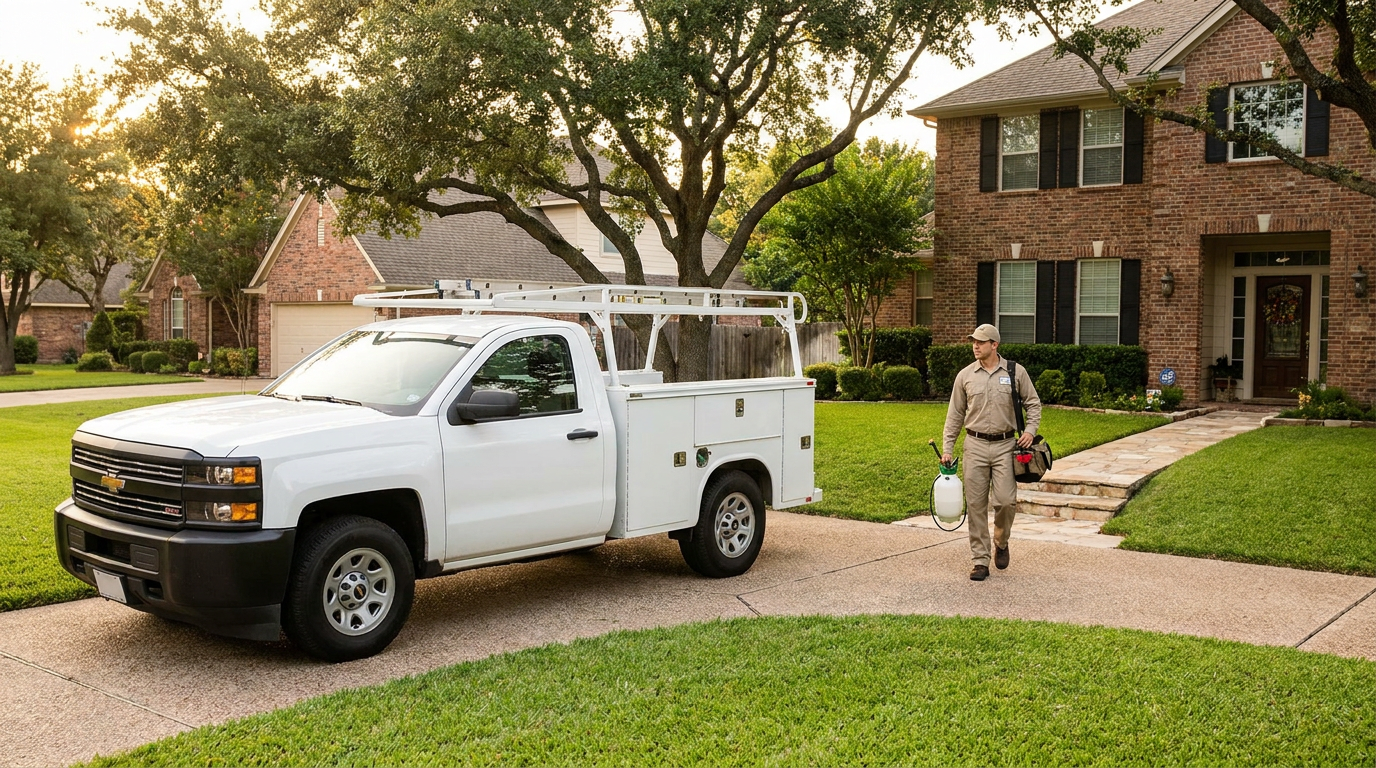
At Romex Pest Control, our technicians consistently emphasize the importance of maintaining a regular service cadence. This isn't merely a sales tactic; it's rooted in the science of pest control, which operates within a critical 60-to-90-day window.
Let's delve into the science behind this scheduling strategy, explained in straightforward terms.
Understanding Residual Products
The insecticides applied by Romex around your home's perimeter are residual products, meaning they remain active on surfaces for weeks. Pests that traverse these treated areas pick up the chemicals, which they then carry back to their colonies, resulting in a gradual but effective reduction in pest populations.
However, 'residual' does not imply permanence. Factors such as UV exposure, rain, and heat degrade these products over time. In controlled environments, these insecticides maintain lethal concentrations for 60 to 90 days. In real-world conditions, particularly in the heat and humidity of Texas, Oklahoma, Louisiana, and Mississippi, this period often leans towards the shorter end.
Ready to Get Started?
Free quote • No obligation • Same-day service available
Consequences of Extending Beyond 90 Days
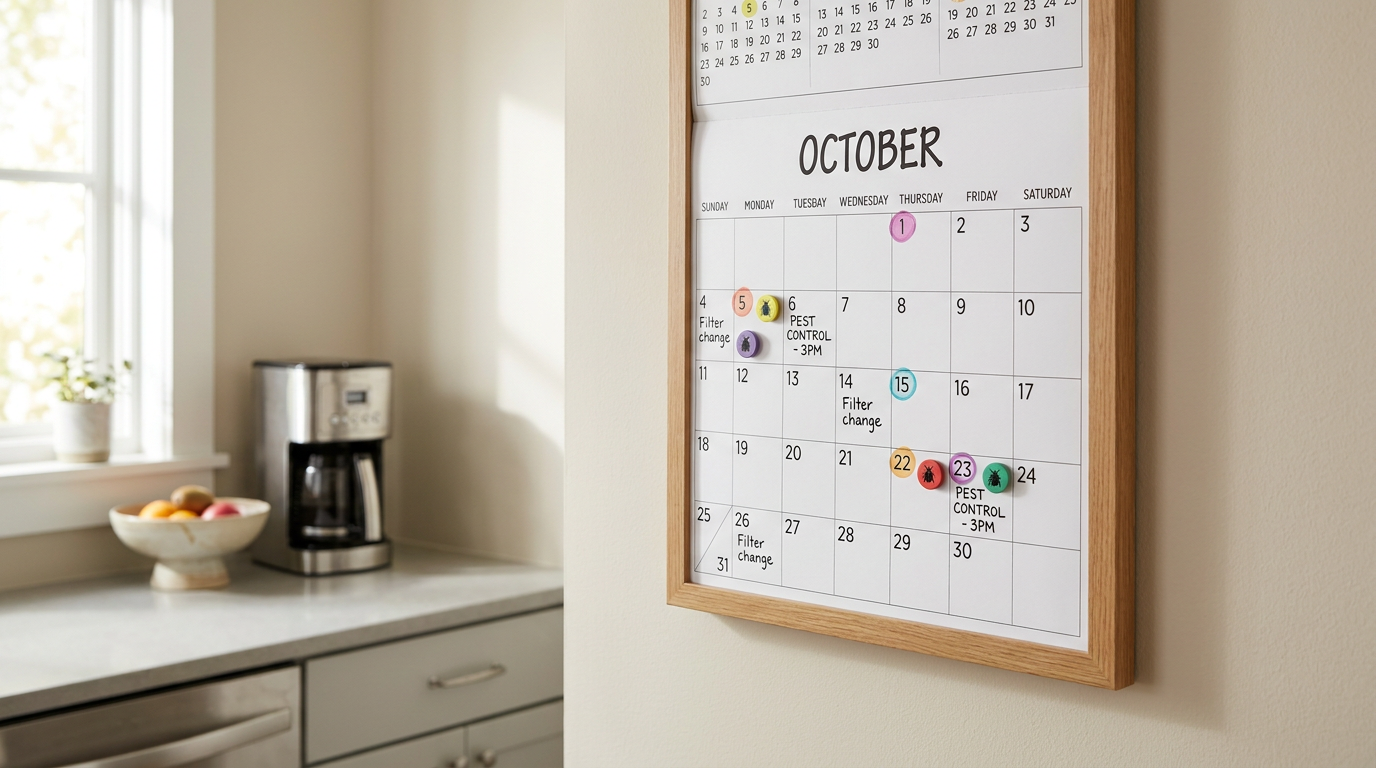
After 90 days, the concentration of insecticides on surfaces falls below lethal levels. Pests crossing these barriers receive sub-lethal doses, insufficient to eliminate them or prevent colony recovery. By day 120, the protective barrier is essentially ineffective.
This explains why homeowners who extend their service intervals to four or five months often experience increased pest activity. The barrier doesn't fail; it simply expires.
Company History and Achievements
Romex Pest Control has been serving the Texas, Oklahoma, Louisiana, and Mississippi regions since 2016. Our commitment to excellence has earned us numerous industry awards and recognition, including the "Best Pest Control Service" by local business associations. Our technicians are certified and undergo continuous training to stay updated with the latest pest control technologies and methods.
Choosing Between Every-Other-Month and Quarterly Services
Romex typically recommends a service cadence of every other month to quarterly, depending on various factors:
| Factor | Every-Other-Month (60 days) | Quarterly (90 days) |
|---|---|---|
| Proximity to water, woods, or construction | ✅ Recommended | May not hold |
| History of high pest pressure | ✅ Recommended | May not hold |
| Active infestation (first year) | ✅ or monthly | Too long between visits |
| Low-pressure suburban lot, good exclusion | Works well | ✅ Usually sufficient |
| Peak season (spring/summer in TX, OK, LA, MS) | ✅ Recommended | Borderline |
Your Romex technician will tailor a service cadence based on your property's specific pest pressure profile. Many homeowners begin with every-other-month services and transition to quarterly visits after the first year, once pest populations are under control and exclusion measures are in place.
Eco-Friendly Pest Control Options
While all our products are tested and approved for residential use, we also offer eco-friendly options that minimize environmental impact. These solutions are particularly suitable for families with children and pets. Consult with our technicians to find the best approach for your home.
Homeowner's Role in Effective Pest Control
The 60-to-90-day service window assumes homeowners are maintaining their part of the partnership: keeping food sealed, eliminating standing water, trimming vegetation, and sealing entry points. If indoor conditions attract pests faster than the barrier can handle, even a 60-day cadence may seem insufficient.
Check our 10-point homeowner checklist for actions to take between visits. These habits are crucial for making the service cadence effective.
Did You Know?
According to a study by Texas A&M University, consistent pest control services can reduce pest populations by up to 80% over a year. Source: Texas A&M University
Professional Tip
Consult with your pest control technician about any unique challenges your property may face, such as nearby water sources or construction, which can increase pest pressure.
FAQ
What if I miss a scheduled service?
Missing a service can reduce the effectiveness of your pest control plan. Contact us immediately to reschedule and maintain your protective barrier.
Are the products used tested and approved for residential areas?
Our products are rigorously tested and approved for use in residential settings. However, we recommend keeping pets away from treated areas until they are dry.
The Takeaway
Consistent service cadence is the most powerful tool in residential pest control. The chemistry works when you adhere to the timeline. Stretch it, and you're risking biology in a climate that favors pests.
Request a quote and let's set up a cadence that fits your property—no surprise add-ons, just flat, written pricing before any work begins.