
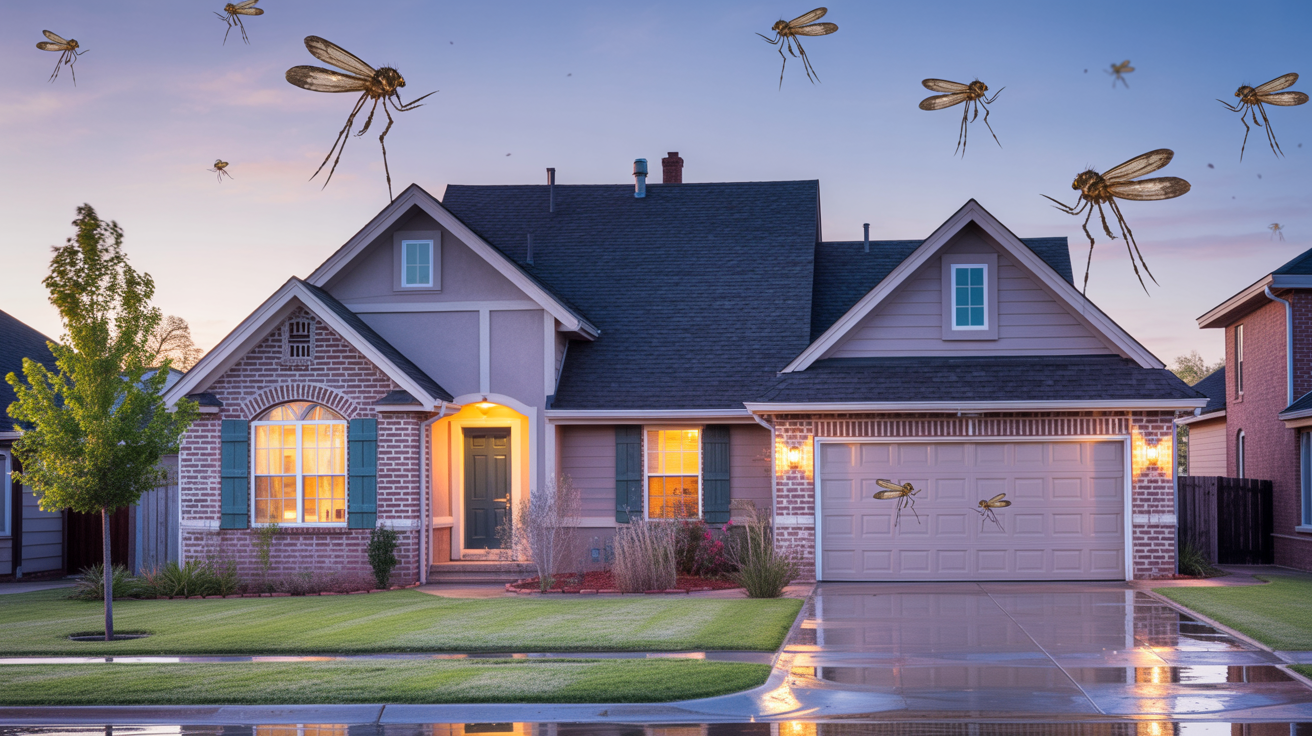
If you've lived in the South for more than five minutes, you know the drill: step outside on a humid evening and become an instant buffet for mosquitoes. But here's what most homeowners don't realize—those aren't just annoying bites. You're dealing with one of the world's deadliest disease vectors, and the species composition in your backyard determines everything from when they're most active to which control methods actually work.
This isn't another generic "eliminate standing water" article. We're diving deep into the science of Southern mosquito behavior, the specific species terrorizing your region, and evidence-based control strategies that address the unique challenges of our climate.
About Romex Pest Control
Romex Pest Control has been a leader in pest management for over 20 years, holding certifications from the National Pest Management Association (NPMA) and licensed by the Environmental Protection Agency (EPA). Our team of experts is dedicated to providing professional and tested pest control solutions tailored to the unique needs of the Southern United States.
Our history of excellence is backed by numerous awards, including the "Best Pest Control Service" in Oklahoma City for three consecutive years. Our commitment to innovation and customer satisfaction sets us apart in the industry.
Ready to Get Started?
Free quote • No obligation • Same-day service available
Know Your Enemy: The Big Three Mosquito Species Dominating the South
Not all mosquitoes are created equal. The species in your yard determines their feeding patterns, breeding preferences, and vulnerability to different control methods. Here are the three primary culprits across Texas, Oklahoma, Louisiana, and Mississippi:
Aedes aegypti (Yellow Fever Mosquito)
This is your daytime nemesis. Unlike most mosquitoes that peak at dawn and dusk, Aedes aegypti actively hunts during daylight hours, making backyard barbecues miserable. They're also the primary vector for Zika, dengue, chikungunya, and yellow fever.
Key identifying behavior: They fly low and silently, often biting ankles and feet. You won't hear them coming.
Breeding preference: Small containers with clean water—flower pot saucers, dog bowls, even bottle caps.
Culex quinquefasciatus (Southern House Mosquito)
The classic evening mosquito that ruins your porch time. These are your West Nile virus carriers, and they're most active from dusk until about 10 PM.
Key identifying behavior: The high-pitched whine that keeps you awake. They prefer to feed on birds but will settle for humans when bird populations are low.
Breeding preference: Stagnant water with organic matter—storm drains, neglected pools, rain barrels.
Aedes albopictus (Asian Tiger Mosquito)
The aggressive daytime biters with distinctive black and white striped legs. They're less disease-focused than their cousins but make up for it with sheer aggression.
Key identifying behavior: Persistent followers that will chase you indoors if given the chance.
Breeding preference: Tree holes, tires, and any container that holds water for more than a week.
The Science of Southern Mosquito Seasons: When to Expect the Worst
Understanding mosquito population dynamics in our region requires looking beyond temperature to humidity, rainfall patterns, and even urban heat island effects.
Spring Emergence (March-May)
The first warm spell above 50°F triggers overwintering Culex females to become active. However, the real explosion doesn't happen until soil temperatures consistently reach 55-60°F, which varies significantly across our service areas:
- South Texas/Louisiana: Early March
- Central Texas/Oklahoma: Mid to late March
- North Texas: Early April
This is your critical intervention window. Larvae developing now will become the breeding population for the entire season.
Peak Season (June-September)
When daytime temperatures consistently exceed 80°F and humidity stays above 60%, you're in prime mosquito territory. But here's the nuance most articles miss: different species peak at different times.
Aedes aegypti populations actually decline during the hottest summer months (July-August) in Texas and Oklahoma, preferring the milder conditions of late spring and early fall. Culex species, however, thrive in the heat and peak in July-August.
Fall Extension (October-November)
In Louisiana and Mississippi, mosquito season extends well into November due to Gulf Coast humidity. This creates a dangerous complacency period—homeowners stop their control efforts just as disease transmission risk peaks.
| Month | Primary Species | Disease Risk | Control Priority |
|---|---|---|---|
| March-May | Culex emergence | Low | Breeding site elimination |
| June-August | All species peak | High | Adult population control |
| September-November | Aedes resurgence | Very High | Continued vigilance |
Beyond Standing Water: Advanced Breeding Site Management
Every pest control article tells you to "eliminate standing water," but they rarely explain the specifics that make the difference between success and failure.
The 7-Day Rule and Why It Matters
Most Southern mosquito species complete their development from egg to adult in 7-10 days under optimal conditions. This means any water source that persists for a week becomes a mosquito factory. But here's the critical detail: the countdown resets every time you add fresh water.
Practical application: That decorative fountain that you top off weekly? It's not the peaceful water feature you think it is—it's a mosquito nursery with a constant supply of fresh nutrients.
Hidden Breeding Sites You're Probably Missing
- Clogged gutters: Even a small amount of debris can create perfect breeding conditions
- AC condensation drains: Check where your units drain—standing water here is often overlooked
- Tree holes and stumps: Natural containers that fill with rainwater and organic matter
- Tire swings and playground equipment: Any depression that can hold water for a week
- Boat covers and tarps: Sagging areas create perfect mosquito nurseries
The Organic Matter Factor
Clean water alone won't sustain large mosquito populations. They need organic matter for larvae to feed on. This is why ornamental ponds with fish rarely have mosquito problems (fish eat the larvae), but neglected pools become mosquito explosions (algae and debris provide abundant food).
Adult Mosquito Control: Timing and Targeting Strategies
Once you have adult mosquitoes, elimination becomes more complex. Success depends on understanding their behavior patterns and choosing the right intervention methods.
Resting Site Management
During daylight hours, mosquitoes need cool, humid places to rest. In the South, this typically means:
- Dense vegetation within 100 feet of your home
- Under deck areas and porches
- Inside garages and storage sheds
- Thick ground cover like ivy or pachysandra
Strategic vegetation management: You don't need to create a barren landscape. Focus on creating airflow by pruning lower branches and thinning dense shrubs near high-traffic areas.
Understanding Flight Patterns
Most mosquitoes are weak fliers, traveling less than 100 yards from their breeding site. However, Aedes aegypti females will follow CO2 trails (your breath) for up to 150 feet, and wind can carry mosquitoes much farther.
Practical implication: If you're seeing mosquitoes on your property, there's likely a breeding site within 300 feet. Neighborhood-wide control efforts are significantly more effective than individual property treatments.
Personal Protection That Works
While professional treatments are essential, personal protection can also play a significant role in reducing mosquito bites. Wearing long sleeves, using EPA-approved repellents, and installing screens can provide additional layers of defense.
Conclusion: Partner with Romex for Effective Mosquito Control
With a deep understanding of mosquito behavior, regional climate conditions, and proven control methods, Romex Pest Control stands ready to help you take back your yard. Our professional services are designed to address the unique challenges of the Southern United States, ensuring you can enjoy your outdoor spaces without the nuisance of mosquitoes.
For more information on our services, visit our Mosquito Control page or contact us at 405-288-1980 for a free quote.