
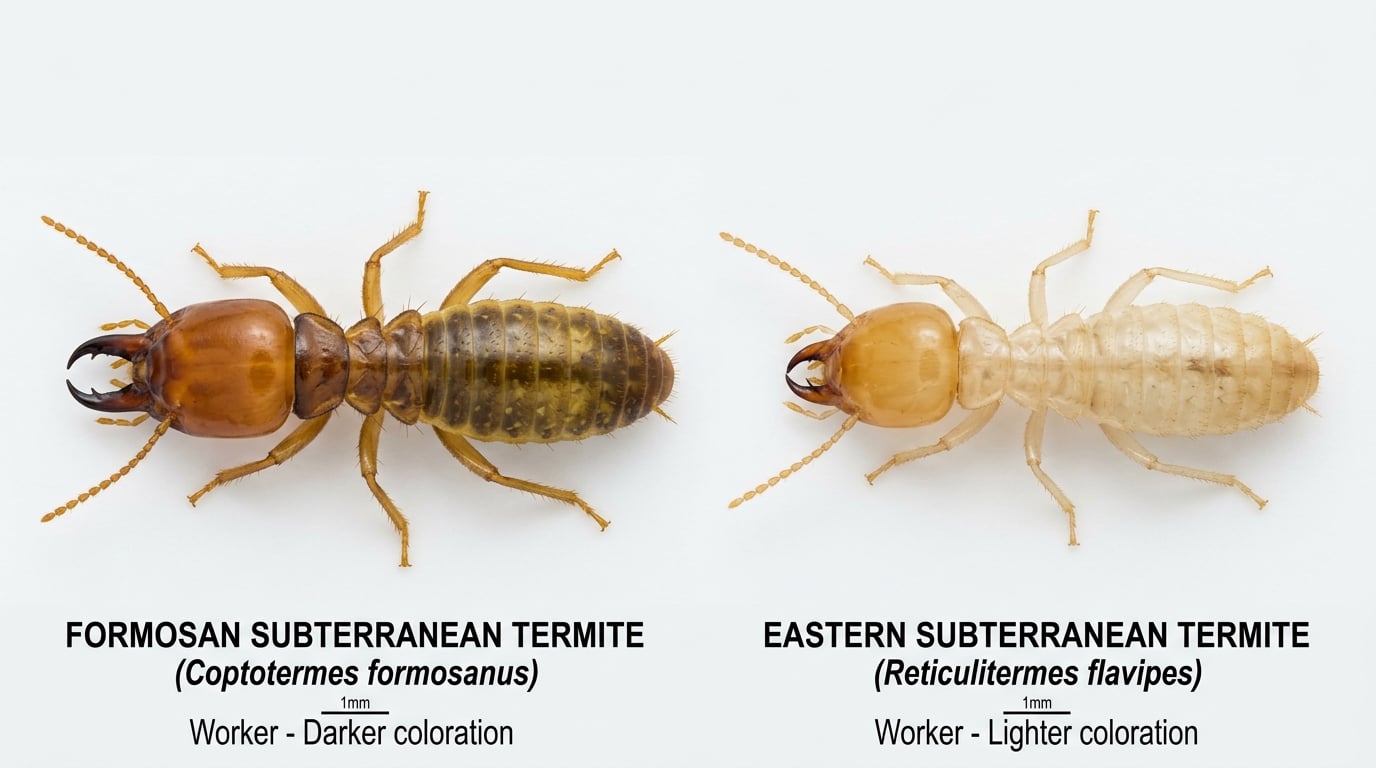
Understanding the differences between Formosan and native subterranean termites is crucial for homeowners, especially in the southern United States. While both are destructive, the Formosan subterranean termite (Coptotermes formosanus) is particularly notorious for its aggressive nature. This article will explore these differences and provide insights into effective treatment options.
The Basics: What Makes Them Different?
Native Subterranean Termites (Reticulitermes spp.)
These termites are the most common in the United States, frequently encountered by homeowners in Texas and Oklahoma. They live in underground colonies, build mud tubes to reach food sources, and cause significant property damage annually. According to the EPA, termites are responsible for over $5 billion in property damage each year in the U.S.
Formosan Subterranean Termites (Coptotermes formosanus)
Originating from East Asia, Formosan termites were introduced to the U.S. through port cities post-World War II. They are now prevalent in Louisiana, Southeast Texas, Mississippi, and parts of the Gulf Coast. The CDC highlights them as one of the most aggressive and destructive termite species globally.
🛡️ Protect Your Home from Termites
Romex Pest Control offers FREE termite inspections across Texas, Oklahoma, Louisiana & Mississippi. Serving since 2016.
Schedule Your FREE Termite Inspection →Ready to Get Started?
Free quote • No obligation • Same-day service available
Head-to-Head Comparison
| Characteristic | Native Subterranean | Formosan |
|---|---|---|
| Colony Size | 60,000 – 1 million | 1 million – 10 million+ |
| Damage Rate | Gradual (years to cause significant damage) | Rapid (structural damage possible within 6 months) |
| Nesting | Underground only | Underground AND above-ground (carton nests) |
| Foraging Range | Up to 300 feet | Up to 300+ feet, often multiple entry points |
| Swarmer Size | ~3/8 inch, dark brown/black | ~1/2 inch, yellowish-brown |
| Swarm Time | Daytime, Feb–May | Dusk/evening, May–June |
| Materials Attacked | Wood, paper, cardboard | Wood, paper, AND non-cellulose (foam, thin metals, plastic) |
Why Formosan Termites Are More Dangerous
1. Massive Colony Size
A single Formosan colony can contain 10 million or more termites — roughly 10x the size of a native subterranean colony. More termites mean dramatically faster damage to your home.
2. Above-Ground Nesting (Carton Nests)
Unlike native subterranean termites that must return to the soil, Formosan termites build "carton nests" — hardened structures made of chewed wood, soil, and feces — inside walls, attics, and even flat roofs. This means they don't need soil contact and can infest upper stories of buildings.
3. Aggressive Feeding
Formosan termites can cause structural damage in as little as 6 months. Their sheer numbers allow them to consume wood at a rate that surprises even experienced pest control professionals.
4. Harder to Eliminate
Because Formosan colonies are larger and can nest above ground, they often require more aggressive treatment protocols and combination approaches.
Where Are They Found?
In our service areas:
- Louisiana: The epicenter of Formosan termite activity in the U.S. — especially New Orleans, Baton Rouge, and the Gulf Coast. If you live in Louisiana, assume Formosan termites are in your area.
- Texas: Established in Houston, Beaumont, Galveston, and spreading inland. DFW and Austin see primarily native subterranean termites, but Formosans are being found further north every year.
- Mississippi: Gulf Coast areas (Biloxi, Gulfport, Hattiesburg) have significant Formosan populations.
- Oklahoma: Formosans are rare but have been detected. Native subterranean termites are the primary concern.
Treatment Differences
For Native Subterranean Termites
Standard Sentricon® or liquid barrier treatments are highly effective. These colonies are underground, predictable, and respond well to conventional professional treatment.
For Formosan Termites
More aggressive approaches are typically needed:
- Combination treatment — liquid barrier PLUS Sentricon® bait system for maximum coverage
- Carton nest removal — if above-ground nests are found, they must be physically removed and the area treated
- Extended monitoring — Formosan colonies are harder to fully eliminate and require more vigilant follow-up
- Larger treatment perimeter — the extensive foraging range means more bait stations and broader liquid barrier coverage
At Romex Pest Control, we're experienced with both species across all four states. Our inspectors can identify the species during a FREE inspection and recommend the appropriate treatment protocol.
The Bottom Line
Whether you're dealing with native subterranean termites or the more aggressive Formosan species, early detection is your best defense. A mature Formosan colony can cause catastrophic damage in months, while even native subterranean termites cause billions in damage annually.
If you see swarmers, mud tubes, or other warning signs, don't wait. The longer termites go untreated, the more expensive the solution becomes.
Ready to Protect Your Home?
Don't wait until termite damage gets worse. Get a FREE professional termite inspection from Romex Pest Control — no obligation, no pressure.
Claim Your FREE Inspection →📞 Or call 844-955-2447
Did You Know?
Formosan termites are capable of consuming up to 13 ounces of wood per day, which is significantly higher than native subterranean termites.
Professional Tip
Regular inspections and preventive treatments are key to protecting your home from termite damage. Consider scheduling annual inspections with a certified pest control professional.
Frequently Asked Questions
What are the signs of a termite infestation?
Common signs include mud tubes, discarded wings, and hollow-sounding wood.
How often should I have my home inspected for termites?
It's recommended to have annual inspections to catch any potential infestations early.
Are Formosan termites more difficult to control?
Yes, due to their large colony size and ability to nest above ground, Formosan termites require more aggressive treatment strategies.